FIFA World Cup 2026 Broadcast Deal Finalized for India
Last-Minute Agreement Ends Uncertainty for Millions of Football Fans
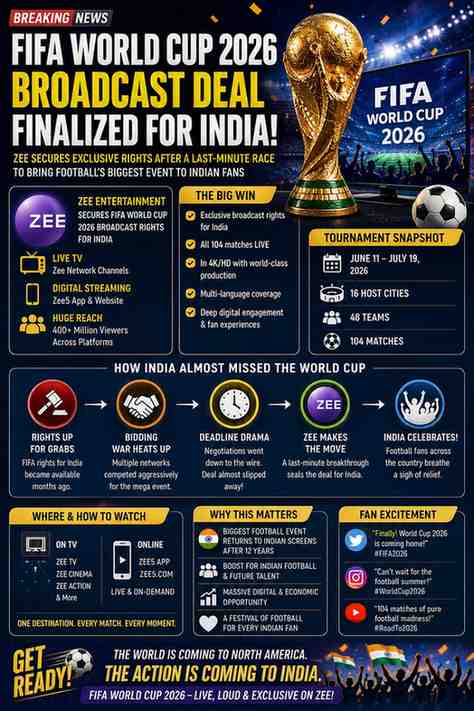
The FIFA World Cup remains one of the most-watched sporting events in the world, attracting billions of viewers across continents. In India, football’s popularity has grown steadily over the years, with fans closely following major international tournaments, European leagues, and global football stars. As anticipation for the FIFA World Cup 2026 continues to build, a major development regarding broadcasting rights has become a significant talking point among sports enthusiasts.
The finalization of a broadcast agreement for India has generated considerable interest, particularly after reports of uncertainty surrounding television and digital streaming arrangements. For football fans, access to live coverage is one of the most important aspects of the tournament experience, making the broadcast deal a closely watched development.
The agreement ensures that Indian viewers will have access to matches from one of the biggest sporting events in the world, bringing relief to fans who had been waiting for official confirmation regarding viewing options.
Why Broadcast Rights Matter So Much
Broadcast rights play a crucial role in modern sports. They determine how fans can watch matches, whether through traditional television channels, digital streaming platforms, or mobile applications.
For events as large as the FIFA World Cup, securing broadcasting rights involves extensive negotiations between media companies, sports organizations, and distribution partners. These agreements influence not only audience reach but also advertising revenue, sponsorship opportunities, and viewer engagement.
In a country like India, where millions of sports fans consume content through multiple devices, having a clear broadcast plan is essential. Viewers increasingly expect flexibility, allowing them to watch matches on televisions, smartphones, tablets, and laptops.
The finalized deal is expected to help meet those expectations by providing reliable access to tournament coverage.
Growing Popularity of Football in India
Although cricket remains India’s most popular sport, football has experienced remarkable growth over the past decade. International tournaments, European club competitions, and domestic football leagues have contributed to expanding the sport’s fan base.
The FIFA World Cup, in particular, attracts significant attention from Indian audiences. During previous editions, social media platforms witnessed extensive discussions, while television and streaming platforms recorded strong viewership numbers.
Many younger viewers have developed strong connections with global football stars and national teams. This growing interest has made major football tournaments increasingly valuable for broadcasters seeking to attract large audiences.
The World Cup’s appeal extends beyond dedicated football supporters. Casual sports fans often tune in as well, drawn by the excitement and global significance of the competition.
The Significance of the 2026 FIFA World Cup
The FIFA World Cup 2026 is expected to be one of the most ambitious editions of the tournament. With an expanded format and increased participation, the competition is anticipated to deliver more matches and greater global engagement than ever before.
The tournament’s scale has already generated considerable discussion among fans, analysts, and media organizations worldwide. Broadcasters recognize that securing rights to such a major event can significantly enhance audience reach and market visibility.
For Indian viewers, the tournament represents an opportunity to watch the world’s best football players compete on the biggest stage. The finalized broadcast agreement ensures that audiences will not miss out on the action.
As preparations continue, interest in viewing details is expected to increase further.
Digital Streaming Changes the Viewing Experience
The way sports fans consume content has changed dramatically in recent years. Traditional television remains important, but digital streaming has become an increasingly significant part of the sports media landscape.
Many viewers now prefer watching matches on mobile devices, particularly younger audiences who value convenience and flexibility. This shift has encouraged broadcasters to invest heavily in streaming infrastructure and digital platforms.
For a tournament like the FIFA World Cup, providing seamless streaming access is essential. Fans expect high-quality video, real-time updates, highlights, and interactive features that enhance the viewing experience.
The broadcast deal’s digital component is therefore likely to play a major role in reaching India’s growing online audience.
Social Media Reactions Fuel Buzz
The announcement of the broadcast arrangement has sparked conversations across social media platforms. Football fans have shared reactions, discussed viewing options, and expressed excitement about the upcoming tournament.
Sports communities, fan pages, and content creators have contributed to the growing buzz by discussing how the agreement could impact coverage and accessibility.
Social media has become a powerful force in sports broadcasting. Major announcements often gain momentum online, helping generate additional interest in upcoming events.
The FIFA World Cup’s global popularity ensures that discussions surrounding broadcasting arrangements attract attention well beyond traditional sports audiences.
Competition Among Broadcasters
The competition for premium sports rights has intensified in recent years. Media companies recognize that major tournaments can attract millions of viewers and drive subscription growth.
As a result, securing rights for events such as the FIFA World Cup often becomes a strategic priority. Broadcasters view these agreements as opportunities to strengthen their position in increasingly competitive media markets.
For audiences, competition among broadcasters can be beneficial because it encourages investment in production quality, streaming technology, and viewer experience.
The finalized agreement highlights the continuing importance of live sports as one of the most valuable forms of media content.
Economic Impact of Major Sports Broadcasts
Large sporting events generate significant economic activity beyond ticket sales and sponsorships. Broadcasters, advertisers, brands, and digital platforms all benefit from increased audience engagement.
During the FIFA World Cup, companies often launch large-scale advertising campaigns designed to capitalize on heightened viewer interest. This creates opportunities for businesses across multiple industries, including technology, consumer goods, telecommunications, and entertainment.
The availability of reliable broadcast coverage is therefore important not only for fans but also for advertisers and commercial partners seeking to connect with audiences during the tournament.
The finalized deal is expected to support these broader economic opportunities.
What Fans Can Expect
With broadcasting arrangements now in place, attention is likely to shift toward tournament preparations, team performances, and player storylines.
Fans can look forward to extensive coverage leading up to the competition, including analysis programs, previews, highlights, interviews, and match broadcasts.
The combination of television and digital access is expected to provide multiple viewing options, helping ensure that audiences can follow the tournament regardless of where they are.
As excitement grows, broadcasters are likely to introduce additional content designed to engage viewers before and during the event.
Looking Ahead to Football’s Biggest Stage
The confirmation of a broadcast deal for India marks an important step in the build-up to the FIFA World Cup 2026. By removing uncertainty surrounding viewing arrangements, the agreement allows fans to focus on what matters most: the football itself.
Interest in the tournament is expected to continue rising as qualification campaigns conclude and participating teams prepare for the global event. Social media discussions, promotional campaigns, and sports coverage will likely contribute to growing anticipation.
For millions of football supporters across India, the finalized broadcast arrangement ensures access to one of the world’s most celebrated sporting spectacles. As the countdown to the FIFA World Cup 2026 continues, fans can now look forward to following every major moment from football’s biggest stage.
Key Insights
- The FIFA World Cup 2026 broadcast deal for India has ended uncertainty regarding how fans will watch the tournament.
- Football’s popularity in India continues to grow, making World Cup broadcasting rights increasingly valuable for media companies.
- The agreement ensures wider access for Indian viewers through television and digital platforms.
- Digital streaming is expected to play a major role, as more fans prefer watching matches on smartphones and other connected devices.
- The FIFA World Cup remains one of the world’s biggest sporting events, attracting massive audiences and advertiser interest.
- Broadcast rights have become highly competitive, with media companies investing heavily in premium sports content.
- Social media discussions surrounding the deal have increased fan excitement, highlighting strong interest in the upcoming tournament.
- The 2026 edition is expected to be one of the largest FIFA World Cups ever, featuring an expanded format and more matches.
- The finalized broadcast arrangement benefits advertisers and brands, who rely on major sporting events to reach large audiences.
- Indian football fans can now prepare for the tournament with confidence, knowing official viewing options have been secured.
- The deal reflects the growing importance of football in India’s sports market, alongside established sports such as cricket.
- The combination of TV and digital coverage is expected to maximize audience reach, helping the tournament connect with viewers across the country.
Last Updated on: Wednesday, June 3, 2026 4:27 pm by Pushkarini Annabathula | Published by: Pushkarini Annabathula on Wednesday, June 3, 2026 4:23 pm | News Categories: Latest
About The Author