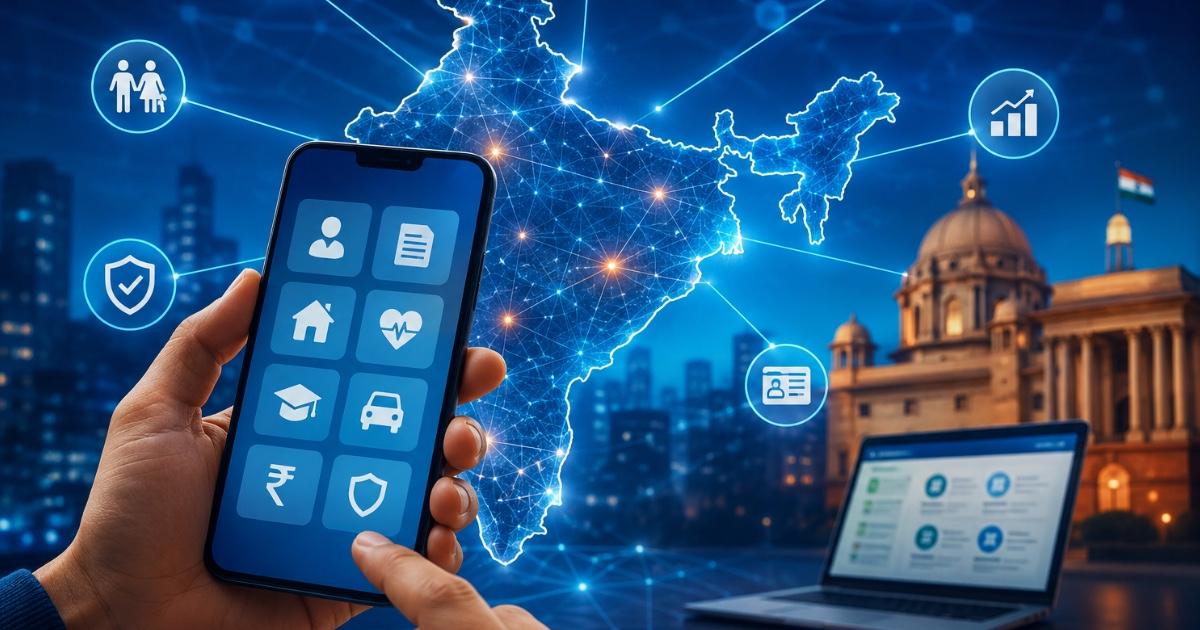
Major Digital Governance Changes Citizens Should Know
New Digital Services Rollout Across India
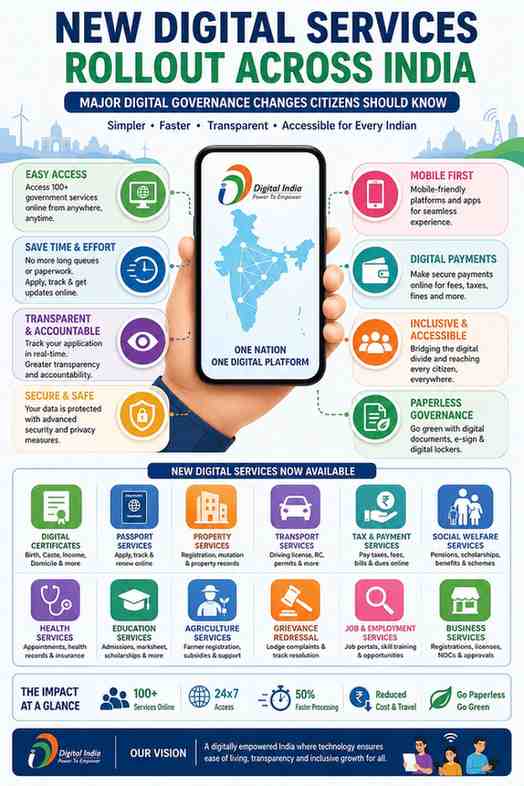
India’s digital transformation journey has entered a new phase with the rollout of several digital governance services designed to make government interactions faster, easier, and more accessible for citizens. Over the past decade, the country has made significant progress in digitizing public services, and the latest initiatives aim to further improve efficiency while reducing paperwork and administrative delays.
As technology becomes increasingly integrated into everyday life, governments across the country are expanding their digital platforms to provide citizens with better access to essential services. From online applications and digital certificates to integrated service portals and mobile-friendly platforms, these developments are changing the way people interact with public institutions.
The new rollout reflects India’s broader vision of creating a technology-driven governance ecosystem that emphasizes convenience, transparency, and accessibility.
The Evolution of Digital Governance in India
Digital governance has become a key component of public administration in India. Traditionally, many government services required citizens to visit offices, fill out physical forms, and wait for manual processing. While these systems served their purpose for many years, they often involved lengthy procedures and multiple administrative steps.
The adoption of digital technologies has transformed these processes. Citizens can now access various services online, reducing the need for physical visits and minimizing paperwork. The government’s continued focus on digital transformation has led to the development of numerous platforms that support everything from document verification to online payments and service requests.
The latest rollout builds on these earlier achievements and seeks to expand digital access to a larger population.
Making Government Services More Accessible
One of the primary goals of the new digital services is improving accessibility. Citizens frequently require government services related to education, healthcare, transportation, taxation, welfare schemes, and public records.
Digital platforms make these services available from virtually anywhere with an internet connection. This is particularly beneficial for individuals living in remote areas who may previously have needed to travel long distances to access administrative services.
The expansion of online service delivery also helps reduce waiting times and streamlines interactions between citizens and government departments.
As digital infrastructure continues to improve, access to public services is becoming increasingly convenient for millions of people across the country.
Integrated Service Platforms Simplify Processes
A significant trend in modern digital governance is the creation of integrated platforms that bring multiple services together under a single system.
Instead of navigating separate websites or offices for different services, citizens can increasingly access multiple functions through unified portals. These systems simplify administrative processes and reduce the complexity associated with managing various government interactions.
Integrated platforms also help improve user experience by providing centralized access to information, applications, status tracking, and support services.
This approach reflects a growing emphasis on citizen-centric governance and service delivery.
Mobile-First Solutions for a Connected Population
India is one of the largest smartphone markets in the world. As a result, many new digital governance services are being designed with mobile users in mind.
Mobile applications and responsive platforms allow citizens to access services directly from their smartphones. This approach is especially important because many individuals rely on mobile devices as their primary means of accessing the internet.
Mobile-friendly platforms can improve adoption rates and make digital services more inclusive.
Whether applying for certificates, checking application status, making payments, or accessing information, citizens increasingly expect government services to be available through mobile devices.
The latest rollout reflects this shift toward mobile-first service delivery.
Faster Processing Through Digital Workflows
Digital systems enable governments to automate many administrative tasks that previously required manual processing. This can significantly improve efficiency and reduce delays.
Applications submitted online can often be processed more quickly because digital workflows eliminate several traditional administrative steps. Automated notifications, electronic records, and digital verification systems help accelerate decision-making and service delivery.
For citizens, faster processing means reduced waiting times and quicker access to essential services.
The adoption of digital workflows also allows government departments to manage larger volumes of requests more effectively.
Improved Transparency and Accountability
Transparency remains one of the most important benefits of digital governance. Online systems provide greater visibility into administrative processes, allowing citizens to track applications and monitor progress.
This transparency helps build trust between citizens and public institutions by providing clear information regarding procedures and timelines.
Digital records create accountability by documenting actions taken during service delivery. Such records can be reviewed when necessary and help ensure that processes are followed consistently.
As governments continue expanding digital services, transparency and accountability remain central objectives.
Strengthening Rural Connectivity and Inclusion
While urban areas often benefit first from technological advancements, policymakers are increasingly focused on ensuring that digital governance reaches rural communities as well.
Expanding internet connectivity, improving digital literacy, and developing user-friendly platforms are helping extend the benefits of digital services to remote regions.
For rural citizens, digital access can reduce travel requirements and provide more convenient access to government services.
This can be especially valuable for applications related to social welfare schemes, agricultural support programs, healthcare services, and educational resources.
The continued expansion of digital governance has the potential to improve inclusivity and reduce service disparities between urban and rural areas.
Digital Documentation and Verification
Digital document management has become an essential aspect of modern governance. Citizens frequently require certificates, licenses, permits, and other official documents for various purposes.
Digital systems simplify document submission, storage, verification, and retrieval. Instead of managing physical paperwork, citizens can increasingly access electronic versions of important records.
Digital verification mechanisms also help improve efficiency by reducing processing times and minimizing administrative burdens.
These systems contribute to a more streamlined and user-friendly experience while maintaining security and authenticity standards.
The Growing Role of Artificial Intelligence
Artificial Intelligence (AI) is beginning to play an important role in digital governance initiatives. AI-powered systems can assist with customer support, data analysis, document processing, and workflow optimization.
Some government agencies are exploring AI-based solutions to improve service delivery and enhance operational efficiency.
For example, automated chat systems can provide quick responses to common citizen inquiries, while AI tools can help identify patterns that improve administrative decision-making.
Although AI is not replacing human oversight, it is becoming a valuable tool for supporting public service operations.
Its role is expected to expand as digital governance systems continue evolving.
Cybersecurity Remains a Top Priority
As digital services become more widespread, protecting citizen data becomes increasingly important. Government platforms handle sensitive information, making cybersecurity a critical component of digital governance.
Authorities continue investing in security measures designed to protect systems from cyber threats and unauthorized access.
Strong authentication methods, secure infrastructure, and data protection protocols help maintain public trust in digital platforms.
Citizens also play a role in protecting their information by following recommended security practices and remaining aware of potential online threats.
Maintaining robust cybersecurity standards will remain essential as digital adoption grows.
Economic Benefits of Digital Governance
The impact of digital governance extends beyond administrative convenience. Efficient digital services can contribute to broader economic development by reducing bureaucratic barriers and improving operational efficiency.
Businesses benefit from streamlined approvals, registrations, and compliance processes. Faster service delivery can help reduce costs and support economic activity.
Digital governance also creates opportunities for innovation, technology adoption, and public-private collaboration.
By improving access to services and simplifying administrative procedures, digital systems contribute to a more productive and connected economy.
Challenges and Future Opportunities
Despite significant progress, challenges remain. Digital literacy gaps, connectivity issues, and cybersecurity concerns continue to require attention.
Ensuring that all citizens can effectively use digital services is an ongoing priority. Governments, educational institutions, and technology providers must work together to improve awareness and accessibility.
At the same time, advances in artificial intelligence, cloud computing, and digital infrastructure create new opportunities for innovation.
Future developments may include even greater integration of services, smarter administrative systems, and more personalized citizen experiences.
The continued evolution of digital governance will likely shape how public services are delivered for years to come.
Conclusion
The latest rollout of digital services across India represents another important milestone in the country’s digital transformation journey. By improving accessibility, transparency, efficiency, and convenience, these initiatives aim to create a more citizen-friendly governance system.
As technology continues to advance, digital governance will play an increasingly important role in connecting citizens with public services. The ongoing expansion of online platforms, mobile applications, and integrated service systems reflects a broader commitment to modernization and innovation.
For millions of Indians, these developments promise easier access to information, faster administrative processes, and a more efficient relationship with government institutions. As Digital India continues to evolve, digital governance is expected to remain a key driver of public service transformation and national development.
Key Insights
- India is expanding digital governance services to make government processes faster, simpler, and more accessible for citizens.
- The latest digital services rollout aims to reduce paperwork and physical visits to government offices by enabling online access to various public services.
- Integrated digital platforms are helping citizens access multiple government services through a single system, improving convenience and efficiency.
- Mobile-first governance is becoming a priority, allowing citizens to use smartphones for applications, payments, status tracking, and document access.
- Digital workflows are reducing processing times by automating administrative tasks and improving operational efficiency.
- Transparency and accountability are being strengthened through online tracking systems and digital records.
- Rural and remote communities are expected to benefit significantly from improved digital connectivity and easier access to government services.
- Digital document management and verification systems are simplifying the handling of certificates, licenses, permits, and official records.
- Artificial Intelligence is beginning to support public service delivery, helping improve customer support, data analysis, and workflow management.
- Cybersecurity remains a major focus, with governments investing in secure systems to protect citizen data and maintain trust.
- Businesses also benefit from digital governance, as online approvals, registrations, and compliance processes become faster and more efficient.
- Digital India initiatives continue to drive innovation, supporting technology adoption across public administration.
- Challenges such as digital literacy and internet accessibility still need attention to ensure that all citizens can benefit from digital services.
- Future digital governance systems are expected to become more integrated, intelligent, and citizen-centric, enhancing service delivery across sectors.
- The overall goal is to create a more transparent, efficient, and technology-driven governance ecosystem that improves everyday interactions between citizens and government institutions.
Last Updated on: Friday, June 5, 2026 3:28 pm by Pushkarini Annabathula | Published by: Pushkarini Annabathula on Friday, June 5, 2026 3:27 pm | News Categories: Latest
About The Author