Which Indian Cities Are Growing the Fastest? India’s Fastest-Growing Smart Cities in 2026
Smart Cities Drive India’s Urban Transformation
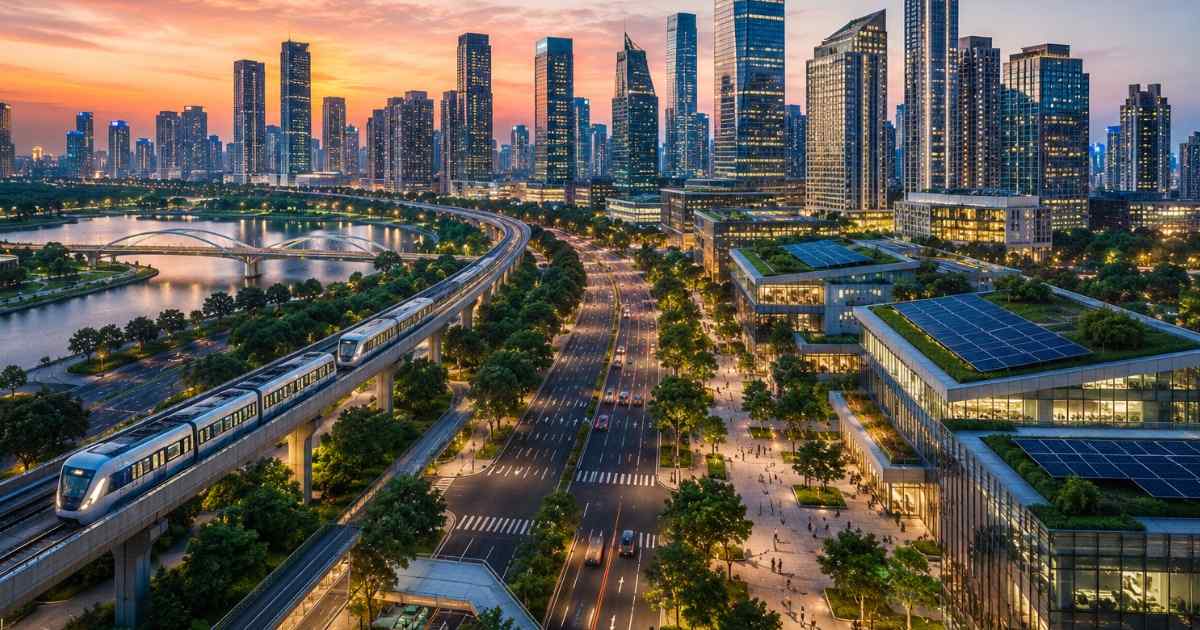
India’s urban landscape is undergoing a significant transformation. Rapid economic growth, increasing digital adoption, infrastructure development, and expanding employment opportunities are reshaping cities across the country. In 2026, several urban centers are emerging as leaders in this transformation, attracting investments, businesses, startups, and new residents at an unprecedented pace.
The concept of a “smart city” extends beyond technology. It includes better transportation systems, efficient public services, sustainable development, digital governance, improved connectivity, and enhanced quality of life. As India continues its journey toward becoming one of the world’s largest economies, smart cities are playing a crucial role in supporting growth and modernization.
Several cities are standing out due to their strong infrastructure projects, economic activity, and increasing appeal among businesses and professionals.
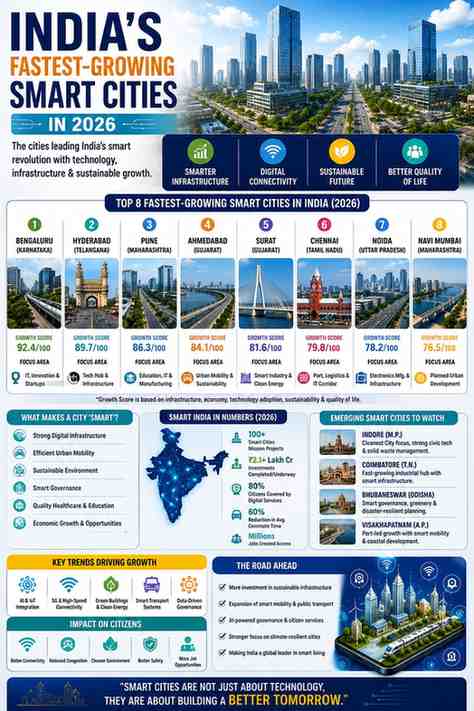
What Makes a City “Smart”?
A smart city uses technology and data-driven solutions to improve urban living. This includes intelligent traffic management systems, digital public services, smart utilities, efficient waste management, and integrated transportation networks.
However, smart city growth is not measured solely by technological advancements. Factors such as job creation, investment inflows, startup activity, housing development, and quality of public infrastructure also contribute significantly.
Cities that successfully combine technology with sustainable urban planning are often viewed as models for future development.
In India, the Smart Cities Mission has encouraged local administrations to adopt innovative solutions that improve efficiency and citizen services.
Bengaluru Continues to Lead the Innovation Race
Bengaluru remains one of India’s fastest-growing smart cities. Often referred to as the country’s technology capital, the city continues to attract startups, multinational corporations, and technology professionals.
The city’s strong IT ecosystem has helped drive investments in digital infrastructure, co-working spaces, research centers, and innovation hubs. Growth in artificial intelligence, software development, fintech, and deep-tech startups has further strengthened Bengaluru’s position.
Infrastructure improvements, including metro rail expansion and smart mobility initiatives, are helping support the city’s growing population and economic activity.
Despite challenges related to traffic congestion and urban density, Bengaluru continues to be a major destination for talent and investment.
Hyderabad Emerges as a Major Technology Hub
Hyderabad has become one of the strongest competitors in India’s smart city landscape. The city has attracted significant investments from technology companies, pharmaceutical firms, and data center operators.
Its modern infrastructure, expanding metro network, and business-friendly environment have contributed to rapid growth. Hyderabad’s technology corridors continue to draw domestic and international companies looking to establish operations in India.
The city has also gained recognition for its startup ecosystem, which supports entrepreneurs across sectors such as software, healthcare technology, and artificial intelligence.
With continued infrastructure development and increasing employment opportunities, Hyderabad is expected to remain one of India’s fastest-growing urban centers.
Pune’s Rise as a Smart Urban Destination
Pune has evolved from a traditional educational center into a major technology and business destination. The city has witnessed strong growth in IT services, manufacturing, engineering, and startup activity.
Educational institutions continue to supply skilled talent, making Pune attractive for employers seeking a qualified workforce. Investments in transportation infrastructure and digital services have further strengthened the city’s development trajectory.
Pune’s relatively balanced mix of employment opportunities, educational resources, and quality of life has helped it attract professionals from across the country.
As businesses continue expanding operations, Pune is increasingly being recognized as a leading smart city in India.
Ahmedabad’s Infrastructure-Led Growth
Ahmedabad has emerged as an important example of infrastructure-driven urban development. Investments in transportation networks, industrial corridors, and urban modernization projects have contributed to the city’s rapid growth.
The city benefits from strong manufacturing and industrial activity while also expanding its digital capabilities. Smart governance initiatives and public infrastructure improvements have enhanced efficiency and service delivery.
Ahmedabad’s strategic location and business-friendly environment continue to attract investment from multiple sectors.
Urban planners often cite the city as a successful example of combining economic growth with long-term infrastructure planning.
Chennai Strengthens Its Smart City Ecosystem
Chennai remains one of India’s most important industrial and technology centers. The city continues to experience growth across sectors including information technology, automobile manufacturing, electronics, and logistics.
Smart city projects have focused on improving transportation, public services, water management, and digital governance. Chennai’s strong industrial foundation provides a stable platform for continued expansion.
The city’s growing startup ecosystem and increasing focus on innovation have added new dimensions to its development story.
As infrastructure upgrades continue, Chennai is expected to remain a key contributor to India’s urban growth.
Tier-2 Cities Gain Momentum
One of the most significant trends in 2026 is the rapid rise of Tier-2 cities. Urban centers such as Indore, Surat, Coimbatore, Bhubaneswar, Kochi, and Nagpur are attracting growing attention from investors and businesses.
Improved digital connectivity, lower operating costs, and enhanced infrastructure are making these cities increasingly attractive alternatives to traditional metropolitan hubs.
Many companies are expanding operations into Tier-2 markets to access talent while reducing costs. This trend is creating new employment opportunities and supporting regional economic growth.
The emergence of these cities highlights how India’s urban development is becoming more geographically diverse.
The Role of Digital Infrastructure
Digital infrastructure has become a key driver of smart city development. High-speed internet, data centers, cloud services, and digital public platforms are transforming how cities operate.
Governments and private companies are investing heavily in digital ecosystems that support businesses and improve citizen services.
Smart city initiatives increasingly rely on technology to manage traffic, utilities, public safety, and administrative processes. These investments help cities become more efficient and responsive to residents’ needs.
As digital adoption continues to accelerate, cities with strong technological foundations are likely to experience faster growth.
Sustainability Becomes a Priority
Modern urban development is increasingly focused on sustainability. Smart cities are implementing projects designed to improve environmental outcomes while supporting economic growth.
These efforts include energy-efficient infrastructure, renewable energy adoption, green public transportation, waste management systems, and water conservation initiatives.
Cities that successfully balance growth with sustainability are often better positioned for long-term success.
Environmental considerations are becoming increasingly important as urban populations continue to expand.
Startups Fuel Urban Expansion
India’s startup ecosystem is playing a major role in city growth. Entrepreneurs are creating businesses across sectors such as fintech, healthcare, education technology, artificial intelligence, logistics, and clean energy.
Cities that provide supportive ecosystems for startups often experience higher levels of innovation, job creation, and investment.
Government initiatives, incubators, accelerators, and venture capital activity are helping strengthen entrepreneurial ecosystems in both major metros and emerging cities.
The continued expansion of startup activity is expected to remain a key driver of urban growth in the coming years.
Challenges Facing Fast-Growing Cities
While growth brings opportunities, it also creates challenges. Rapid urbanization can place pressure on housing, transportation systems, public services, and environmental resources.
Traffic congestion, affordability concerns, infrastructure maintenance, and sustainability issues require careful planning and management.
City administrations must balance growth objectives with quality-of-life considerations to ensure long-term success.
Experts emphasize that effective governance and strategic planning are essential for managing urban expansion responsibly.
Looking Ahead
India’s fastest-growing smart cities are helping shape the country’s future. Through investments in technology, infrastructure, sustainability, and innovation, these urban centers are becoming engines of economic growth and modernization.
Cities such as Bengaluru, Hyderabad, Pune, Ahmedabad, and Chennai continue to lead the way, while emerging Tier-2 cities are demonstrating impressive momentum. Together, they represent a new phase of urban development that combines economic opportunity with digital transformation.
As India moves further into the digital era, smart cities will play an increasingly important role in attracting talent, supporting businesses, and improving quality of life. Their success will not only influence local economies but also contribute significantly to the nation’s broader growth ambitions.
The story of India’s fastest-growing smart cities in 2026 is ultimately a story of transformation—one that reflects the country’s evolving aspirations, technological progress, and vision for the future.
Key Insights
- India’s smart cities are growing rapidly due to investments in technology, infrastructure, and digital governance.
- Bengaluru continues to lead as India’s innovation hub, driven by its strong IT sector, startup ecosystem, and technology investments.
- Hyderabad has emerged as one of the fastest-growing cities, attracting major investments in technology, pharmaceuticals, and data centers.
- Pune is strengthening its position as a smart urban center, supported by education, IT services, manufacturing, and startup growth.
- Ahmedabad’s growth is being fueled by large-scale infrastructure projects, industrial development, and smart governance initiatives.
- Chennai remains a key contributor to India’s urban expansion, with strong growth in technology, manufacturing, logistics, and digital services.
- Tier-2 cities such as Indore, Surat, Nagpur, Kochi, and Bhubaneswar are becoming major growth destinations, attracting businesses and skilled professionals.
- Digital infrastructure is a critical factor in smart city development, including high-speed internet, cloud services, data centers, and digital public platforms.
- Smart mobility solutions and public transport improvements are helping cities manage increasing populations and traffic challenges.
- Startup ecosystems are playing a major role in urban growth, creating jobs, attracting investment, and driving innovation.
- Sustainability is becoming a central focus, with cities investing in renewable energy, green transportation, and efficient resource management.
- Rapid urbanization also presents challenges, including housing demand, traffic congestion, environmental concerns, and infrastructure pressure.
- Smart cities are expected to contribute significantly to India’s economic growth, helping attract global investment and improve quality of life.
- The future of India’s urban development will be shaped by cities that successfully combine technology, sustainability, and economic opportunity.
Last Updated on: Wednesday, June 3, 2026 4:27 pm by Pushkarini Annabathula | Published by: Pushkarini Annabathula on Wednesday, June 3, 2026 4:25 pm | News Categories: Latest
About The Author