The DLI 2.0 Shift: Why Semiconductor Startups are Raising Red Flags Over New Equity‑Linked Support
India’s Semiconductor Ambitions Meet Policy Tension
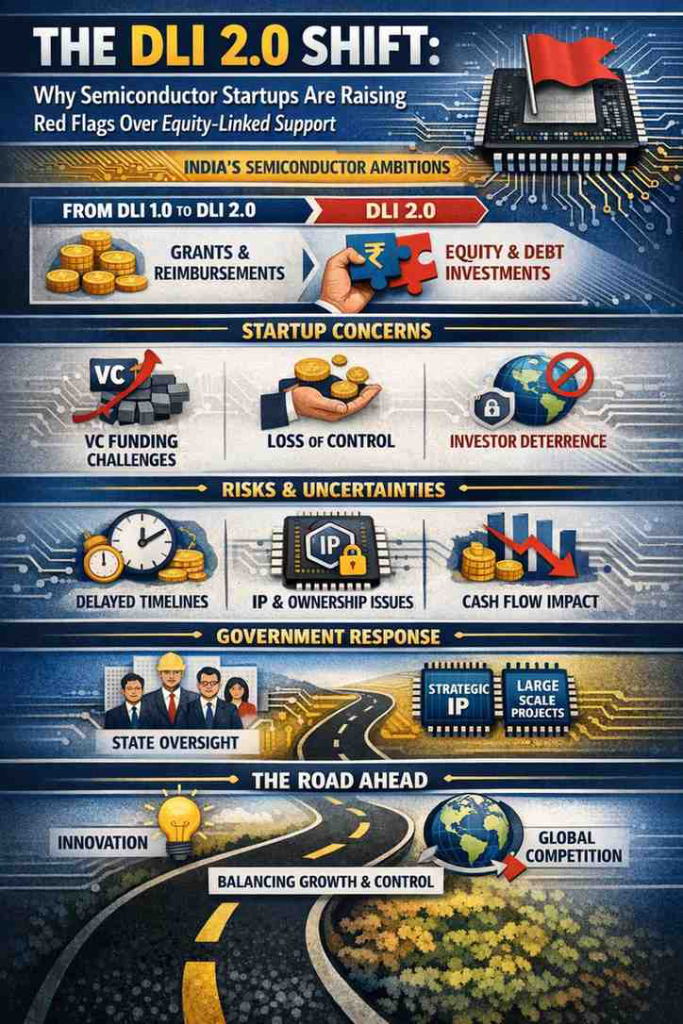
As India strives to transition from an emerging technology hub to a globally competitive semiconductor powerhouse, a fresh policy debate has erupted that could shape the country’s digital future. At the heart of this debate is the government’s plan to overhaul its flagship Design‑Linked Incentive (DLI) scheme into a revamped structure termed DLI 2.0, which pivots from traditional grant and reimbursement‑based support to a model tied to equity, debt, and strategic oversight. The shift has triggered concerns among semiconductor startups, warning that the new framework could constrain innovation, deter private capital, and slow India’s march toward semiconductor self‑reliance.
From DLI 1.0 to 2.0: Understanding the Transition
In its original iteration, launched under the Ministry of Electronics and Information Technology in 2021, DLI offered reimbursements of up to 50 % of eligible design costs and sales‑linked incentives to chip design startups, MSMEs, and domestic companies, alongside access to critical infrastructure like Electronic Design Automation (EDA) tools. Although modest relative to global programs, it was a vital lifeline. Yet, uptake lagged expectations due to the high cost of design, ownership restrictions, and limited foreign investment.
Policymakers now aim to evolve the scheme into DLI 2.0, shifting from simple cost reimbursement toward instruments tied to equity stakes, convertible debt, and increased government oversight. Proponents argue this ensures taxpayer money translates into strategic gains, particularly in IP ownership and commercialization outcomes.
Startups Voice Concern Over Equity-Linked Support
Despite government assurances, startup founders warn that a prescriptive equity model could undercut the very ecosystem it seeks to nurture. A primary concern is the effect on venture capital (VC) dynamics. Investors typically seek clear exit pathways, limited dilution, and alignment with global norms. Equity-linked state support could complicate fundraising, introduce bureaucratic oversight, and restrict flexibility in mergers, acquisitions, or redomiciling — making Indian startups less attractive compared with peers abroad.
“We welcome continued state support,” said one founder, “but it needs to be compatible with VC expectations. Cumbersome conditions on IP or commercialization rights will deter the funding we need to scale.” Some executives suggest non-dilutive, debt-linked instruments for companies past the R&D phase could be a more founder-friendly approach.
Risks to Continuity and Ecosystem Growth
Firms that achieved milestones under DLI 1.0 now face uncertainty about how DLI 2.0 will impact timelines and cash flow. In semiconductor design, delays are costly — outstanding payments to IP vendors, foundries, and packaging partners accumulate rapidly. Overly centralized IP residency and ownership rules could also dissuade foreign investors from deploying capital into Indian design firms, pushing them toward regions with more fluid capital markets.
Startup leaders advocate for a “light-touch” regulatory framework that safeguards national strategic interests without micromanaging ownership, commercialization pathways, or exit routes.
Government Perspective and Strategic Intent
Officials defend DLI 2.0 as necessary to protect public investment and retain strategic IP domestically. They argue the new framework will support larger, more complex design projects, potentially expanding beyond startups to module-level and system-level designs with clearer commercial paths. However, final policy contours remain under discussion, and approval timelines intersect with budgetary and political calendars.
Balancing State Oversight With Market Dynamism
This tension reflects a broader challenge for India’s semiconductor ambitions: how to balance state-led strategic oversight with the creative chaos and capital-driven dynamism that define global tech innovation. Countries like China have opted for massive government-led investment vehicles taking direct equity positions in semiconductor firms — a model with its own risks and benefits — underscoring the variety of approaches nations take in this critical sector.
The Stakes Ahead
As DLI 2.0 takes shape, the coming weeks and months will be crucial. For startups at the forefront of India’s semiconductor dreams, the stakes are high: the right balance could unlock a new era of design innovation and global competitiveness, while missteps could stall momentum and leave India trailing in a race where technology leadership increasingly defines economic and geopolitical power.
Add republicpost.in as a preferred source on google – click here
Last Updated on: Tuesday, January 27, 2026 11:10 am by Rishidhar Reddy | Published by: Rishidhar Reddy on Tuesday, January 27, 2026 11:10 am | News Categories: News
About The Author