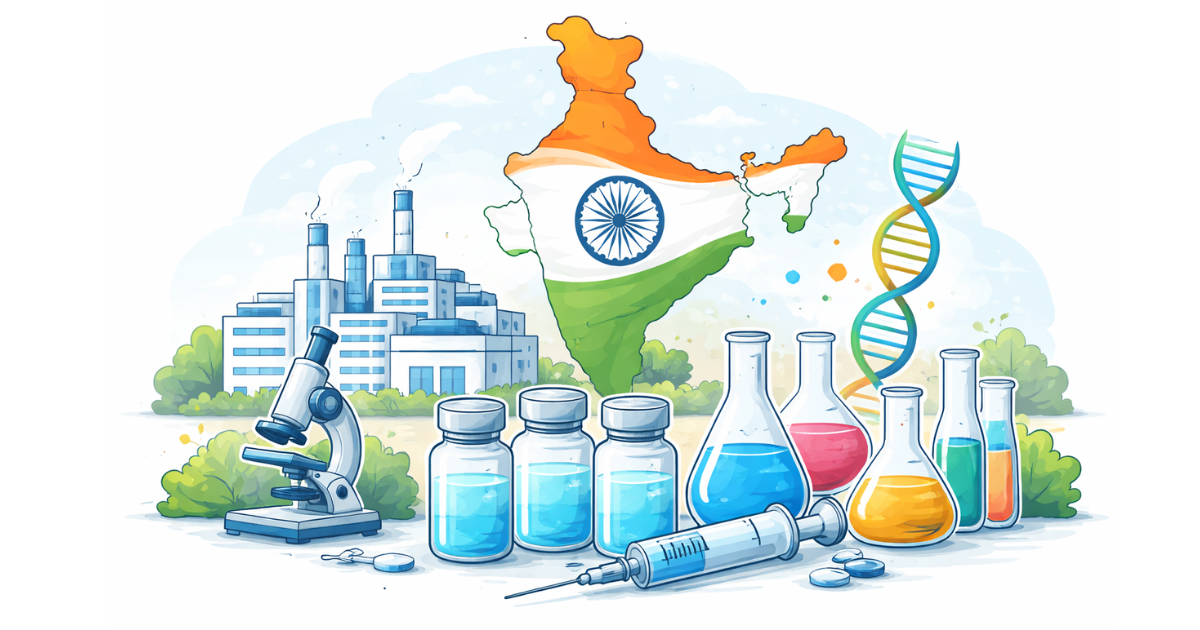
A simple illustration showing biopharmaceutical manufacturing facilities in India with vaccine vials, laboratory equipment, and DNA symbols representing healthcare innovation. Health 

Biopharma SHAKTI Scheme: What You Should Know About India’s New ₹10,000 Crore Healthcare Manufacturing Push

India is taking another decisive step toward strengthening its healthcare manufacturing ecosystem with the launch of the Biopharma SHAKTI Scheme, a ₹10,000 crore government-backed initiative aimed at transforming the country into a global hub for biopharmaceutical production. At a time when geopolitical disruptions, pandemic lessons, and supply chain vulnerabilities have reshaped global healthcare priorities, the scheme signals New Delhi’s intent to move decisively from dependence to dominance in critical biopharma segments. The initiative aligns with the broader vision of Atmanirbhar Bharat, but its scope goes far beyond import substitution. It…

Read More
DigiLocker 2026 interface showing digital documents such as Aadhaar, driving licence, academic certificates and health records stored securely on a smartphone. News 

Complete Guide to DigiLocker 2026: New Digital Services and Documents You Can Now Store Legally

As India’s digital governance ecosystem matures, DigiLocker in 2026 has emerged as far more than a paperless document repository. What began as a convenience-driven initiative under the Digital India programme has now evolved into a legally robust, citizen-centric digital vault that supports daily life, compliance, education, travel, healthcare and employment. With fresh upgrades, expanded document categories and deeper integration with government and private platforms, DigiLocker 2026 marks a decisive shift toward a fully trusted digital-first documentation system. What DigiLocker Means in 2026 DigiLocker today functions as an officially recognised platform…

Read More
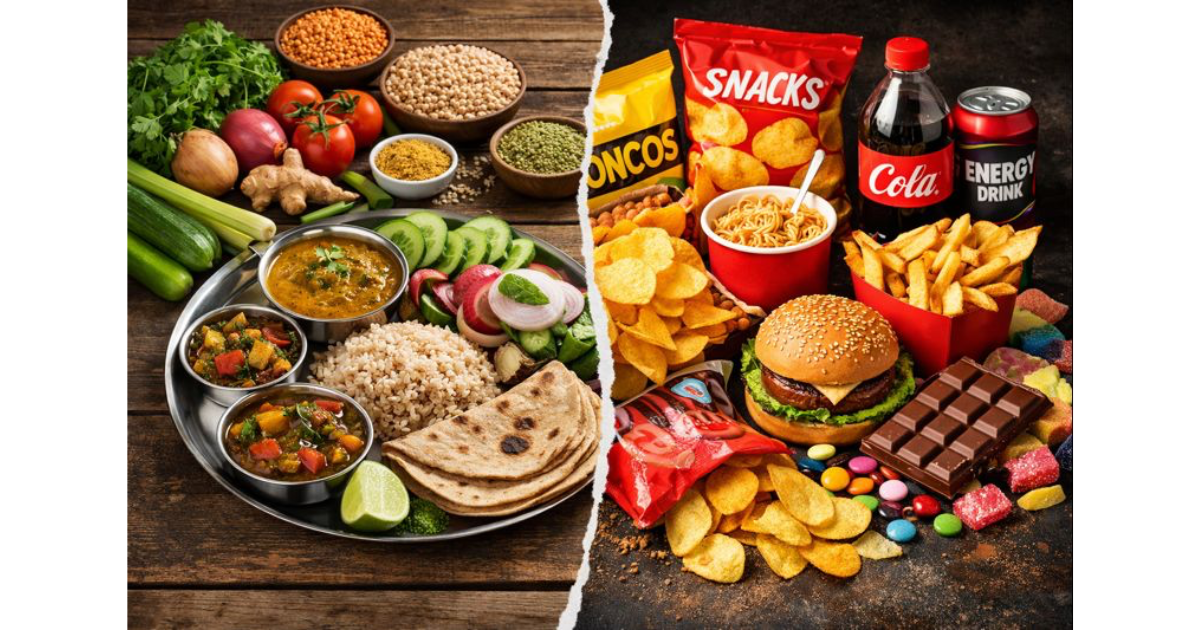
A contrasting visual showing a traditional Indian thali with fresh vegetables, grains, and pulses on one side, and brightly packaged ultra-processed foods like chips, sugary drinks, and instant noodles on the other, symbolising the growing nutrition crisis highlighted in Economic Survey 2026. News 

The Silent Crisis: Why Economic Survey 2026 Warns Against the Rising Consumption of Ultra-Processed Foods

The Economic Survey 2026, often read for its insights into growth projections, fiscal discipline, and sectoral performance, carries an unusually stark warning this year—one that goes beyond balance sheets and GDP numbers. Buried within its analysis of human capital and productivity is a clear signal of concern over India’s rapidly changing food habits, particularly the growing dependence on ultra-processed foods. The Survey frames this not merely as a health issue but as a long-term economic risk capable of undermining workforce productivity, increasing healthcare costs, and weakening demographic dividends. This warning…

Read More
Indian job market trends showing hiring shift towards skills over degrees with young professionals working on laptops and digital tools News 

What You Should Know About Job Market Trends in India as Hiring Focus Shifts to Skills Over Degrees

India’s job market is undergoing a fundamental transformation. For decades, academic degrees from reputed institutions were considered the primary gateway to stable employment and career growth. Today, that long-standing belief is steadily losing ground. Across sectors ranging from technology and manufacturing to media, healthcare and logistics, employers are increasingly prioritising skills, practical experience and adaptability over formal educational qualifications. This shift is not sudden, nor is it limited to start-ups or niche industries. Large corporations, multinational companies and even public sector-linked enterprises are revising hiring frameworks to reflect the realities…

Read More
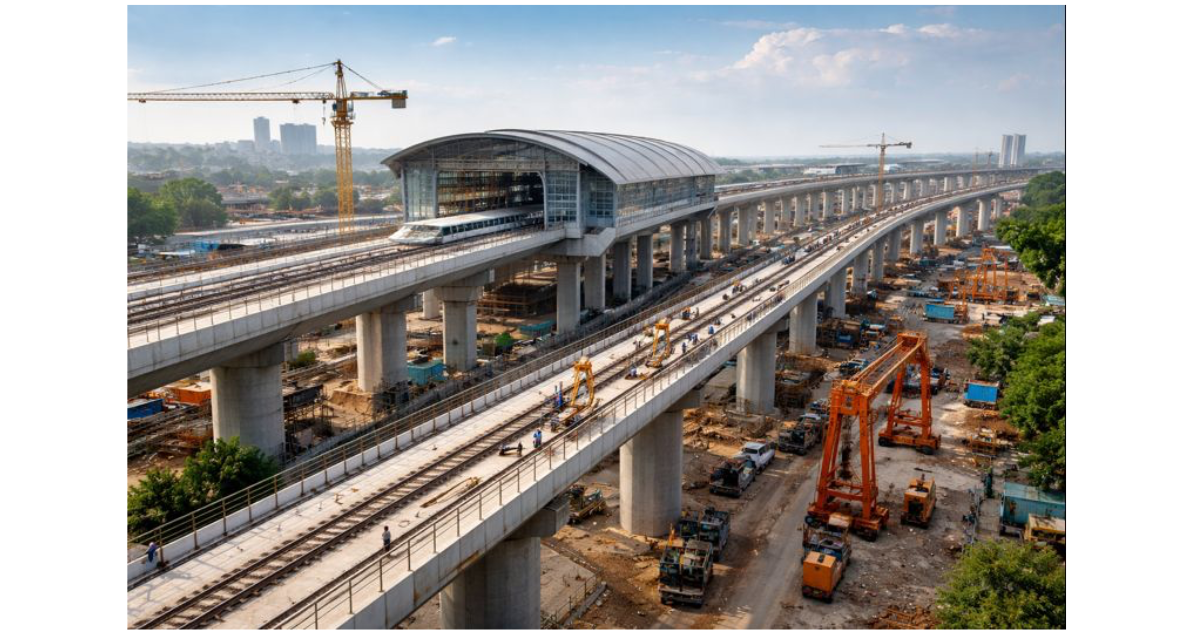
A wide-angle view of India’s Mumbai–Ahmedabad High Speed Rail corridor under construction, showing elevated viaducts, newly built bullet train stations, and ongoing track-laying work with cranes and workers on site. News 

Bullet Train Progress Report: MAHSR Project Crosses 55% Physical Completion; Key Stations Ready for Trials

India’s first high-speed rail corridor, the Mumbai–Ahmedabad High Speed Rail (MAHSR) project, has crossed a significant milestone with over 55 per cent physical completion achieved, according to the latest official updates. Conceived as a transformational leap in inter-city travel, the bullet train project is now entering a decisive phase where visible infrastructure, systems integration, and station readiness are beginning to align with its long-term vision. Backed by Japanese Shinkansen technology and executed by the National High Speed Rail Corporation Limited (NHSRCL), the project is widely seen as a test case…

Read More
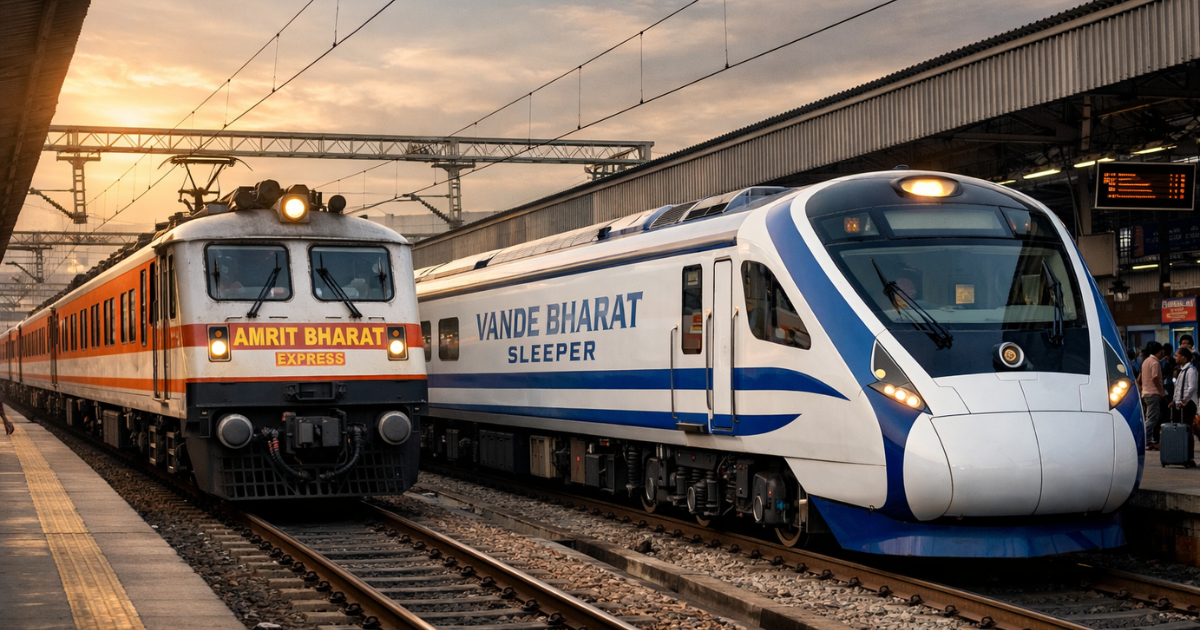
Modern Indian Railways trains including Amrit Bharat and Vande Bharat Sleeper standing at a station, symbolising India’s railway modernisation plans for 2026. News 

Indian Railways 2026: What You Should Know About the New Amrit Bharat and Vande Bharat Sleeper Trains

Indian Railways is entering a transformative phase in 2026, reshaping long-distance travel with the introduction of Amrit Bharat trains and the much-awaited Vande Bharat Sleeper services. Together, these two categories signal a strategic shift: faster trains for the masses and premium overnight travel for the growing middle class. As India expands its railway infrastructure at an unprecedented pace, these trains are designed to bridge comfort gaps, improve efficiency, and redefine how millions experience rail journeys. A New Chapter in Rail Modernisation For decades, Indian Railways has balanced scale with affordability,…

Read More
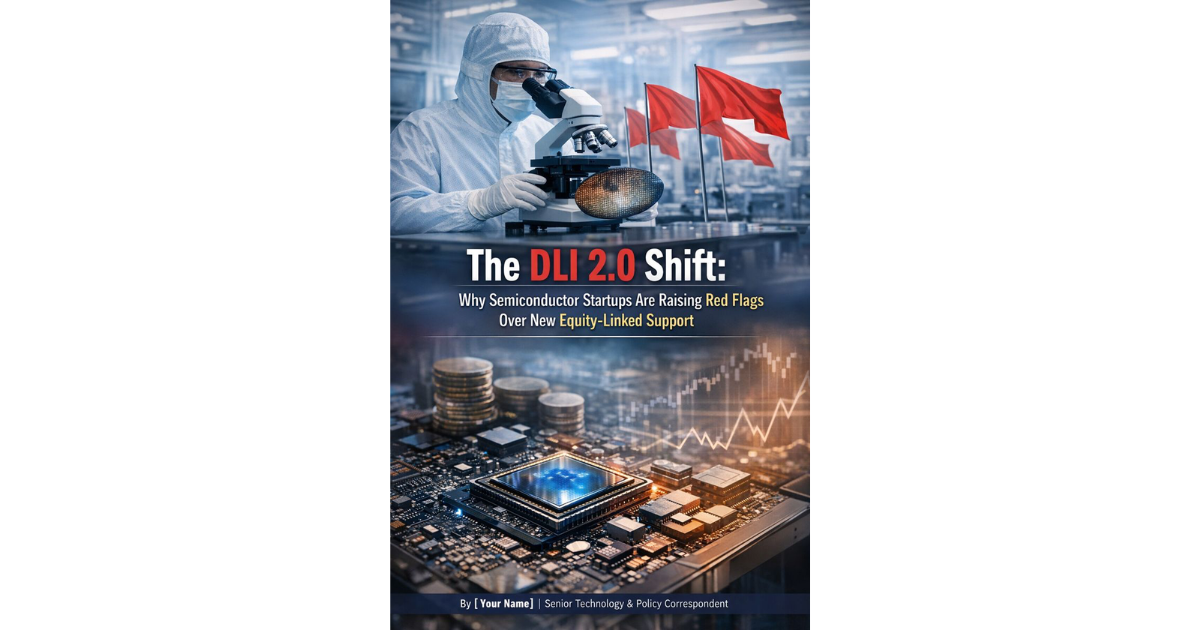
"Infographic comparing India’s DLI 1.0 and DLI 2.0 semiconductor policies, showing equity-linked support, VC concerns, government objectives, and potential startup risks with icons of chips, money, graphs, and policy documents." News 

The DLI 2.0 Shift: Why Semiconductor Startups are Raising Red Flags Over New Equity‑Linked Support

India’s Semiconductor Ambitions Meet Policy Tension As India strives to transition from an emerging technology hub to a globally competitive semiconductor powerhouse, a fresh policy debate has erupted that could shape the country’s digital future. At the heart of this debate is the government’s plan to overhaul its flagship Design‑Linked Incentive (DLI) scheme into a revamped structure termed DLI 2.0, which pivots from traditional grant and reimbursement‑based support to a model tied to equity, debt, and strategic oversight. The shift has triggered concerns among semiconductor startups, warning that the new framework could constrain innovation, deter…

Read More
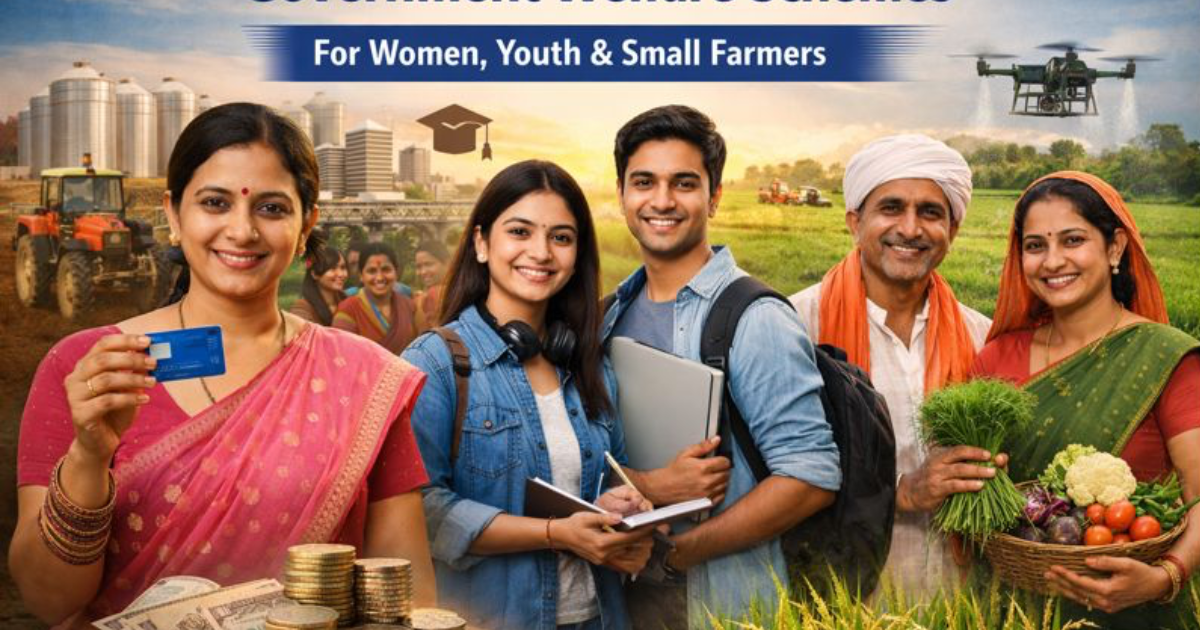
Infographic showing government welfare schemes for women, youth, and small farmers in India, highlighting financial assistance, skill development programs, and agricultural support initiatives. News 

What You Need to Know About Government Welfare Schemes Aimed at Women, Youth, and Small Farmers

As India navigates economic transitions shaped by inflation pressures, job market shifts, and climate-linked agricultural risks, government welfare schemes aimed at women, youth, and small farmers continue to play a critical role in supporting livelihoods and promoting inclusive growth. From direct income support and skill development to health, education, and agricultural security, these schemes form the backbone of the country’s social protection framework. With both the Union government and states expanding and refining welfare outreach, understanding how these initiatives work — and who they are designed to help — has…

Read More
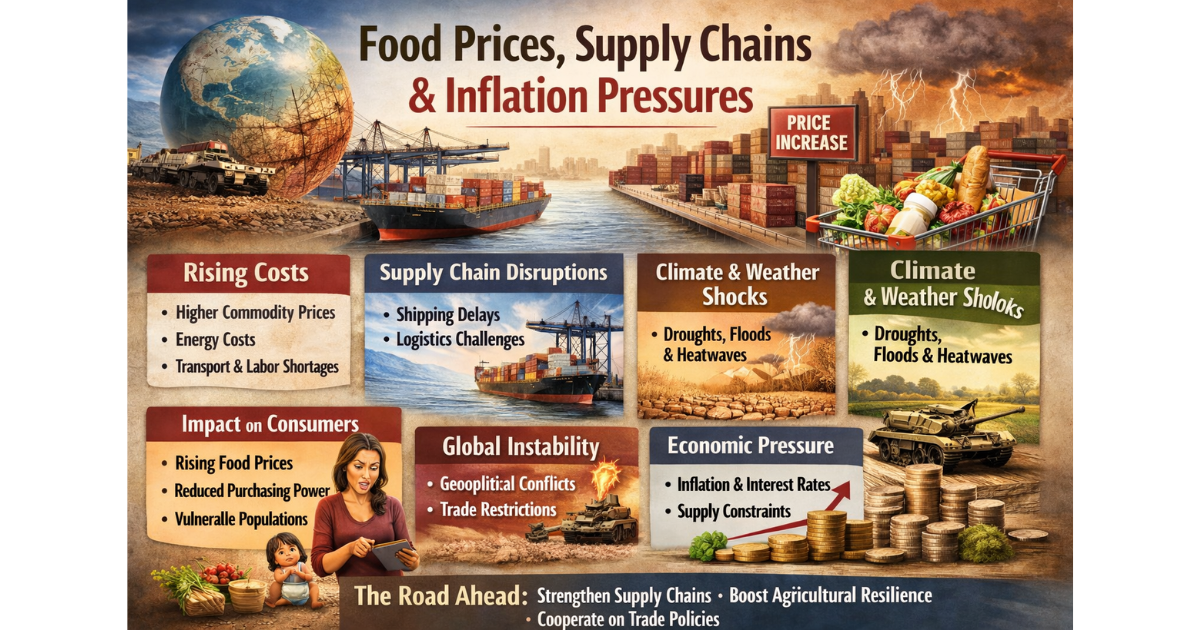
Infographic titled “Food Prices, Supply Chains & Inflation Pressures” showing a global supply chain with cargo ships, shipping containers, farmland, and a grocery cart with rising prices. Sections highlight rising costs, supply chain disruptions, climate News 

What You Need to Know About Food Prices, Supply Chains, and Inflation Pressures

In nearly every country around the world — from urban markets to rural hinterlands — families are feeling the pinch at the grocery store. Food prices, long a barometer of economic wellbeing, have become a headline issue, shaping household budgets, national policymaking, and global geopolitics. Understanding why food is costing more — and why prices may stay volatile — means unpacking the complex interplay between global supply chains, inflationary pressures, climate events, geopolitical shocks, and structural economic forces. 1. Food Prices: Not Just a Short-Term Spike — a Structural Shift Although…

Read More
Infographic summarizing the JEE Main 2026 January 21 Shift 1 exam review. The image highlights Physics, Chemistry, and Mathematics sections with key topics: Mechanics, Modern Physics, Thermodynamics & Optics for Physics; Physical, Organic, Inorganic, NCERT-based questions for Chemistry; and Calculus, Coordinate Geometry, Algebra, Trigonometry, and 3D Geometry for Mathematics. It includes a table showing question distribution and difficulty levels, and icons representing student feedback: time management importance, NCERT focus in Chemistry, and lengthy Maths section. The design uses blue, orange, and white color scheme. News 

JEE Main 2026: In‑Depth Coverage of the January 21 Shift‑1 Question Paper

The National Testing Agency (NTA) conducted the JEE Main 2026 Session 1 Paper 1 on January 21, 2026, with the first shift running from 9 am to 12 pm. Across India, tens of thousands of engineering aspirants appeared for the BE/BTech entrance exam, designed to assess readiness in Physics, Chemistry, and Mathematics. Early post‑exam analyses and student feedback have now provided a credible, subject‑wise understanding of the paper’s content, difficulty level, and emerging trends. Overall Difficulty and Student Reaction Across reports, the January 21 Shift‑1 question paper was perceived as moderately challenging, with variation among the three…

Read More