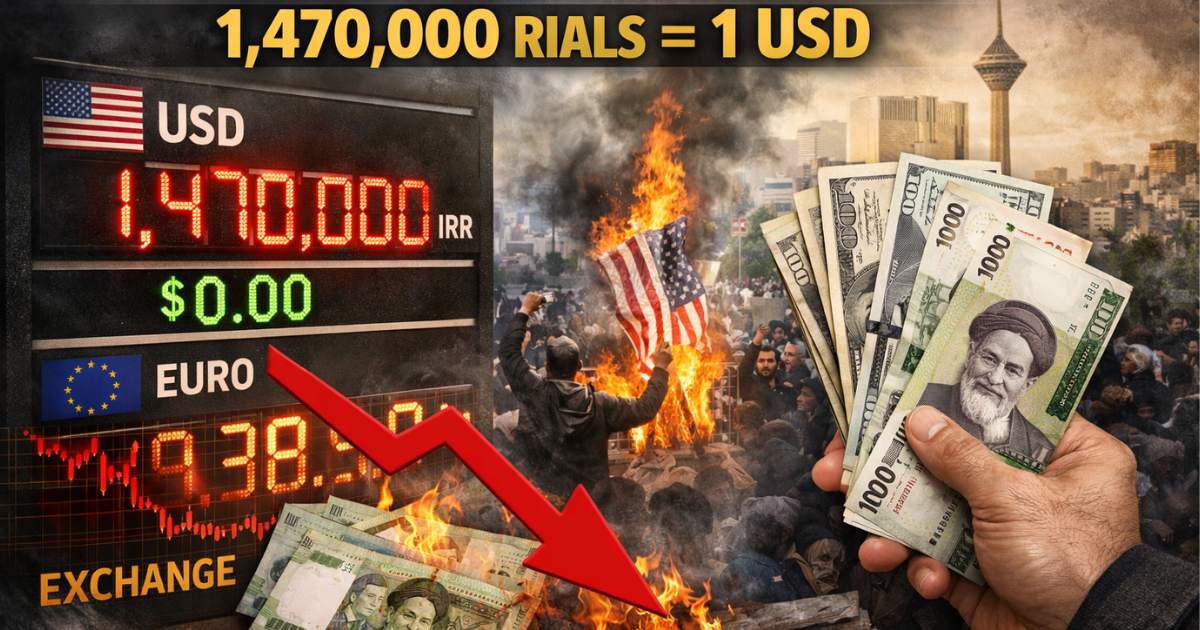
Record-Low Rial vs USD
Iran Currency Plunges to Historic Lows Against the U.S. Dollar — Latest Developments
TEHRAN — Iran’s national currency, the rial (IRR), has collapsed to unprecedented lows against the U.S. dollar (USD), deepening an already profound economic crisis and fuelling widespread social unrest across the country.
According to multiple market sources, the rial is now trading at around 1.45 million to 1.47 million rials per U.S. dollarin unofficial or free-market exchanges — record levels that underscore the severity of the currency’s depreciation.
Historic Depreciation and Economic Context
The dramatic slide in the value of Iran’s currency reflects cumulative pressures from persistent inflation, prolonged international sanctions, and strained foreign-exchange reserves.
In late 2025 and early 2026, the rial’s value in the free market weakened rapidly, surpassing 1.4 million rials per USD, a significant jump from earlier periods when the rate hovered far below this level. On digital currency converters and global financial screens, the rial’s value is now so diminished that it often displays as “$0.00” due to rounding, a technical outcome of its severe depreciation rather than a literal loss of all value. The currency’s collapse has unfolded against a backdrop of high inflation, which official and market estimates place at more than 40% annually, and has translated into sharply higher costs for food, fuel, and other essential consumer goods.
Drivers of the Currency Crash
Economic analysts and market observers identify several verified factors behind the rial’s collapse:
U.S. and International Sanctions: Long-standing sanctions targeting Iran’s oil exports, banking sector, and access to global financial markets have constrained foreign currency inflows, driving up demand for hard currencies like the U.S. dollar.
Inflationary Pressures: Spiralling inflation has eroded purchasing power, prompting businesses and households to seek refuge in foreign currency or hard assets.
Economic Policy Shifts: Reduction or removal of subsidised exchange rates has increased reliance on free-market pricing, intensifying downward pressure on the rial.
Public Confidence Erosion: Loss of confidence in the rial as a store of value has further fuelled its rapid depreciation.
Social and Political Repercussions
The currency collapse has coincided with a surge in nationwide protests, originally sparked by economic frustration but increasingly encompassing broader political discontent.
Merchants and bazaar traders, long considered pillars of support for Iran’s establishment, have openly criticised the clerical leadership as inflation and currency instability erode livelihoods.
Protests that began in the Grand Bazaar in late December 2025 over rising costs have since spread across more than 180 cities, drawing diverse segments of society.
International media and human rights observers highlight that the unrest has intensified social tensions and resulted in violent confrontations between demonstrators and security forces, contributing to a broader sense of instability.
Government and Policy Response
Iranian authorities have publicly acknowledged the economic challenges but face significant constraints:
President Masoud Pezeshkian’s government has moved to curtail some subsidised currency allocations, part of a broader effort to reform foreign exchange policy.
In late 2025, the central bank governor resigned amid mounting currency pressures, reflecting internal strain on financial management.
Despite these measures, persistent inflation and limited access to foreign exchange have continued to drive the rial’s free-market decline.
Broader Impact
The devaluation of the rial has had tangible consequences for everyday life in Iran:
Cost of Living: Prices for basic necessities have risen sharply, squeezing household budgets and reducing real incomes.
Trade and Business: Importers face higher costs for foreign-denominated goods, complicating supply chains and contributing to shortages in some sectors.
Investor Sentiment: Domestic and international investors are increasingly cautious, as currency volatility feeds broader economic uncertainty.
Also read :https://republicpost.in/indias-convincing-win-over-usa-in-u-19-world-cup-opener/
Last Updated on: Friday, January 16, 2026 12:46 pm by Rishidhar Reddy | Published by: Rishidhar Reddy on Friday, January 16, 2026 12:46 pm | News Categories: News
About The Author