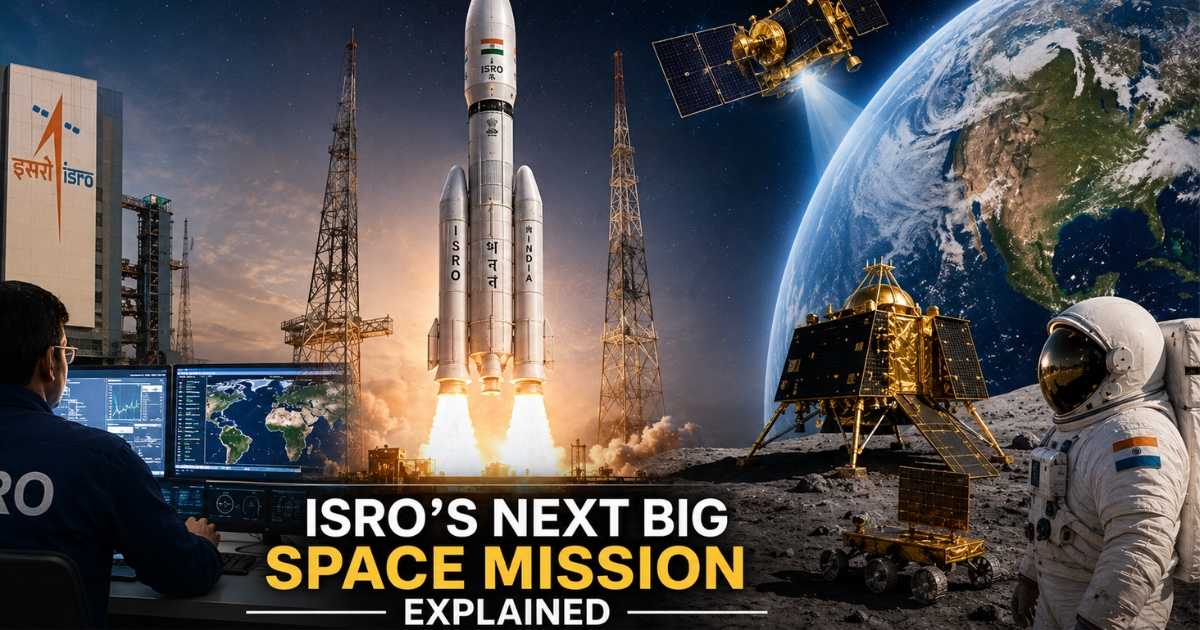
ISRO’s Next Big Space Mission Explained
India Prepares For Another Major Leap In Space Exploration
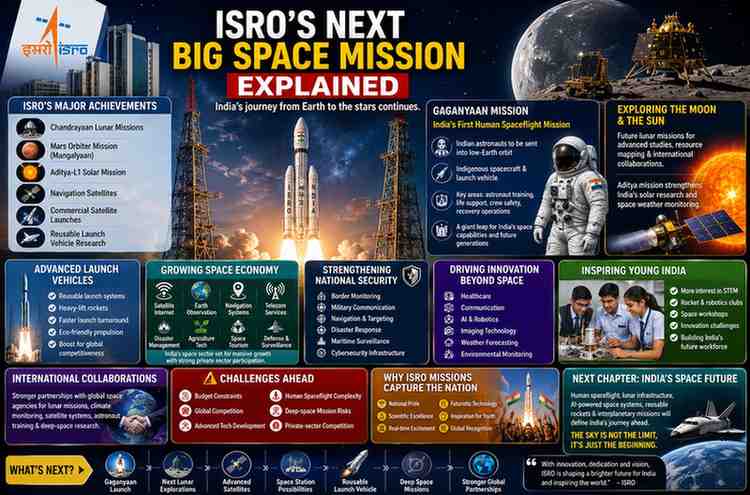
India’s space ambitions are once again capturing national attention as the Indian Space Research Organisation (ISRO) prepares for its next major mission aimed at expanding the country’s capabilities in deep space exploration, advanced satellite technology, scientific research, and future human spaceflight programs. From lunar exploration and solar observation to next-generation launch systems and ambitious interplanetary goals, ISRO’s upcoming projects are generating massive curiosity across India and among global space enthusiasts.
Searches related to “ISRO next mission,” “India space mission,” “Gaganyaan update,” “ISRO launch today,” “Indian astronauts,” and “India Moon mission” are trending heavily across Google, YouTube, and social media platforms as millions follow India’s rapidly growing role in the global space sector.
Space analysts say ISRO’s future roadmap reflects India’s transformation from a regional satellite-launching nation into a major global space power with ambitions extending far beyond Earth’s orbit.
ISRO’s Growing Global Importance
Over the past decade, ISRO has emerged as one of the world’s most respected space agencies because of its ability to deliver complex missions at comparatively lower costs while maintaining high success rates.
India’s achievements including:
- Chandrayaan lunar missions
- Mars Orbiter Mission (Mangalyaan)
- Aditya-L1 solar mission
- navigation satellites
- commercial satellite launches
- reusable launch vehicle research
have significantly elevated the country’s global scientific reputation.
Experts say ISRO’s success has also boosted India’s soft power internationally by demonstrating advanced engineering capability, scientific talent, and cost-efficient innovation.
Gaganyaan Mission Remains India’s Biggest Human Spaceflight Project
One of ISRO’s most anticipated upcoming programs continues to be the Gaganyaan mission, India’s first human spaceflight initiative.
The mission aims to send Indian astronauts into low-Earth orbit aboard an indigenous spacecraft developed largely within India.
If successful, India would become one of the few countries in the world capable of independently launching humans into space.
The project involves:
- astronaut training
- crew escape systems
- life-support technology
- orbital spacecraft systems
- human-rated launch vehicles
- recovery operations
ISRO has already conducted multiple test programs related to crew safety and spacecraft reliability.
Space experts say Gaganyaan represents more than a symbolic achievement because it could accelerate advancements in:
- aerospace manufacturing
- robotics
- artificial intelligence
- defense technology
- materials science
- medical research
- space medicine
The mission is also expected to inspire a new generation of Indian students toward careers in science, engineering, and space technology.
India’s Moon Ambitions Continue Expanding
Following the global success of Chandrayaan missions, ISRO is expected to continue focusing heavily on lunar exploration.
India’s Moon program has gained international recognition because of its scientific achievements and relatively low operational costs.
Future lunar goals may include:
- advanced rover technology
- long-duration lunar studies
- Moon surface analysis
- resource mapping
- international lunar collaborations
- robotic exploration systems
Space researchers believe the Moon could become strategically important in the future because of potential water ice reserves, scientific research opportunities, and future deep-space mission planning.
India’s successful lunar landings have already positioned the country among elite space powers.
Aditya Mission Boosted India’s Solar Research Capability
ISRO’s solar observation efforts have also generated strong scientific interest.
The Aditya mission was designed to study the Sun’s outer atmosphere, solar winds, magnetic storms, and space weather activity.
Solar research is becoming increasingly important globally because solar disturbances can affect:
- satellite communications
- GPS systems
- aviation technology
- internet infrastructure
- electricity grids
- military communication systems
Experts say India’s growing investment in solar science reflects the country’s increasing focus on advanced space research rather than only satellite deployment.
New Launch Vehicles Could Transform India’s Space Industry
ISRO is also developing more advanced launch technologies to improve payload capability and reduce mission costs.
Future rocket programs may focus on:
- reusable launch systems
- heavy-lift rockets
- faster launch turnaround
- environmentally safer propulsion systems
- commercial launch competitiveness
India’s private space sector is also expanding rapidly alongside ISRO’s programs.
Space startups across the country are now working on:
- satellite manufacturing
- launch services
- propulsion systems
- Earth observation technology
- defense-space applications
- communication infrastructure
Industry experts believe India’s space economy could grow significantly over the next decade as both government and private players increase investment.
Why ISRO Missions Generate Massive Public Interest
ISRO missions consistently dominate online conversations because they combine:
- national pride
- scientific achievement
- futuristic technology
- global competition
- dramatic visuals
- real-time launch excitement
Rocket launches, spacecraft animations, countdown events, and mission control celebrations often go viral across social media platforms within minutes.
YouTube livestreams of ISRO launches frequently attract millions of viewers nationwide.
Space-related content also performs strongly on Google Discover because audiences actively search for:
- launch dates
- astronaut updates
- Moon missions
- satellite technology
- rocket science
- space exploration news
India’s Space Economy Could Expand Rapidly
Experts believe India’s space sector may become one of the country’s most important future industries.
The growing commercial space market includes opportunities in:
- satellite internet
- climate monitoring
- agricultural technology
- navigation systems
- disaster management
- defense surveillance
- telecommunications
- space tourism
Government reforms encouraging private-sector participation have already increased startup activity in India’s space ecosystem.
Several analysts believe India could become a major global launch hub because of its cost-effective engineering capabilities.
ISRO’s Role In National Security Is Increasing
Modern space programs are no longer limited to scientific exploration alone.
Satellites now play a critical role in:
- border monitoring
- military communication
- navigation systems
- weather forecasting
- disaster response
- maritime surveillance
- cybersecurity infrastructure
India’s expanding space capability is therefore viewed as strategically important from both technological and national security perspectives.
Experts say future geopolitical competition may increasingly involve space technology leadership.
Space Missions Are Driving Scientific Innovation
ISRO’s projects are also accelerating innovation in multiple sectors beyond space exploration itself.
Technologies developed for space programs often contribute to improvements in:
- healthcare systems
- remote communication
- imaging technology
- weather forecasting
- transportation systems
- environmental monitoring
- artificial intelligence
Scientists say investment in space research frequently produces long-term economic and technological benefits across civilian industries.
Students And Young Scientists Closely Following ISRO
Interest in astronomy, robotics, coding, and aerospace engineering has grown sharply among Indian students because of ISRO’s visibility.
Schools and universities increasingly organize:
- rocket science workshops
- astronomy clubs
- satellite-building competitions
- coding programs
- STEM education events
Many educators believe ISRO’s success stories are helping create stronger scientific awareness among younger generations.
The popularity of space documentaries, science explainers, and launch livestreams has also increased significantly across digital platforms.
International Collaborations Could Expand
India’s growing credibility in the space sector may lead to stronger international partnerships in the coming years.
Potential future collaborations may involve:
- lunar exploration programs
- Earth observation satellites
- climate monitoring systems
- astronaut training
- deep-space research
- commercial launch partnerships
Global space agencies are increasingly viewing India as an important technological partner because of its engineering efficiency and mission reliability.
Climate Monitoring Becoming A Major Priority
Space technology is also becoming essential for climate observation and disaster management.
Satellites help monitor:
- cyclones
- floods
- droughts
- glacier movement
- forest changes
- ocean conditions
- pollution levels
Experts say climate-focused satellite systems will become increasingly important as extreme weather events grow more frequent.
India’s weather forecasting accuracy has already improved significantly because of satellite technology advancements.
Challenges ISRO Still Faces
Despite major achievements, ISRO also faces several long-term challenges.
These include:
- budget constraints
- global competition
- advanced technology development
- human spaceflight complexity
- deep-space mission risks
- private-sector competition
Space missions remain extremely expensive and technically demanding.
Analysts say maintaining consistent investment in research, infrastructure, and talent development will remain crucial for India’s long-term ambitions.
Social Media Has Turned ISRO Into A Digital Phenomenon
ISRO launches now regularly trend across:
- Instagram Reels
- YouTube Shorts
- X discussions
- educational channels
- science podcasts
- meme culture
Popular viral content includes:
- rocket launch clips
- spacecraft animations
- astronaut training videos
- mission countdowns
- satellite deployment visuals
- Moon landing simulations
Science communication creators are also helping younger audiences understand complex missions through simplified digital content.
Why India’s Space Future Looks Important
Experts believe India is entering a major expansion phase in space science and commercial aerospace development.
Key future growth areas may include:
- human spaceflight
- lunar infrastructure
- satellite internet
- AI-driven space systems
- reusable rockets
- interplanetary missions
- private-sector launch ecosystems
The combination of government investment, engineering talent, digital infrastructure, and growing public interest is expected to strengthen India’s global position in the space economy.
ISRO’s Next Chapter Could Shape India’s Technological Future
As India prepares for its next major space missions, ISRO continues symbolizing the country’s scientific ambition, engineering capability, and technological progress on the global stage.
From Moon exploration and astronaut missions to satellite innovation and deep-space research, India’s expanding space program is influencing education, industry, national security, digital infrastructure, and international scientific collaboration.
With millions closely tracking every upcoming launch and mission update, ISRO’s next big step may not only redefine India’s space ambitions but also shape the future of the country’s innovation-driven economy in the years ahead.
Last Updated on: Friday, May 22, 2026 3:55 pm by Pushkarini Annabathula | Published by: Pushkarini Annabathula on Friday, May 22, 2026 3:48 pm | News Categories: Latest
About The Author