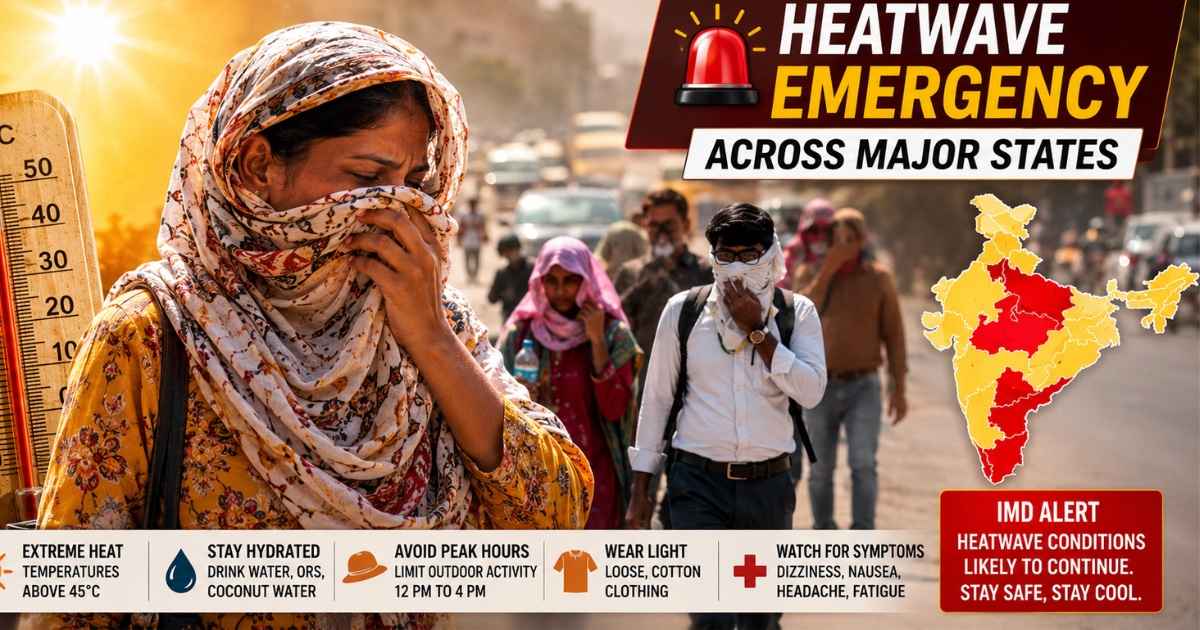
Doctors Warn Indians Against These Dangerous Heatwave Mistakes
India Heatwave Alert Today: Health Tips, IMD Warnings & State Updates
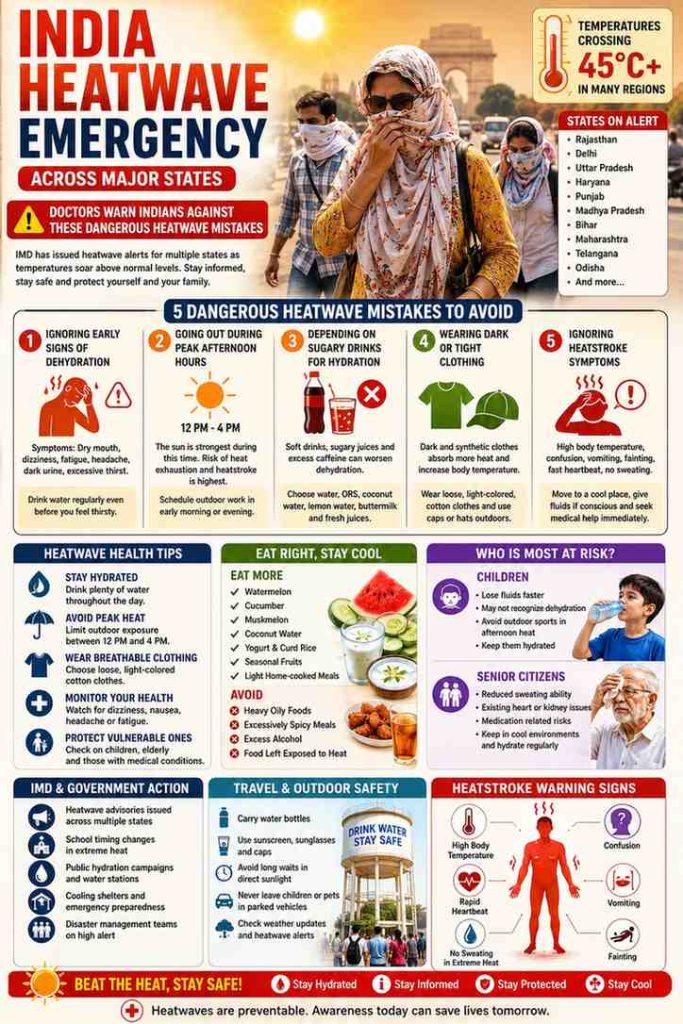
India is facing another intense summer season as multiple states continue experiencing severe heatwave conditions, rising daytime temperatures, dry weather, and increasing public health concerns. From Delhi, Rajasthan, Uttar Pradesh, Bihar, Maharashtra, Telangana, Odisha, Madhya Pradesh, and parts of South India, extreme heat is disrupting daily life, affecting work productivity, travel, public health systems, and electricity demand.
As temperatures cross dangerous levels in several regions, doctors, weather experts, and disaster management authorities are warning citizens against common heatwave mistakes that could increase the risk of dehydration, heat exhaustion, and life-threatening heatstroke.
Search trends related to “heatwave India,” “summer alert,” “IMD warning,” “heatstroke symptoms,” and “how to stay safe during extreme heat” are rapidly rising online as people look for practical ways to protect themselves and their families.
Health experts say India’s growing urban heat pressure, climate variability, and prolonged dry conditions are making heatwaves more frequent and intense, turning extreme summer temperatures into a major public safety concern.
IMD Issues Heatwave Alerts Across Multiple States
The India Meteorological Department (IMD) has issued heatwave warnings for several states where temperatures continue remaining significantly above normal seasonal averages.
Cities across northwestern and central India are recording extremely high daytime temperatures, with some areas crossing 45°C during peak afternoon hours.
According to weather experts, the combination of dry winds, reduced cloud cover, and delayed rainfall patterns is contributing to severe heating conditions across urban and rural regions alike.
States currently witnessing intense heat conditions include:
- Rajasthan
- Delhi
- Uttar Pradesh
- Haryana
- Punjab
- Madhya Pradesh
- Bihar
- Maharashtra
- Telangana
- Odisha
Meteorologists warn that prolonged exposure to such temperatures can become dangerous, especially for vulnerable populations including children, elderly citizens, outdoor workers, and people with pre-existing medical conditions.
Why India’s Heatwaves Are Becoming More Dangerous
Experts say heatwaves are no longer isolated weather events but are increasingly becoming recurring climate-related emergencies.
A heatwave occurs when temperatures remain abnormally high for consecutive days, placing pressure on the body’s ability to cool itself naturally through sweating and hydration.
Medical researchers say prolonged heat exposure can impact:
- Blood circulation
- Heart function
- Kidney health
- Brain activity
- Respiratory systems
- Electrolyte balance
Extreme temperatures can also worsen existing illnesses including diabetes, hypertension, asthma, and cardiovascular conditions.
Environmental experts believe rising urbanization, concrete-heavy infrastructure, shrinking green spaces, and changing climate patterns are intensifying heat stress across Indian cities.
Doctors Warn Against These Dangerous Heatwave Mistakes
1. Ignoring Early Signs of Dehydration
Doctors say many people underestimate dehydration during summer.
Early symptoms often include:
- Dry mouth
- Dizziness
- Fatigue
- Headache
- Muscle weakness
- Dark-colored urine
- Excessive thirst
Medical professionals warn that continuing outdoor activity despite these signs can rapidly worsen physical stress and increase heatstroke risk.
Experts recommend drinking water regularly throughout the day rather than waiting until thirst becomes severe.
2. Going Outdoors During Peak Afternoon Hours
One of the most dangerous mistakes during heatwaves is direct exposure to sunlight between 12 PM and 4 PM.
This period typically records the highest temperatures and strongest solar radiation.
Outdoor workers including:
- Construction laborers
- Delivery workers
- Street vendors
- Traffic police
- Farmers
- Daily wage workers
face particularly high risk during this period.
Doctors recommend scheduling outdoor tasks during early morning or evening hours whenever possible.
3. Depending on Sugary Drinks for Hydration
Health experts warn that many cold beverages marketed during summer do not provide effective hydration.
Excessive intake of:
- Soft drinks
- Sugary packaged juices
- Energy drinks
- Excess caffeine
can actually worsen dehydration in some cases.
Doctors instead recommend:
- Plain drinking water
- ORS solutions
- Coconut water
- Lemon water
- Buttermilk
- Fresh fruit juices without added sugar
Maintaining electrolyte balance becomes especially important during prolonged heat exposure.
4. Wearing Dark or Tight Clothing
Doctors say clothing choices directly affect the body’s cooling ability.
Experts advise people to wear:
- Loose cotton clothing
- Light-colored fabrics
- Breathable materials
- Caps or hats outdoors
Dark synthetic clothes absorb more heat and reduce airflow, increasing body temperature rapidly.
Children and elderly citizens are especially vulnerable to overheating in poorly ventilated clothing.
5. Ignoring Heatstroke Symptoms
Heatstroke is considered a medical emergency that requires immediate attention.
Common warning signs include:
- Extremely high body temperature
- Confusion or disorientation
- Rapid heartbeat
- Vomiting
- Difficulty breathing
- Fainting
- Lack of sweating despite heat exposure
Doctors warn that delayed treatment can become life-threatening.
If someone shows heatstroke symptoms, experts advise:
- Moving them to a cool environment
- Applying wet cloths
- Using fans or cool air
- Providing fluids if conscious
- Seeking emergency medical care immediately
Why Cities Feel Hotter Than Before
Urban areas across India are increasingly experiencing what environmental experts call the “urban heat island effect.”
Concrete roads, glass buildings, heavy traffic, pollution, and shrinking tree cover trap heat within cities, causing temperatures to remain elevated even after sunset.
Metro cities including:
- Delhi
- Mumbai
- Hyderabad
- Bengaluru
- Chennai
- Kolkata
often experience extremely uncomfortable heat conditions because of dense infrastructure and limited natural cooling.
Urban planners say expanding green cover and improving ventilation systems will become increasingly important in future city planning.
Children and Senior Citizens Face Higher Risks
Heatwave Risks for Children
Children are more vulnerable because they lose fluids faster and may not recognize dehydration symptoms early.
Doctors recommend:
- Frequent hydration
- Avoiding outdoor sports during afternoon hours
- Using lightweight clothing
- Monitoring signs of fatigue or dizziness
Schools in some regions have also adjusted schedules due to extreme temperatures.
Elderly Citizens Need Extra Protection
Senior citizens may face increased risk because of:
- Reduced sweating ability
- Existing heart conditions
- Kidney stress
- Medication-related dehydration
Health experts advise families to ensure elderly relatives remain indoors in cool environments with regular hydration.
Heatwaves Are Impacting Daily Productivity
Extreme temperatures are also affecting work efficiency, mental concentration, and physical endurance.
Experts say heat stress can reduce:
- Productivity
- Sleep quality
- Attention span
- Mood stability
- Physical performance
Factory workers, office employees, students, gig workers, drivers, and delivery staff often experience exhaustion more quickly during prolonged heat conditions.
Economic experts note that heatwaves can also impact:
- Construction activity
- Agricultural productivity
- Transport systems
- Electricity demand
- Healthcare costs
Rising AC Usage Creates Additional Challenges
Air conditioner and cooler usage has surged sharply across India as temperatures rise.
While cooling systems help reduce heat-related illness, doctors warn against:
- Sudden temperature changes
- Poorly maintained AC systems
- Very cold indoor settings
- Inadequate room ventilation
Moving repeatedly between intense outdoor heat and extremely cold indoor environments may trigger headaches, fatigue, and respiratory discomfort.
Electricity demand also rises sharply during heatwaves, placing pressure on power infrastructure in several states.
Foods Doctors Recommend During Extreme Heat
Nutrition experts advise people to focus on hydration-rich diets during summer.
Recommended foods include:
- Watermelon
- Cucumber
- Muskmelon
- Coconut water
- Yogurt
- Seasonal fruits
- Light home-cooked meals
- Curd rice
Doctors recommend avoiding:
- Heavy oily foods
- Excessively spicy meals
- Excess alcohol
- Food left exposed to heat for long periods
Heat also increases the risk of food spoilage and bacterial contamination.
Travelers Face Increased Heatwave Risks
Travel during peak summer conditions requires extra precautions.
Experts advise travelers to:
- Carry water bottles
- Use sunscreen
- Wear sunglasses and caps
- Track weather alerts
- Avoid prolonged waiting under direct sunlight
Passengers at railway stations, bus terminals, and airports may face additional discomfort during peak afternoon hours.
Road safety experts also warn against leaving children or pets inside parked vehicles, even briefly, as vehicle interiors can heat up dangerously within minutes.
Social Media Is Amplifying Heatwave Awareness
Heatwave-related videos and health content are trending heavily across social media platforms.
Popular short-form content currently includes:
- Heatstroke warning signs
- Summer survival hacks
- Best cooling foods
- Hydration tips
- Skin protection advice
- Emergency heatwave precautions
Doctors say social media can help spread awareness quickly, especially among younger audiences.
However, experts also caution people against relying on unverified medical advice circulating online.
Climate Experts Warn of More Frequent Heatwaves
Climate researchers believe India may witness increasingly intense summers in the coming years.
Experts say several factors are contributing to rising heat risk:
- Climate change
- Urban expansion
- Reduced green cover
- Changing rainfall patterns
- Rising average temperatures
Future summers could involve:
- Longer heatwave periods
- Higher nighttime temperatures
- Increased water stress
- Greater public health pressure
- More power demand
Environmental experts say heat resilience planning is becoming essential for Indian cities.
Government Authorities Increase Preparedness
State governments and local authorities are increasingly treating heatwaves as serious public health emergencies.
Several measures being implemented include:
- Heatwave advisories
- School timing changes
- Public hydration campaigns
- Emergency medical preparedness
- Drinking water stations
- Cooling shelters
- Public awareness drives
Disaster management agencies are also improving coordination during extreme weather events.
Simple Heatwave Survival Tips Experts Recommend
Stay Hydrated
Drink water regularly even if you do not feel thirsty.
Avoid Peak Heat Hours
Limit outdoor activity between 12 PM and 4 PM.
Wear Breathable Clothing
Choose loose, light-colored cotton fabrics.
Eat Light Meals
Focus on fruits, curd, and hydrating foods.
Monitor Symptoms
Seek medical help if dizziness, fainting, or confusion occurs.
Protect Vulnerable Family Members
Check regularly on children and elderly relatives.
Follow Weather Alerts
Track official heatwave advisories and temperature updates.
Why Heatwave Awareness Matters More Than Ever
Health experts say awareness remains the strongest protection against heat-related illness.
Many severe heatstroke cases occur because people delay treatment or underestimate the dangers of extreme temperatures.
As India continues experiencing rising summer heat across multiple states, doctors believe preventive action, responsible outdoor behavior, hydration awareness, and early medical intervention will become increasingly important.
The growing focus on heatwave survival also reflects broader national concerns around public health preparedness, climate resilience, urban planning, and environmental sustainability.
With temperatures expected to remain high across several regions in the coming weeks, experts say simple precautions taken early can significantly reduce health risks and help people stay safe during one of India’s harshest summer seasons.
Key Insights
- India’s recurring heatwaves are increasingly being treated as a major public health challenge rather than only a seasonal weather event, with authorities expanding heat action plans, emergency advisories, and preparedness measures across multiple states.
- The growing frequency of extreme heat conditions is placing additional pressure on healthcare systems, electricity infrastructure, water supply networks, and urban transport operations, especially in densely populated metro cities.
- Experts say the “urban heat island effect” is becoming a critical concern in Indian cities, where concrete-heavy infrastructure, shrinking green cover, and traffic congestion can significantly raise local temperatures compared to surrounding regions.
- Outdoor workers, including construction laborers, delivery personnel, farmers, sanitation staff, and traffic police, remain among the most vulnerable groups during heatwaves, highlighting the need for stronger workplace heat-safety protocols and hydration access.
- Rising temperatures are also beginning to affect economic productivity, with heat stress impacting work efficiency, construction schedules, agricultural activity, and daytime labor output in several sectors.
- Public health experts increasingly emphasize that many heat-related deaths and medical emergencies are preventable through early hydration, awareness of warning symptoms, and timely medical intervention.
- Climate researchers warn that India could experience longer and more intense heatwave periods in the coming years due to changing climate patterns, making long-term investments in climate-resilient infrastructure and urban cooling strategies increasingly important.
- The rapid rise in online searches related to dehydration, heatstroke symptoms, and summer survival tips reflects growing public awareness around heat-related risks, while also increasing the importance of verified medical information and responsible public communication.
- State governments and municipal authorities are expected to expand cooling shelters, drinking water stations, school timing adjustments, and public awareness campaigns as extreme summer conditions become more frequent across different regions of the country.
- Experts believe heatwave preparedness will increasingly become a key component of India’s broader discussions around climate adaptation, disaster management, public health resilience, and sustainable urban planning.
Last Updated on: Thursday, May 21, 2026 3:50 pm by Pushkarini Annabathula | Published by: Pushkarini Annabathula on Thursday, May 21, 2026 3:47 pm | News Categories: Latest
About The Author