AI in Indian Education 2026: How Smart Tools Are Transforming Learning and University Admissions
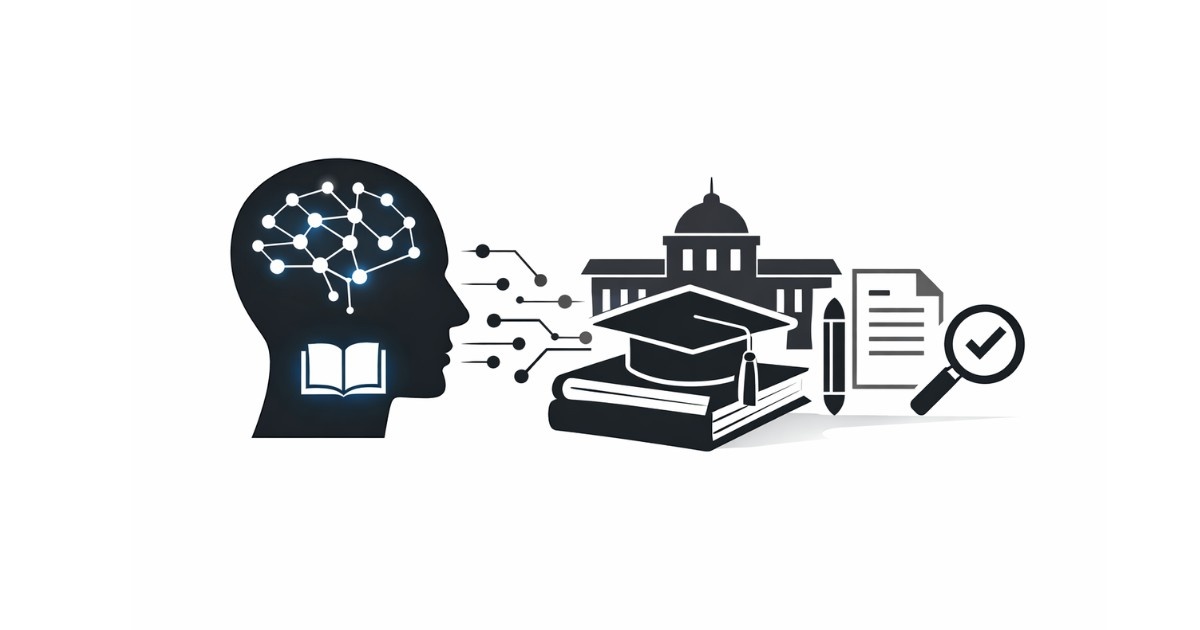
Artificial Intelligence is no longer limited to tech companies. It is now shaping classrooms and university admissions across India.
From personalised learning apps to AI-assisted admission screening, digital tools are changing how students study and how universities select candidates.
In 2026, this shift has gained speed. Schools, coaching centres, edtech platforms, and universities are investing in AI tools to improve efficiency and outcomes.
For students preparing for competitive exams and college admissions, this transformation directly affects their academic journey.
What AI Tools Are Being Used in Indian Education?
AI tools in education are software systems that analyse data and provide automated support.
Common uses include:
- Personalised study plans
- Doubt-solving chat assistants
- Automated grading
- Exam pattern prediction
- Admission data screening
Edtech platforms and universities are adopting AI to manage large student volumes more efficiently.
AI-Powered Learning: Smarter Study Support
Personalised Learning Plans
AI systems track student performance.
They analyse:
- Test scores
- Study time
- Weak subjects
- Practice patterns
Based on this data, platforms create customised study plans.
This helps students preparing for major exams like:
- JEE Main
- NEET
- CUET
Instead of generic lessons, students receive targeted revision modules.
24/7 AI Doubt Solving
AI chat-based systems answer academic queries instantly.
Students can ask questions in:
- Mathematics
- Physics
- Chemistry
- English
- Coding
This reduces dependence on coaching hours.
For rural students with limited access to tutors, AI tools improve learning access.
AI in University Admissions: Faster and Data-Driven
Universities in India handle thousands of applications each year.
AI tools now assist in:
- Screening application forms
- Checking document completeness
- Identifying eligibility criteria
- Sorting applicants based on merit
Large institutions such as University of Delhi and Jawaharlal Nehru University rely heavily on digital admission systems.
While final decisions remain with human committees, AI helps manage volume efficiently.
Benefits of AI in Indian Education
1. Efficiency in Large-Scale Systems
India has millions of students appearing for entrance exams each year.
AI helps process:
- Results
- Application forms
- Counselling data
This reduces delays and administrative errors.
2. Improved Exam Preparation
AI tools identify:
- Common mistakes
- Frequently asked topics
- Performance gaps
Students can focus on weak areas instead of revising everything.
3. Cost-Effective Access to Guidance
Many AI-powered apps offer affordable subscription models.
Students from smaller towns gain access to structured test preparation without relocating.
This reduces financial burden on families.
4. Language Support
Some AI systems support regional languages.
This improves understanding for non-English medium students.
Controversies and Concerns Around AI in Education
Despite benefits, AI adoption has raised serious debates.
1. Over-Reliance on Automation
Experts warn that excessive use of AI may reduce critical thinking.
Students may depend too much on instant answers instead of learning concepts deeply.
2. Academic Integrity Issues
AI-generated assignments and essays have sparked concerns.
Universities are monitoring misuse of AI for plagiarism or unfair advantage.
Institutions are updating academic honesty guidelines.
3. Bias in Admission Screening
AI systems rely on data.
If datasets are incomplete or biased, outcomes may be unfair.
Transparent algorithms and human oversight remain essential.
4. Data Privacy Risks
Education platforms collect personal data, including:
- Academic records
- Contact details
- Performance history
Strong data protection policies are necessary to maintain trust.
Role of Government and Policy Makers
India is promoting digital education under various national initiatives.
AI integration aligns with broader goals of:
- Expanding online learning
- Increasing digital access
- Improving administrative efficiency
However, regulators are also focusing on:
- Data protection rules
- Fair access policies
- Academic transparency
Clear frameworks are critical as AI usage expands.
EdTech Growth and Market Expansion
India’s edtech market has grown significantly over the past decade.
AI-based features are now common in many platforms.
Competitive exam coaching apps use predictive analytics to suggest likely exam trends.
Mock test analysis tools give instant score breakdowns.
This technology-driven model has reshaped the coaching industry.
How Students Are Adapting in 2026
Today’s students are digital natives.
They are comfortable using:
- AI chat assistants
- Learning dashboards
- Video micro-lessons
- Practice analytics
However, teachers continue to play a central role.
AI supports instruction but does not replace educators.
University Admissions: Transparency and Speed
In recent years, admission timelines have shortened due to digital systems.
Automated merit list generation reduces manual errors.
Students receive:
- Instant confirmation emails
- Digital document verification
- Online counselling slots
This reduces stress during admission season.
The Human Factor: Teachers and Counselors Still Matter
Despite automation, human judgment remains crucial.
Admissions often consider:
- Interviews
- Personal statements
- Co-curricular achievements
AI tools assist but final evaluation remains with committees.
Similarly, teachers use AI insights but decide teaching strategy themselves.
Future Outlook: What to Expect by 2030
AI integration in education will likely expand in:
- Virtual reality classrooms
- AI-based career counselling
- Skill mapping tools
- Adaptive testing systems
Hybrid models combining offline and online learning may become standard.
Indian universities may also adopt AI tools for global student recruitment.
Balanced Perspective: Technology With Responsibility
AI is neither a threat nor a miracle solution.
Its impact depends on responsible use.
Key priorities include:
- Ethical deployment
- Student data safety
- Human supervision
- Equal access
Education remains a human-centred process.
Technology should support learning, not dominate it.
A Defining Moment for Indian Education
AI tools are transforming how students learn and how universities admit candidates.
From personalised exam preparation to automated admission systems, the shift is clear.
For Indian students, this means greater access, faster processes, and smarter guidance.
For universities, it means efficiency and data-driven decision-making.
However, with rapid change comes responsibility.
The future of Indian education will depend on how wisely AI is used — balancing innovation with fairness, privacy, and human judgment.
As 2026 progresses, AI in education is no longer optional. It is becoming a core part of India’s academic ecosystem — shaping classrooms, campuses, and career paths across the country.
Edited by: Pushkarini Annabathula
Also Read : HEALTH & FOOD BUZZ 2026: 7 VIRAL WELLNESS DIETS INDIANS ARE LOVING — POWERFUL SMART NUTRITION INSIGHTS
Add republicpost.in as preferred source on google – Click Here
Last Updated on: Wednesday, February 25, 2026 4:42 pm by Republic Post Team | Published by: Republic Post Team on Wednesday, February 25, 2026 4:42 pm | News Categories: Health
About The Author