Pariksha Pe Charcha 2026 Goes Pan‑India: 6.76 Crore Join Conversation with PM Modi

Pariksha Pe Charcha 2026 saw a huge boost in participation, as the Prime Minister’s flagship student engagement programme expanded like never before. For the first time, activities were held simultaneously in different parts of the country, breaking away from the usual Delhi‑centric format. This ninth edition brought together students from all walks of life on a single national platform, making it a truly inclusive and memorable experience. A Nationwide Dialogue: Breaking the Delhi-Centric Model For the first time, Pariksha Pe Charcha 2026 broke away from its Delhi-centric format, reaching students…

Read More
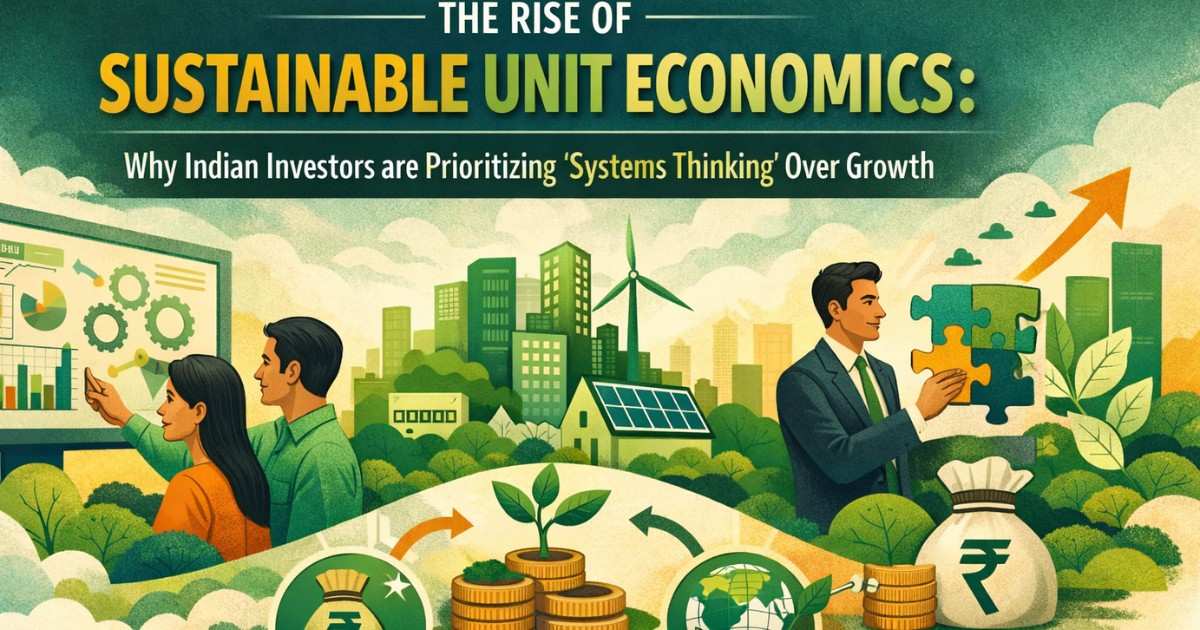
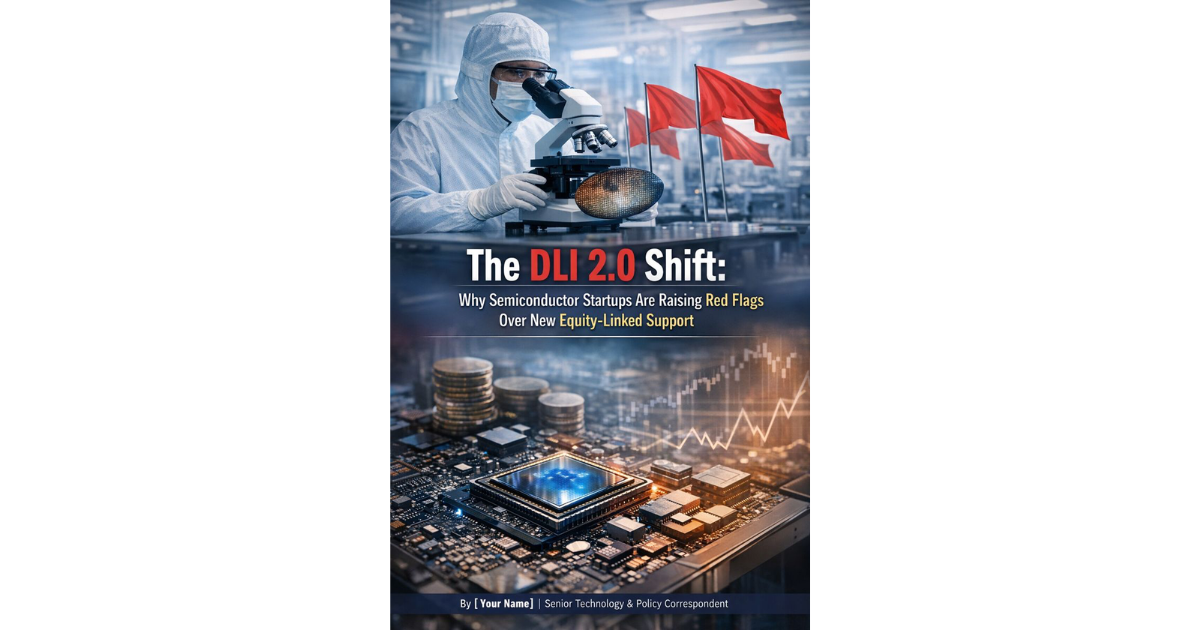
Illustration showing interconnected charts, gears, and data flows symbolizing sustainable unit economics and systems thinking in India’s startup investment landscape. Startup Trending 

The Rise of Sustainable Unit Economics: Why Indian Investors Are Prioritizing Systems Thinking Over Growth

For much of the last decade, India’s startup ecosystem was powered by a single, seductive promise: grow fast, capture market share, and worry about profits later. Capital was abundant, valuations climbed rapidly, and founders were rewarded for scale rather than sustainability. That era is now decisively over. In its place, a quieter but more rigorous philosophy is taking root among Indian investors—one that places sustainable unit economics and systems thinking at the center of decision-making. This shift has been shaped by a series of hard lessons. As global liquidity tightened…

Read More
"Infographic comparing India’s DLI 1.0 and DLI 2.0 semiconductor policies, showing equity-linked support, VC concerns, government objectives, and potential startup risks with icons of chips, money, graphs, and policy documents." News 

The DLI 2.0 Shift: Why Semiconductor Startups are Raising Red Flags Over New Equity‑Linked Support

India’s Semiconductor Ambitions Meet Policy Tension As India strives to transition from an emerging technology hub to a globally competitive semiconductor powerhouse, a fresh policy debate has erupted that could shape the country’s digital future. At the heart of this debate is the government’s plan to overhaul its flagship Design‑Linked Incentive (DLI) scheme into a revamped structure termed DLI 2.0, which pivots from traditional grant and reimbursement‑based support to a model tied to equity, debt, and strategic oversight. The shift has triggered concerns among semiconductor startups, warning that the new framework could constrain innovation, deter…

Read More
India 

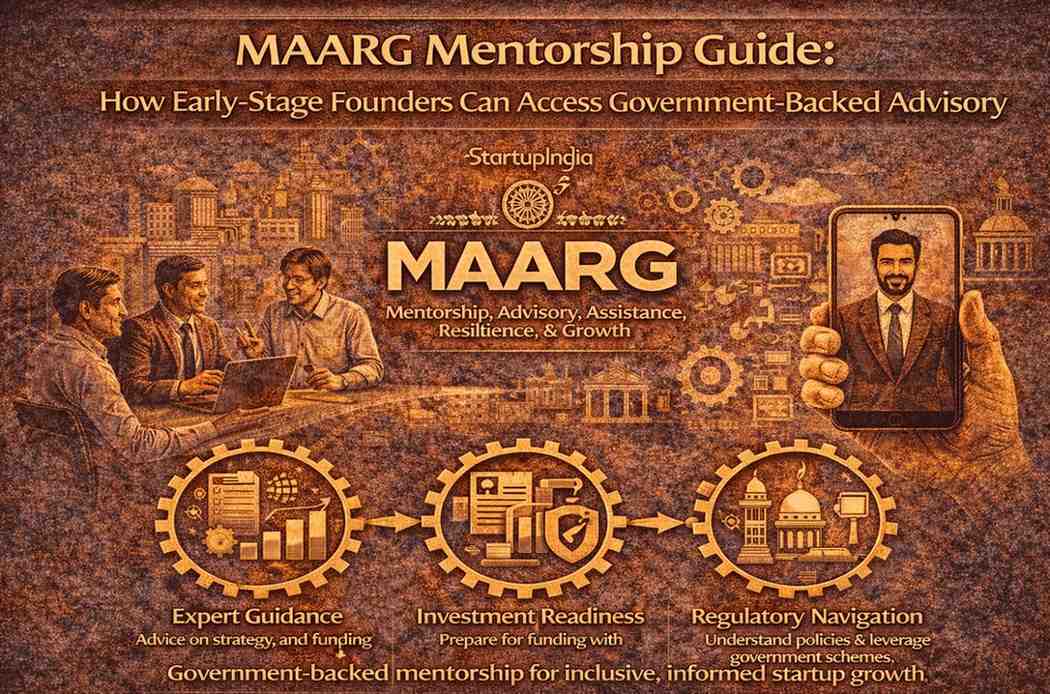
MAARG Mentorship Guide: How Early-Stage Founders Can Access Government-Backed Advisory in 2026

As India’s startup ecosystem matures, early-stage founders are increasingly recognising that capital alone is not enough to build sustainable businesses. Strategic guidance, market access, regulatory clarity, and operational mentorship have become equally critical. In this context, the MAARG mentorship platform has emerged as a key government-backed initiative aimed at supporting startups with structured advisory support. As 2026 approaches, understanding how MAARG works and how founders can leverage it effectively is becoming essential for entrepreneurs navigating India’s competitive startup landscape. What Is MAARG and Why It Was Launched MAARG, short for…

Read More

Union Budget 2026: Aviation Cargo, Logistics, Dairy, Edible Oils, Electronics & Banking Leaders Seek Infrastructure Push and Value-Chain Reforms

As Finance Minister Nirmala Sitharaman prepares to present the Union Budget 2026-27 on February 1, 2026, at 11 AM, industry leaders from aviation cargo, logistics, dairy, edible oils, electronics manufacturing, and banking are calling for sustained infrastructure investments, supply-chain resilience, export competitiveness, and technology adoption to fuel India’s economic momentum amid 6.5–7% GDP growth projections. The logistics sector, projected at ~US$384 billion in 2026 with air cargo throughput growing at ~11.5% CAGR through 2033, seeks targeted support for multimodal connectivity and digitisation. Dairy and edible oils players emphasise value-added processing,…

Read More

A Beginner’s Guide to Investing in Gold and Silver During Market Volatility

When financial markets become unpredictable, investors often look for safer assets to protect their wealth. Gold and silver have long been considered reliable options during periods of market volatility. For beginners, understanding how and why to invest in these precious metals is the first step toward building a balanced portfolio. This guide explains the basics of gold and silver investing and how they can help during uncertain economic times. Why Gold and Silver Perform Well During Volatility Gold and silver are known as safe-haven assets. When stock markets fall or…

Read More
Infographic showing government welfare schemes for women, youth, and small farmers in India, highlighting financial assistance, skill development programs, and agricultural support initiatives. News 

What You Need to Know About Government Welfare Schemes Aimed at Women, Youth, and Small Farmers

As India navigates economic transitions shaped by inflation pressures, job market shifts, and climate-linked agricultural risks, government welfare schemes aimed at women, youth, and small farmers continue to play a critical role in supporting livelihoods and promoting inclusive growth. From direct income support and skill development to health, education, and agricultural security, these schemes form the backbone of the country’s social protection framework. With both the Union government and states expanding and refining welfare outreach, understanding how these initiatives work — and who they are designed to help — has…

Read More
Business News 

Union Budget 2026: GCC Leaders Seek Tax Incentives and Talent Push While Circular Economy Players Demand GST Relief for Recycling

With Finance Minister Nirmala Sitharaman scheduled to present the Union Budget 2026-27 on Sunday, February 1, 2026, at 11 AM the first Sunday presentation in recent history India’s Global Capability Centres (GCCs), commercial real estate, and circular economy sectors are pressing for targeted reforms to sustain high-value growth, expand beyond metros, and advance sustainability goals. India’s GCC ecosystem, now home to over 1,800 centres employing more than 2 million professionals and contributing around $65–68 billion in revenue (with projections reaching $150–200 billion by 2030), continues its shift from cost arbitrage…

Read More
News India 

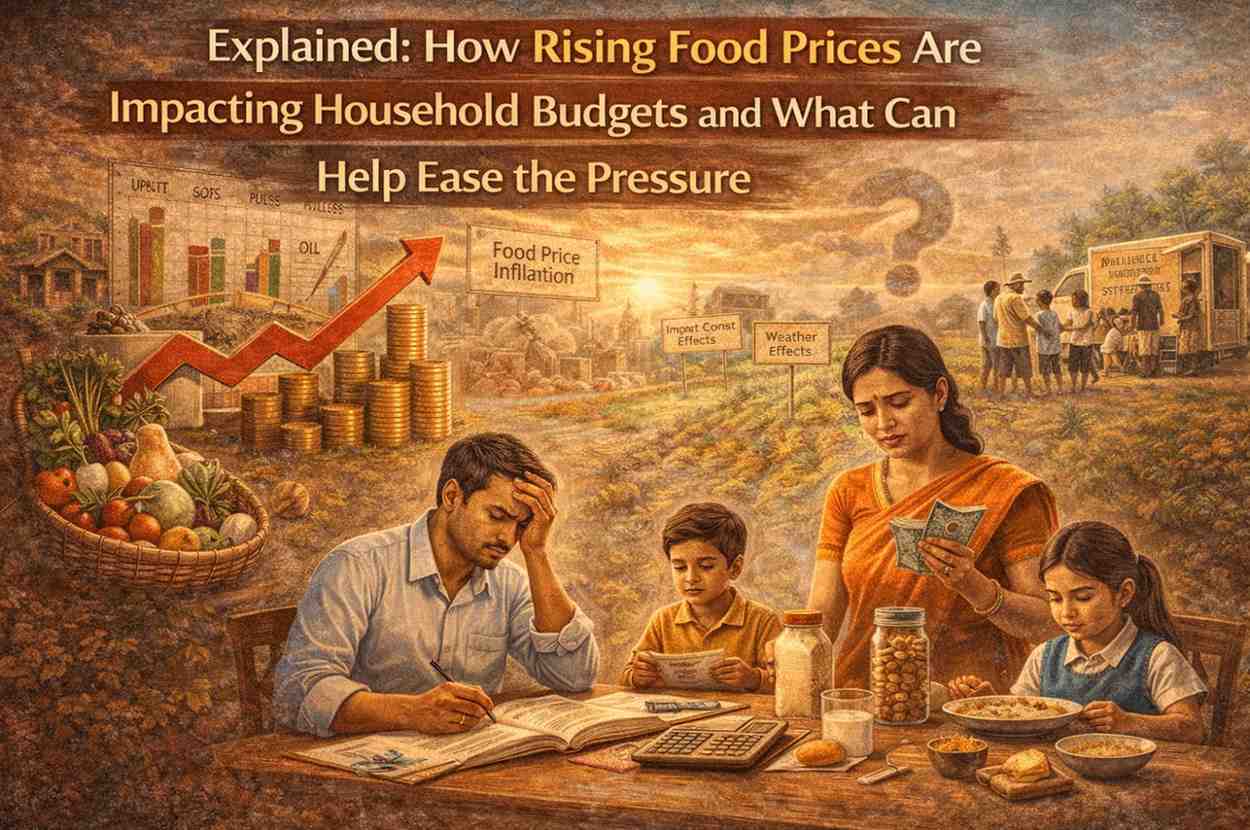
Explained: How Rising Food Prices Are Impacting Household Budgets and What Can Help Ease the Pressure

Rising food prices have emerged as one of the most pressing economic concerns for households across India. From vegetables and pulses to cooking oil and dairy products, everyday essentials have become steadily more expensive, putting pressure on family budgets and altering consumption patterns. While inflation is influenced by global and domestic factors, its impact is felt most acutely at the household level, where food accounts for a significant share of monthly spending, especially for lower- and middle-income families. Why Food Prices Are Rising Food price inflation is driven by a…

Read More
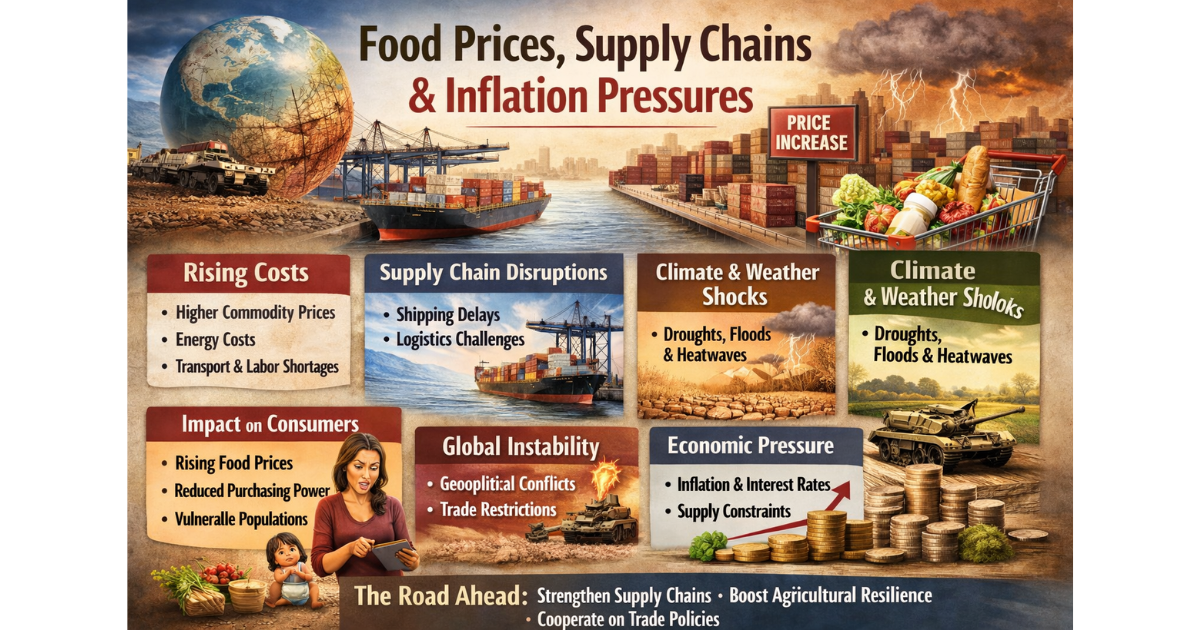
Infographic titled “Food Prices, Supply Chains & Inflation Pressures” showing a global supply chain with cargo ships, shipping containers, farmland, and a grocery cart with rising prices. Sections highlight rising costs, supply chain disruptions, climate News 

What You Need to Know About Food Prices, Supply Chains, and Inflation Pressures

In nearly every country around the world — from urban markets to rural hinterlands — families are feeling the pinch at the grocery store. Food prices, long a barometer of economic wellbeing, have become a headline issue, shaping household budgets, national policymaking, and global geopolitics. Understanding why food is costing more — and why prices may stay volatile — means unpacking the complex interplay between global supply chains, inflationary pressures, climate events, geopolitical shocks, and structural economic forces. 1. Food Prices: Not Just a Short-Term Spike — a Structural Shift Although…

Read More