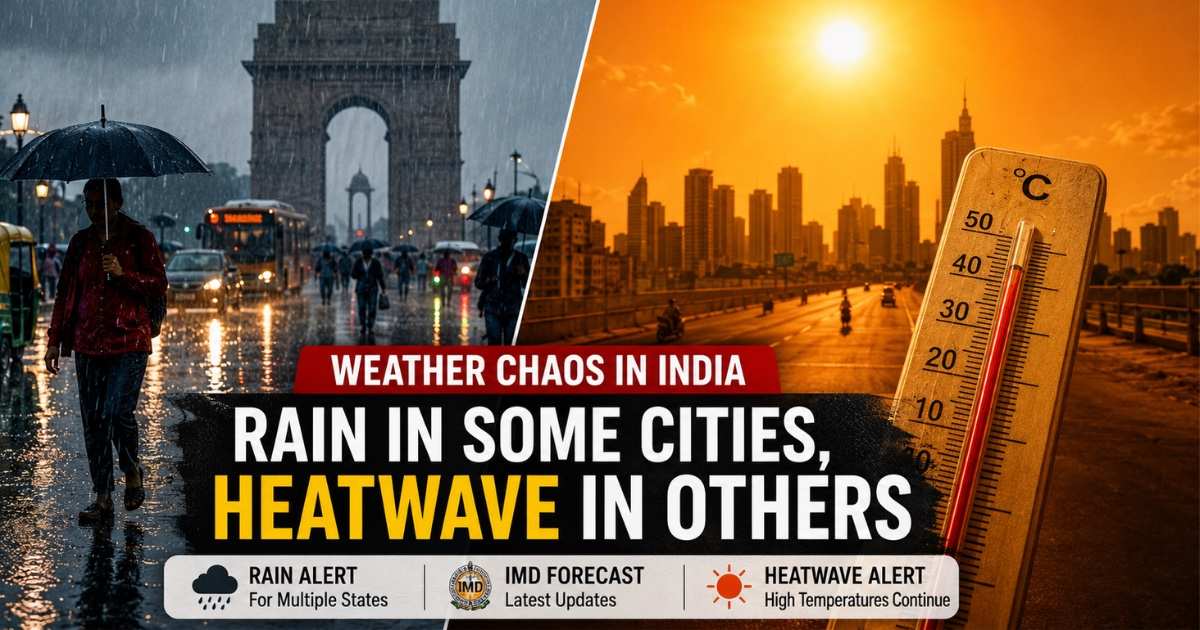
India Weather Chaos: Rain + Heatwave Combination
Extreme Weather Alert: Rain Hits Some Cities While Others Burn
India Faces Unusual Weather Contrast Across Multiple States
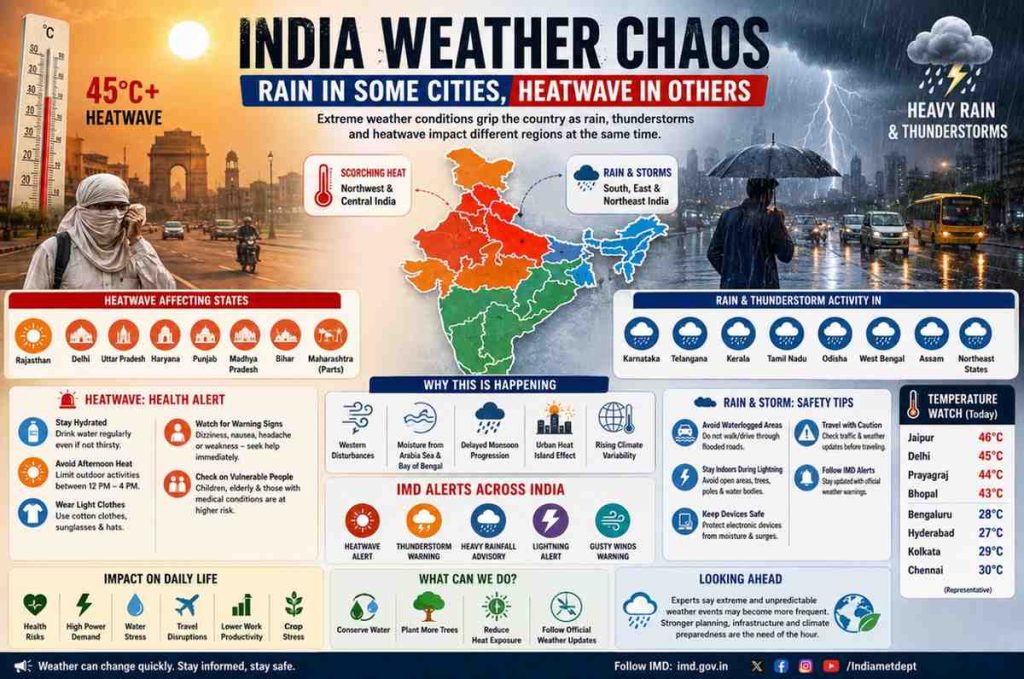
India is currently witnessing one of the most unpredictable weather patterns of the season, with several cities experiencing heavy rainfall and thunderstorms while others continue battling intense heatwave conditions. From scorching temperatures in northwestern and central India to sudden rain alerts in southern and eastern regions, the dramatic contrast in weather has triggered widespread public concern, travel disruptions, health warnings, and rising online searches related to the India Meteorological Department (IMD) forecast.
Searches for terms such as “India weather today,” “rain forecast,” “heatwave alert,” “IMD warning,” and “which states will receive rain” are surging across Google and social media platforms as people attempt to understand the rapidly changing weather situation.
Weather experts say the unusual combination of rain activity and extreme heat reflects complex seasonal transitions influenced by atmospheric instability, regional pressure systems, moisture movement, and changing climate patterns.
Across India, people are now experiencing two completely different weather realities at the same time — flooded streets and thunderstorms in some cities, while others struggle under temperatures crossing 45°C.
Heatwave Continues Across Northern and Central India
Several northern and central Indian states remain under severe heatwave conditions despite scattered rain activity elsewhere in the country.
States experiencing extreme daytime temperatures include:
- Rajasthan
- Delhi
- Uttar Pradesh
- Haryana
- Punjab
- Madhya Pradesh
- Bihar
- Parts of Maharashtra
In many cities, daytime temperatures have crossed dangerous levels, increasing the risk of dehydration, heat exhaustion, and heatstroke.
Doctors and public health experts are warning citizens to avoid prolonged outdoor exposure during afternoon hours as dry winds and intense sunlight continue affecting daily life.
In parts of Rajasthan and Delhi, roads have appeared nearly deserted during peak afternoon hours because of intense heat stress.
Meteorologists say heatwave conditions are intensifying because of:
- Dry western winds
- Delayed rainfall patterns
- Low moisture levels
- Reduced cloud cover
- Rising urban heat buildup
Rain and Thunderstorms Bring Relief to Some Regions
While northern India struggles with extreme heat, several other regions are witnessing sudden rain showers, thunderstorms, lightning activity, and gusty winds.
States and cities receiving rainfall activity include:
- Karnataka
- Telangana
- Kerala
- Tamil Nadu
- Odisha
- West Bengal
- Assam
- Parts of Maharashtra
- Northeastern states
Several metro cities have experienced sudden evening thunderstorms after extremely hot afternoons, creating dramatic weather shifts within hours.
In Bengaluru, Hyderabad, Kolkata, and Chennai, rain showers have provided temporary relief from rising temperatures but have also caused:
- Traffic congestion
- Waterlogging
- Flight delays
- Power interruptions
- Reduced visibility on roads
Weather experts say pre-monsoon activity is gradually increasing across parts of southern and eastern India, although heat conditions remain severe in many inland regions.
Why India Is Seeing Both Rain and Heatwave Together
Meteorologists explain that India often experiences mixed weather patterns during seasonal transition periods before the monsoon fully arrives.
The current weather contrast is being influenced by multiple atmospheric systems operating simultaneously across different regions.
Key contributing factors include:
Western Disturbances
Weather systems moving from the west are affecting northern regions and occasionally triggering dust storms and isolated rainfall.
Moisture Intrusion from Seas
Moisture from the Arabian Sea and Bay of Bengal is contributing to thunderstorm formation in southern and eastern states.
Delayed Monsoon Progression
The monsoon has not fully advanced across all regions, creating uneven weather distribution.
Urban Heat Island Effect
Cities with dense concrete infrastructure trap heat more aggressively, worsening local temperatures.
Climate Variability
Experts believe rising climate variability is increasing the frequency of unpredictable weather combinations.
Meteorologists say these overlapping systems are creating conditions where one part of India experiences flood-like rainfall while another remains under dangerous heat stress.
IMD Issues Multiple Weather Alerts
The India Meteorological Department (IMD) has issued a combination of:
- Heatwave alerts
- Thunderstorm warnings
- Heavy rainfall advisories
- Lightning alerts
- Gusty wind warnings
Authorities are urging people to monitor official weather bulletins regularly because local conditions are changing rapidly.
The IMD has particularly advised caution for:
- Outdoor workers
- Farmers
- School students
- Travelers
- Elderly citizens
- People with respiratory conditions
In some regions, district administrations have also begun preparing emergency response measures for both heatwave and storm-related disruptions.
Doctors Warn Against Common Weather Mistakes
Health experts say rapidly changing weather conditions can confuse people into ignoring serious risks.
Mistake 1: Ignoring Dehydration Because of Cloudy Weather
Doctors say many people stop drinking enough water once temperatures temporarily drop after rain.
However, humidity levels often remain high, increasing sweating and fluid loss.
Mistake 2: Sudden Exposure to Extreme Temperature Changes
Moving repeatedly between intense outdoor heat and very cold air-conditioned spaces may trigger:
- Headaches
- Fatigue
- Respiratory discomfort
- Dizziness
Mistake 3: Traveling During Storm Warnings
Heavy rain and lightning activity can create dangerous road and transport conditions.
Experts advise avoiding unnecessary travel during severe thunderstorm alerts.
Mistake 4: Underestimating Humidity
Even when temperatures appear lower, high humidity can make conditions physically exhausting and dangerous for vulnerable individuals.
Heatwave Conditions Continue Affecting Daily Life
Extreme temperatures are impacting multiple sectors across India.
Public Health Pressure
Hospitals are reporting increased cases of:
- Dehydration
- Heat exhaustion
- Low blood pressure
- Fatigue-related illness
- Heatstroke symptoms
Power Demand Surges
Electricity consumption has risen sharply because of increased usage of:
- Air conditioners
- Coolers
- Refrigeration systems
Several states are closely monitoring grid pressure during peak afternoon hours.
Water Stress Rising
Heatwave conditions are also increasing pressure on water supplies in some urban and semi-urban regions.
Productivity Challenges
Experts say extreme temperatures are reducing outdoor work efficiency, especially in:
- Construction
- Delivery services
- Agriculture
- Transportation
- Factory operations
Rainfall Creates Urban Challenges
While rain brings temporary relief from heat, it is also exposing urban infrastructure weaknesses in several cities.
Heavy rain in metro areas has led to:
- Waterlogged roads
- Traffic jams
- Flight delays
- Metro disruptions
- Drainage overflow
- Localized flooding
Urban planners say many Indian cities continue struggling with stormwater drainage management during sudden high-intensity rainfall events.
Experts also warn that short-duration heavy rainfall is becoming increasingly common because warmer atmospheric conditions allow air to hold more moisture.
Farmers Closely Watching Weather Changes
India’s farming community is closely monitoring weather developments as pre-monsoon conditions influence agricultural planning.
Farmers are particularly concerned about:
- Crop stress due to heat
- Water availability
- Sudden storms damaging standing crops
- Delayed sowing patterns
- Soil moisture conditions
Agricultural experts say unpredictable weather is making farming decisions more difficult, especially in regions heavily dependent on seasonal rainfall patterns.
Social Media Flooded With Extreme Weather Videos
Videos showing dramatic weather contrasts are trending heavily across digital platforms.
Popular viral clips currently include:
- Dust storms in Delhi
- Heavy rain in Bengaluru
- Lightning videos from eastern states
- Heatwave footage from Rajasthan
- Flooded city roads
- Temperature display boards crossing 45°C
- Split-screen “rain vs heat” comparisons
Weather-related content performs strongly online because it combines:
- Public safety relevance
- Visual impact
- Regional connection
- Real-time updates
- Emotional reactions
Searches related to “weird India weather,” “rain alert,” and “heatwave India” continue rising sharply across Google Discover and short-video platforms.
Experts Link Extreme Weather to Climate Concerns
Climate researchers say India may continue witnessing more unpredictable weather patterns in coming years.
Experts point to several long-term concerns:
- Rising average temperatures
- More frequent heatwaves
- Intense short-duration rainfall
- Urban flooding risks
- Water shortages
- Greater public health pressure
Environmental experts believe climate adaptation planning is becoming increasingly important for Indian cities and infrastructure systems.
Several researchers have also emphasized the importance of:
- Expanding green cover
- Improving drainage systems
- Enhancing heat action plans
- Protecting water resources
- Strengthening weather forecasting systems
Travelers Advised to Monitor Weather Conditions
Travel experts say passengers should remain cautious because rapidly changing weather may affect:
- Flight schedules
- Train operations
- Road travel visibility
- Highway conditions
Travelers are being advised to:
- Carry water bottles
- Monitor weather alerts
- Avoid unnecessary afternoon exposure
- Keep emergency medicines ready
- Plan extra travel time during rain
Airlines and local authorities are also monitoring weather-related operational challenges in several cities.
Safety Tips Experts Recommend During Mixed Weather Conditions
Stay Hydrated
Drink water regularly even if rain temporarily cools temperatures.
Avoid Afternoon Heat
Limit outdoor exposure during peak heat hours.
Monitor Official Alerts
Track IMD updates and local weather advisories.
Be Careful During Storms
Avoid open areas during lightning activity.
Wear Breathable Clothing
Choose lightweight cotton fabrics suitable for humid conditions.
Protect Electronic Devices
Rainstorms and sudden moisture can damage gadgets and electrical systems.
Check on Vulnerable Family Members
Children and elderly individuals remain at higher risk during extreme weather.
Why Weather Updates Are Dominating Public Attention
Weather has become one of India’s biggest public-interest topics because it directly affects:
- Health
- Travel
- Work productivity
- Electricity supply
- Water availability
- Agriculture
- Daily commuting
Experts say rapidly changing weather patterns are increasing public dependence on real-time forecasts and digital weather alerts.
The combination of rain in some cities and severe heat in others has also created widespread curiosity and social media discussion across the country.
India’s Extreme Weather Phase Could Continue
Meteorologists believe fluctuating weather conditions may continue over the coming weeks as seasonal transitions progress across the country.
While some regions may receive additional rainfall activity, several northern and inland states are likely to continue facing heat stress until stronger monsoon systems advance further.
Experts say the current weather chaos highlights how climate variability, urban pressure, and seasonal instability are increasingly shaping daily life across India.
For millions of citizens navigating rising temperatures, sudden storms, traffic disruptions, and health risks, staying informed and taking preventive precautions may remain essential during one of the country’s most unpredictable weather phases in recent years.
Key Insights
- India’s simultaneous heatwave and rainfall pattern highlights the growing complexity of seasonal weather transitions, with different regions facing entirely different climate risks at the same time.
- The rising frequency of extreme heat conditions is increasing pressure on public health systems, especially due to dehydration, heatstroke, respiratory stress, and weather-related illnesses among vulnerable populations.
- Sudden thunderstorms and heavy rainfall in urban areas continue exposing infrastructure gaps such as poor drainage systems, traffic management issues, waterlogging, and power disruption vulnerabilities.
- The India Meteorological Department (IMD) is playing an increasingly critical role in public safety through real-time weather alerts, heatwave advisories, thunderstorm warnings, and disaster preparedness coordination.
- Climate experts believe rising temperatures, urban heat buildup, changing rainfall patterns, and climate variability are contributing to more unpredictable and extreme weather combinations across India.
- Extreme weather conditions are also impacting economic activity, including agriculture, construction, transportation, electricity demand, and outdoor labor productivity across multiple states.
- Farmers are closely monitoring shifting weather patterns because sudden heat stress, delayed rainfall, and unexpected storms can directly affect crop planning, irrigation needs, and seasonal agricultural output.
- The sharp increase in online searches for weather updates reflects how digital weather information and mobile alerts have become essential tools for daily decision-making, travel planning, and health precautions.
- Public awareness around hydration, heatwave safety, lightning precautions, and official weather advisories is becoming increasingly important as India experiences more frequent climate-related disruptions.
- Experts say long-term solutions may require stronger climate adaptation strategies, including improved urban planning, better drainage systems, expanded green cover, upgraded forecasting systems, and more resilient public infrastructure.
Last Updated on: Thursday, May 21, 2026 3:54 pm by Pushkarini Annabathula | Published by: Pushkarini Annabathula on Thursday, May 21, 2026 3:48 pm | News Categories: Latest
About The Author