Can India Build Global Sports Brands? Why ‘Made in India’ Sports Manufacturing is the Next Big Opportunity
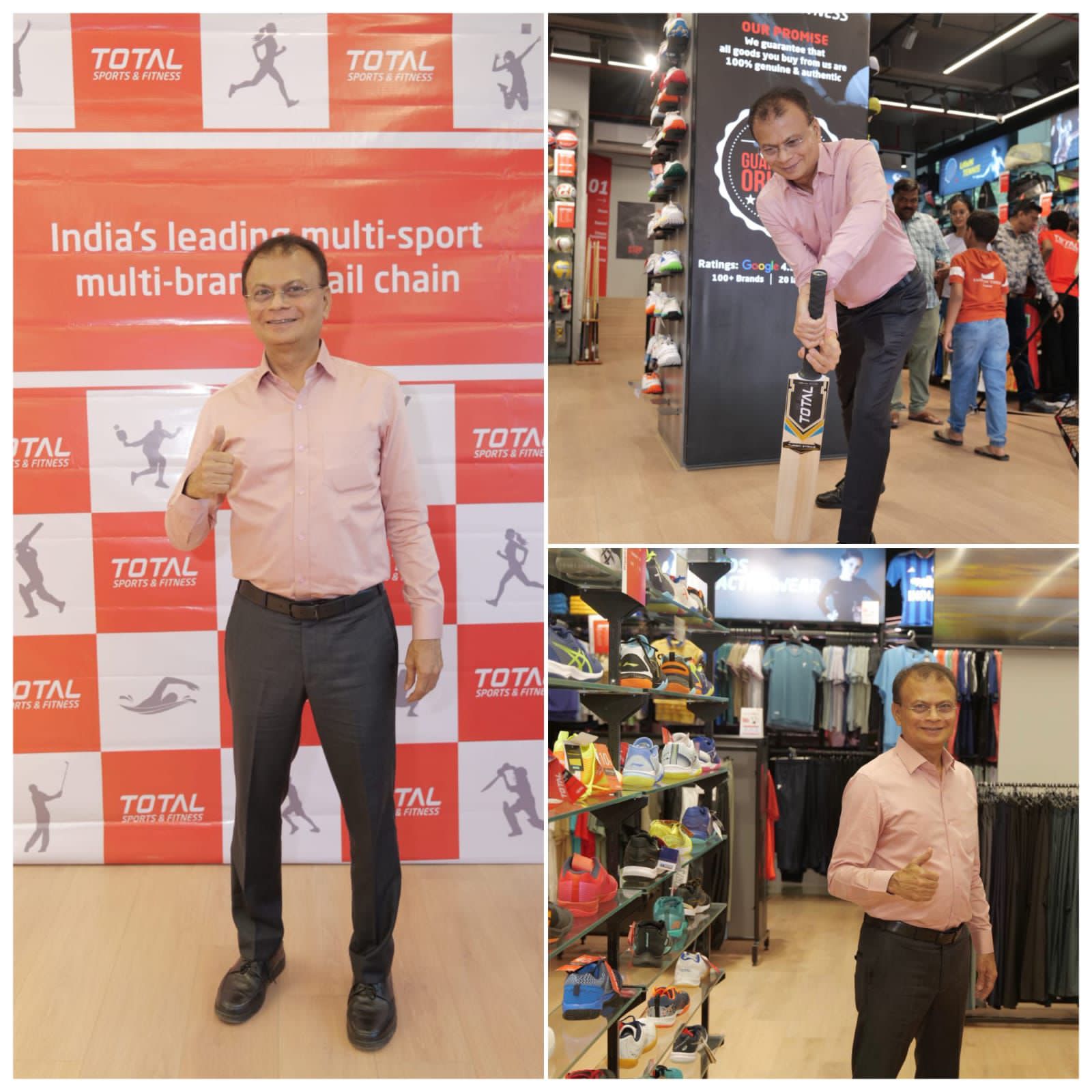
By Niteen Shah, Founder & Managing Director, Total Sports & Fitness
India’s leading multi-brand sports and fitness retail chain
India is witnessing a sporting renaissance unlike anything in its history. What was once a nation largely defined by its passion for cricket is steadily evolving into a country embracing running, cycling, football, badminton, pickleball, fitness training, and recreational sports. This transformation is not only changing how Indians engage with sports; it is creating one of the most compelling manufacturing and consumer opportunities of the coming decade.
As participation in sports and fitness rises across urban and rural India, a critical question emerges: can India move beyond being a manufacturing hub for global brands and begin building globally recognised sports brands of its own?
The answer lies in India’s manufacturing heartlands, particularly cities such as Jalandhar, Ludhiana and Meerut, which have quietly powered the sports industry for decades.
Today, India should not just consume global sports brands—it should build global sports brands.
India’s Sports Economy is Entering a New Growth Phase
The momentum behind sports and fitness in India is undeniable. Rising health awareness, increasing disposable incomes, government initiatives such as Khelo India, the success of sporting leagues, and greater participation in fitness activities have created a powerful growth engine for the industry.
According to a Deloitte-Google estimate cited by industry bodies, India’s broader sporting goods market could grow from US$52 billion in 2024 to US$130 billion by 2030 as participation, consumption, and infrastructure investments accelerate.
More importantly, this growth is no longer limited to professional athletes. Millions of Indians are purchasing running shoes, cricket kits, gym equipment, football gear, activewear, yoga accessories, and fitness products as part of their everyday lifestyle. This expanding consumer base presents a once-in-a-generation opportunity for Indian manufacturers.
India’s sports manufacturing sector now sits at the intersection of three national priorities—Make in India, export-led growth, and employment generation.
The Manufacturing Legacy We Often Overlook
Few consumers realise that some of India’s most important sports manufacturing clusters are located in Punjab.
Jalandhar has long been known as India’s sports goods capital, manufacturing cricket bats, footballs, hockey sticks, volleyballs, athletics equipment, training accessories, and protective gear supplied across domestic and international markets. The city exports sports goods to more than 100 countries and remains one of the largest sports manufacturing hubs in South Asia. Industry estimates suggest Jalandhar accounts for nearly 55% of India’s domestic sports goods demand, with a domestic market value of around ₹1,300 crore, alongside significant export revenues.
Ludhiana, meanwhile, has emerged as a key centre for sportswear, activewear, performance apparel, footwear components, and fitness accessories.
Together with manufacturing clusters such as Meerut, these regions account for nearly 75-80 percent of India’s sports goods production and support thousands of manufacturing units. The sector itself provides direct and indirect employment to more than five lakh people, making it one of the country’s most important labour-intensive industries.
For decades, these cities have manufactured products for some of the world’s leading brands. Their products have reached international markets, often without consumers ever knowing where they were produced.
The capability already exists. What remains underdeveloped is brand creation.
Beyond Contract Manufacturing
India has successfully established itself as a trusted sourcing destination for global sports companies. While this has generated employment and industrial growth, much of the value creation continues to remain concentrated with international brands.
The next phase of growth must involve Indian manufacturers moving higher up the value chain—from producing products for others to building brands of their own.
This transition is critical because true economic value lies not only in manufacturing but also in intellectual property, design, innovation, marketing, distribution, and consumer loyalty.
Countries such as China have successfully built globally recognised sports brands while simultaneously serving as manufacturing centres for international companies. India now has the opportunity to follow a similar path.
The question is no longer whether Indian manufacturers can make world-class products. They already do. The question is whether they can create world-class brands.
Reducing Import Dependence Through Local Innovation
Despite India’s manufacturing capabilities, a significant portion of sports and fitness products sold in the country continue to be imported, particularly across categories such as fitness accessories, activewear, sports technology, performance equipment, and specialised training gear.
As demand continues to grow, there is a strong case for increasing domestic production and reducing import dependence.
Indian manufacturers possess competitive cost structures, skilled labour, established manufacturing ecosystems, and an increasingly sophisticated understanding of consumer needs. By investing in research and development, product innovation, quality standards, and branding, they can successfully compete with imported alternatives across multiple categories.
Reducing import dependence is not merely an economic objective—it is a strategic one. It strengthens domestic manufacturing, creates employment, improves supply chain resilience, and contributes directly to the broader Make in India vision.
The Role of Organised Retail in Building Indian Brands
Manufacturing alone cannot create successful brands.
One of the biggest challenges facing emerging Indian sports brands is visibility and market access. Many manufacturers possess excellent products but lack the distribution, consumer trust, and brand-building capabilities needed to scale nationally.
This is where organised retail can play a transformative role.
Multi-brand sports retail platforms provide consumers with the opportunity to discover, compare, evaluate, and trust Indian-made products alongside established international brands. They create a level playing field where quality, innovation, and performance become the primary differentiators.
At Total Sports & Fitness, we have witnessed increasing consumer willingness to explore high-quality Indian products when they are presented with the right guidance, education, and retail experience.
Retailers can become important growth partners in helping local brands move from factories to households.
A Major Export Opportunity for India
India’s sports manufacturing opportunity is no longer just a retail story—it is an industrial and export growth story.
India currently exports roughly 60% of its sporting goods production, but its share of the global sports goods market remains below 1%, indicating substantial headroom for growth.
A recent NITI Aayog-backed estimate projects India’s sports equipment exports could potentially increase from approximately US$275 million in 2024 to over US$8 billion by 2036, creating nearly 5.4 million jobs and positioning the country as a global sports manufacturing powerhouse.
For investors, policymakers, and industry stakeholders, this represents a unique opportunity at the intersection of manufacturing, exports, employment generation, and consumer growth.
The Road Ahead
India stands at an important inflection point in its sports journey. We have the consumers, the manufacturing ecosystem, the entrepreneurial talent, and the growing culture of fitness needed to build globally competitive sports brands.
The challenge before us is not one of capability, but ambition.
As sports participation continues to grow and organised retail expands across the country, the conditions are ideal for a new generation of Indian sports brands to emerge from manufacturing hubs such as Jalandhar and Ludhiana and reach consumers across India and the world.
The future of India’s sports industry should not be limited to producing for global brands. It should be about creating global brands from India.
The next iconic sports brand could very well be made in India, designed in India, trusted by Indian consumers, and celebrated across the world.
Last Updated on: Saturday, July 4, 2026 5:52 pm by Prachi Chadha | Published by: Republic Post Team on Saturday, July 4, 2026 5:52 pm | News Categories: Brand Post
About The Author