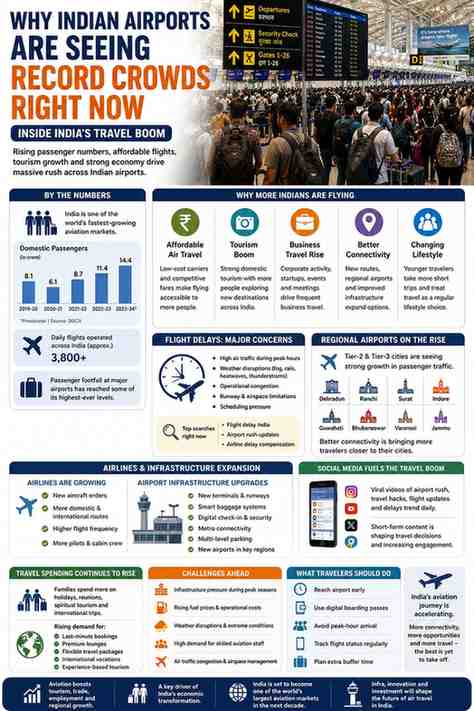
Why Indian Airports Are Seeing Record Crowds Right Now
India Airport Rush and Travel Boom Explained
Rising Passenger Numbers, Holiday Travel, Business Trips, and Affordable Flights Drive Massive Crowds Across Indian Airports
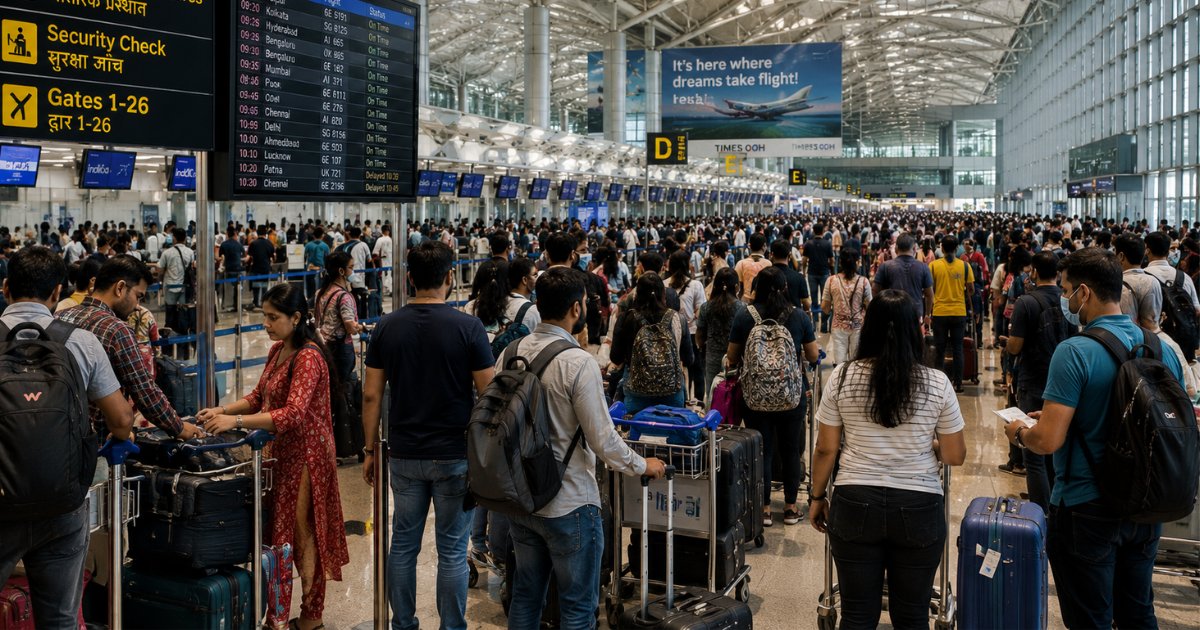
India is witnessing one of its biggest travel booms in recent years, with airports across the country handling record passenger traffic, packed terminals, longer queues, and increased flight operations.
From Delhi and Mumbai to Bengaluru, Hyderabad, Chennai, Kolkata, and smaller regional airports, travel demand has surged sharply as more Indians return to flying for holidays, work, education, family visits, and religious tourism.
The rise in domestic travel, expanding airline networks, affordable airfares on select routes, and strong economic activity have together created an unprecedented rush at Indian airports.
Travel experts say India’s aviation sector is currently experiencing a major transformation as air travel becomes increasingly accessible to middle-class families, young professionals, and first-time flyers.
The airport rush has also become a major topic online, with videos of crowded terminals, long security lines, delayed flights, and packed boarding gates trending heavily on social media platforms.
India’s Airports Witness Massive Passenger Growth
India has emerged as one of the world’s fastest-growing aviation markets.
Over the past few years, domestic air travel demand has grown steadily due to improving connectivity, rising incomes, stronger tourism activity, and expansion of low-cost airlines.
Major airports are now regularly witnessing:
- Packed terminals
- Longer check-in queues
- Increased flight frequency
- Heavy baggage movement
- Crowded boarding gates
- High taxi and ride-app demand
- Parking shortages during peak hours
Travel demand has become especially strong during:
- Summer holidays
- Festival seasons
- Long weekends
- School vacations
- Wedding seasons
- Religious pilgrimage periods
Airports in metro cities are currently handling some of their highest-ever daily passenger movements.
Why More Indians Are Flying Than Before
Several major factors are contributing to the current travel boom.
1. Rise of Affordable Air Travel
Low-cost carriers have significantly changed India’s aviation market.
Budget airlines continue to offer competitive ticket prices on many domestic routes, making flying more affordable for middle-class travelers.
Many passengers who earlier depended on trains for long-distance travel are now choosing flights because of shorter travel time and improved connectivity.
Short-haul routes between major cities have especially seen strong demand.
2. Strong Domestic Tourism Growth
Domestic tourism has expanded rapidly after travel activity recovered strongly across India.
Popular tourist destinations including:
- Goa
- Kashmir
- Himachal Pradesh
- Uttarakhand
- Kerala
- Rajasthan
- Northeast India
are witnessing higher visitor numbers throughout the year.
Travel companies say younger travelers are now taking more frequent short vacations, weekend trips, and group tours compared to previous years.
Social media travel content has also encouraged more people to explore destinations within India.
3. Business Travel Is Increasing Again
Corporate travel has also recovered strongly.
As companies continue expanding operations across Indian cities, airports are seeing growing movement of:
- Business executives
- Startup founders
- IT professionals
- Government officials
- Event organizers
- Investors
Major business hubs such as Bengaluru, Mumbai, Delhi, Hyderabad, Pune, and Chennai continue to witness high weekday passenger traffic.
Industry experts say India’s growing economy is directly contributing to increased air travel demand.
Regional Airports Are Also Seeing Higher Traffic
The travel boom is no longer limited to metro cities.
Regional airports across tier-2 and tier-3 cities are also recording higher passenger movement.
Government-led connectivity expansion under regional aviation initiatives has improved access to smaller cities and remote regions.
Cities such as:
- Dehradun
- Ranchi
- Surat
- Indore
- Guwahati
- Bhubaneswar
- Varanasi
- Jammu
have seen strong growth in passenger traffic over recent years.
Improved airport infrastructure and new airline routes are helping more people travel directly without depending entirely on larger metro hubs.
Why Airports Are Looking More Crowded
Travel demand is growing faster than infrastructure expansion in some locations.
Because of this, several airports are facing operational pressure during peak travel hours.
Passengers are reporting:
- Congested entry points
- Long security screening queues
- Delayed baggage delivery
- Overcrowded waiting areas
- Higher waiting time for cabs
- Flight delays during busy slots
Experts say airport infrastructure development is continuing rapidly, but passenger growth remains extremely high.
Several airports are currently undergoing expansion projects to handle future demand.
Flight Delays Becoming a Common Concern
One of the biggest issues affecting passengers is flight delays.
Heavy air traffic, weather disruptions, operational congestion, runway limitations, and scheduling pressure are contributing to delays at multiple airports.
Travelers are increasingly searching online for:
- Flight delay India
- Airport rush updates
- Airport waiting time
- Airline delay compensation
- Best time to reach airport
Aviation analysts say delays become more common when airports operate close to maximum capacity during peak hours.
Fog, thunderstorms, heatwaves, and monsoon weather also affect operations during certain seasons.
Airlines Expanding Fleets and Routes
Indian airlines are rapidly increasing capacity to meet growing demand.
Several airlines are:
- Adding new aircraft
- Expanding domestic routes
- Increasing flight frequency
- Launching international connections
- Hiring more cabin crew and pilots
India’s aviation market has also become highly competitive, with airlines focusing aggressively on regional expansion.
Industry observers say India could become one of the largest aviation markets globally over the next decade if current growth continues.
Airport Infrastructure Projects Accelerate
The central and state governments are investing heavily in airport infrastructure development.
Multiple airport modernization and expansion projects are underway across India.
These include:
- New terminals
- Additional runways
- Smart baggage systems
- Better digital check-in systems
- Improved security infrastructure
- Metro connectivity
- Multi-level parking facilities
New airports are also being developed in several regions to reduce pressure on existing metro airports.
Infrastructure experts say India’s long-term aviation growth will depend heavily on how quickly airport capacity expands.
Social Media Amplifies Airport Rush Videos
The airport travel boom has become highly visible online.
Videos showing:
- Long queues
- Crowded terminals
- Packed flights
- Delayed departures
- Rush during boarding
are regularly going viral on Instagram, YouTube Shorts, and X.
Travel influencers and vloggers are also documenting the changing airport experience across India.
Short-form video content explaining:
- Best travel hacks
- Airport rush timings
- Fast security tips
- Budget travel strategies
- Flight delay survival tips
is gaining strong engagement online.
Digital audiences tend to respond strongly to visual travel content, making airport-related stories highly discoverable on Google Discover and social platforms.
Travel Spending Continues to Rise
The growing airport rush also reflects increasing consumer spending on travel.
Many families now prioritize:
- Holidays
- Spiritual tourism
- Family reunions
- International trips
- Weekend travel experiences
Travel platforms report rising demand for:
- Last-minute bookings
- Premium lounges
- Flexible travel packages
- International vacations
- Experience-based tourism
Experts believe India’s younger population is reshaping the country’s travel culture.
Unlike previous generations, many young professionals now treat travel as a regular lifestyle activity rather than an occasional luxury.
Challenges Facing India’s Aviation Sector
Despite strong growth, the aviation sector still faces several challenges.
Infrastructure Pressure
Some airports are operating near capacity during peak hours.
Rising Operational Costs
Fuel prices and airport charges continue affecting airline profitability.
Weather Disruptions
Extreme weather events often impact schedules.
Staffing Demand
The industry requires more trained pilots, engineers, and airport staff.
Air Traffic Congestion
Airspace management is becoming more complex due to increasing flights.
Experts say long-term planning will be necessary to maintain service quality while handling rising passenger volumes.
What Travelers Should Expect
Travel demand is expected to remain high over the coming months.
Passengers traveling during peak seasons may continue experiencing:
- Longer queues
- Early reporting requirements
- Dynamic ticket pricing
- Limited last-minute seats
- Delays during busy travel windows
Travel experts recommend:
- Reaching airports early
- Using digital boarding passes
- Avoiding peak-hour arrival
- Tracking flight updates regularly
- Planning extra buffer time
Airports and airlines are also expected to increase digital automation to improve passenger movement.
India’s Aviation Growth Story Is Far From Over
Industry experts believe India’s airport rush represents a much larger economic and social transformation.
Rising incomes, urbanization, digital booking platforms, infrastructure growth, and changing consumer habits are reshaping how Indians travel.
The expansion of air connectivity is also helping tourism, trade, employment, and regional economic development.
At the same time, increasing passenger expectations are pushing airports and airlines to improve efficiency, comfort, and service quality.
With state governments, private operators, and airlines continuing investments in aviation infrastructure, India’s travel boom is expected to remain one of the country’s most important growth stories in the coming years.
As airports continue witnessing record crowds, India’s aviation sector is rapidly becoming a key symbol of the country’s changing economy and growing mobility culture.
Key Insights
- India’s aviation sector is increasingly becoming a major indicator of broader economic growth, rising middle-class spending capacity, and expanding consumer mobility across urban and semi-urban regions.
- The surge in domestic air travel reflects the long-term impact of low-cost carriers and improved regional connectivity, which have made flying more accessible beyond metro-city travelers.
- Rapid passenger growth is also placing pressure on airport infrastructure, highlighting the urgent need for faster expansion of terminals, runways, air traffic management systems, and passenger handling capacity.
- The strong rise in travel demand across tier-2 and tier-3 cities signals a structural shift in India’s transportation ecosystem, with regional aviation emerging as a key driver of tourism, business activity, and local economic development.
- Increased airport congestion and flight delays underline the operational challenges facing airlines and airport authorities as demand growth outpaces infrastructure upgrades during peak travel periods.
- The aviation boom is generating wider economic benefits for sectors such as hospitality, tourism, ride-hailing services, retail, logistics, and airport-linked commercial development.
- Growing digital engagement around airport rush videos, flight updates, and travel content reflects how aviation has become a high-interest consumer topic across social media and Google Discover platforms.
- India’s continued investment in airport modernization, new terminals, and regional connectivity projects is expected to play a critical role in supporting long-term economic integration and domestic mobility.
- Experts believe India could emerge as one of the world’s largest aviation markets over the next decade if infrastructure expansion, operational efficiency, and airline capacity continue growing alongside passenger demand.
- The current travel surge also highlights changing lifestyle patterns among younger Indians, for whom leisure travel, short vacations, and frequent flying are increasingly becoming part of mainstream consumer behavior rather than occasional luxury spending.
Last Updated on: Tuesday, May 19, 2026 9:28 pm by Pushkarini Annabathula | Published by: Pushkarini Annabathula on Tuesday, May 19, 2026 9:24 pm | News Categories: Latest
About The Author