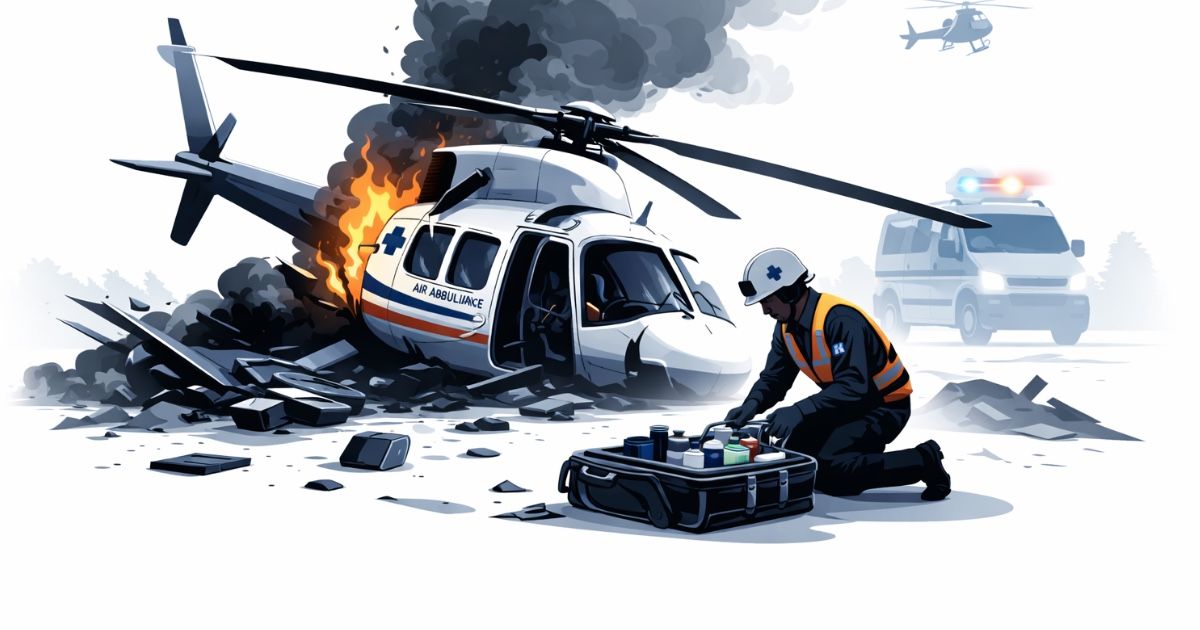
Air Ambulance Crash in Jharkhand: 7 Critical Safety Gaps in India’s Emergency Aviation Response
An air ambulance crash in Jharkhand has raised serious questions about aviation safety, emergency preparedness, and oversight of medical flights in India.
Air ambulances play a life-saving role. They are often used in critical medical emergencies where time is limited. When such an aircraft crashes, the impact goes beyond one incident. It raises wider concerns about pilot training, aircraft maintenance, air traffic coordination, and regulatory checks.
Authorities have begun an investigation. However, aviation experts say the key focus should be on systemic safety reforms, not just immediate fault-finding.
What We Know So Far
An air ambulance operating in Jharkhand met with an accident during an emergency operation.
Officials confirmed that an investigation has been initiated under standard aviation safety procedures. The probe will examine:
- Aircraft technical condition
- Weather conditions at the time of the crash
- Pilot experience and training
- Air traffic control communication
- Emergency response timeline
At this stage, investigators have not officially confirmed the cause of the crash Jharkhand. Aviation experts caution against speculation until formal findings are released.
Why Air Ambulance Safety Matters
Air ambulances are different from commercial passenger flights. They operate under pressure and often land at smaller airstrips or temporary helipads.
Key features of air ambulance operations:
- Short-notice departures
- Night operations
- Flights during adverse weather
- Critical patient transport
These factors increase operational risk.
In India, air ambulance services have expanded rapidly over the past decade. They connect remote regions with major hospitals in cities like Delhi, Mumbai, and Kolkata.
Jharkhand, with its mining belts and remote districts, often relies on air transport for medical emergencies.
Understanding Aviation Emergency Protocols
Every aircraft, including air ambulances, must follow rules set by the Directorate General of Civil Aviation (DGCA).
Standard safety checks include:
- Pre-flight inspection
- Weather clearance
- Fuel calculation
- Pilot duty-hour limits
- Emergency landing plans
In case of an accident, the Aircraft Accident Investigation Bureau (AAIB) conducts a detailed probe.
The investigation normally examines:
- Flight data recorders (if available)
- Maintenance logs
- Pilot communication
- Witness accounts
Experts say transparency in the final report is crucial for public trust.
Safety Expert Analysis: What Could Go Wrong in Air Ambulance Flights
Aviation safety analysts point to several possible risk areas in medical flights.
1. Weather Misjudgment
Air ambulances often operate in urgent conditions.
Poor visibility, heavy rain, or low clouds can reduce pilot reaction time. Smaller aircraft are more vulnerable to sudden weather shifts.
2. Pilot Fatigue
Medical evacuation flights may happen at odd hours. If crew rest rules are not strictly followed, fatigue can affect decision-making.
3. Maintenance Oversight
Air ambulance operators may use smaller charter aircraft. Maintenance quality varies across operators.
Strict adherence to DGCA-approved maintenance schedules is essential.
4. Landing Infrastructure Gaps
Remote areas may lack:
- Proper runway lighting
- Clear landing zones
- Updated navigation systems
In such conditions, even a minor error can lead to a serious incident.
Systemic Aviation Safety Questions Raised
This crash has triggered broader questions across the aviation sector.
Are Air Ambulance Operators Adequately Regulated?
Air ambulance services fall under charter aviation rules. Some experts argue that medical flights should have additional safety audits because they operate under emergency pressure.
Is There Enough Real-Time Monitoring?
Modern aircraft can transmit flight data live. Wider adoption of such systems can help authorities detect anomalies before a crash.
Are Smaller Airports Fully Equipped?
Jharkhand has several smaller airstrips. Many of them do not have advanced navigation aids found at metro airports.
Improving infrastructure at regional airports may reduce risk.
Emergency Response After the Crash
In any aviation accident, the first “golden hour” is critical.
Emergency response includes:
- Local police and disaster teams
- Fire services
- Medical support
- Air traffic coordination
Experts say coordinated response systems can reduce casualties.
In recent years, India has strengthened disaster response mechanisms. However, rural and semi-urban areas still face logistical challenges.
How India’s Aviation Sector Has Grown
India is one of the fastest-growing aviation markets globally. The expansion includes:
- Increased domestic flights
- Growth in charter services
- Rise in medical air transport
With this growth comes higher responsibility.
The DGCA regularly conducts audits, but experts suggest that medical aviation may need dedicated safety reviews.
International Safety Benchmarks
Globally, air ambulance safety has improved through:
- Advanced pilot simulation training
- Mandatory terrain awareness systems
- Strict weather minimums
- Real-time aircraft tracking
Some aviation analysts believe India can adopt stricter monitoring for emergency flights, especially in difficult terrains.
Public Confidence and Transparency
Aviation accidents often cause fear among the public.
However, data shows that flying remains one of the safest modes of transport when safety standards are followed.
Clear communication from authorities is important. Regular updates about the investigation can prevent misinformation.
Experts stress that early blame without evidence can damage institutions and create confusion.
What Happens Next?
The formal investigation will likely take several months.
Authorities will:
- Examine the wreckage
- Review flight records
- Analyse pilot credentials
- Study weather reports
If systemic flaws are found, recommendations may include:
- Revised operating procedures
- Stronger safety audits
- Infrastructure upgrades
- Policy changes in medical aviation
Impact on Air Ambulance Services in India
Following such incidents, operators often conduct internal reviews.
Short-term impacts may include:
- Temporary grounding of similar aircraft
- Safety inspections
- Insurance scrutiny
In the long term, reforms may improve safety standards.
Experts say incidents should become learning opportunities for the aviation system.
The Bigger Safety Conversation
This Jharkhand air ambulance crash is not just about one aircraft. It highlights a broader issue:
Emergency aviation must match the highest safety standards, even under pressure.
As India continues expanding regional connectivity and healthcare access, medical aviation will grow.
Ensuring strong oversight today can prevent future tragedies.
Key Takeaways for Readers
- An official investigation is underway.
- The cause has not yet been confirmed.
- Air ambulance flights carry unique risks.
- Experts call for stronger safety audits and better infrastructure.
- Transparency will be crucial in maintaining public trust.
A Call for System-Level Reform
The Jharkhand air ambulance crash is a reminder that rapid aviation growth must be matched with strong safety systems.
India’s aviation sector has achieved remarkable expansion. But emergency services require special attention.
As investigators work to determine what went wrong, policymakers may need to examine systemic aviation safety questions.
The goal should not only be to assign responsibility. It should be to strengthen the system so that emergency flights remain safe, reliable, and ready to save lives when every minute counts.
For readers searching “Air ambulance crash in Jharkhand,” “aviation emergency response India,” or “aircraft accident investigation update,” the coming weeks will bring more clarity.
Until then, the focus remains on safety, accountability, and reform.
Edited by: Pushkarini Annabathula
Also Read : Top OTT Releases of the Week: ‘Bridgerton’ S4 Part 2, ‘Ikkis’ and ‘Paradise’ Spark Fresh Buzz – Complete Viewing Guide & Cultural Impact
Add republicpost.in as preferred source on google – Click Here
Last Updated on: Wednesday, February 25, 2026 3:48 pm by Republic Post Team | Published by: Republic Post Team on Wednesday, February 25, 2026 3:48 pm | News Categories: India
About The Author