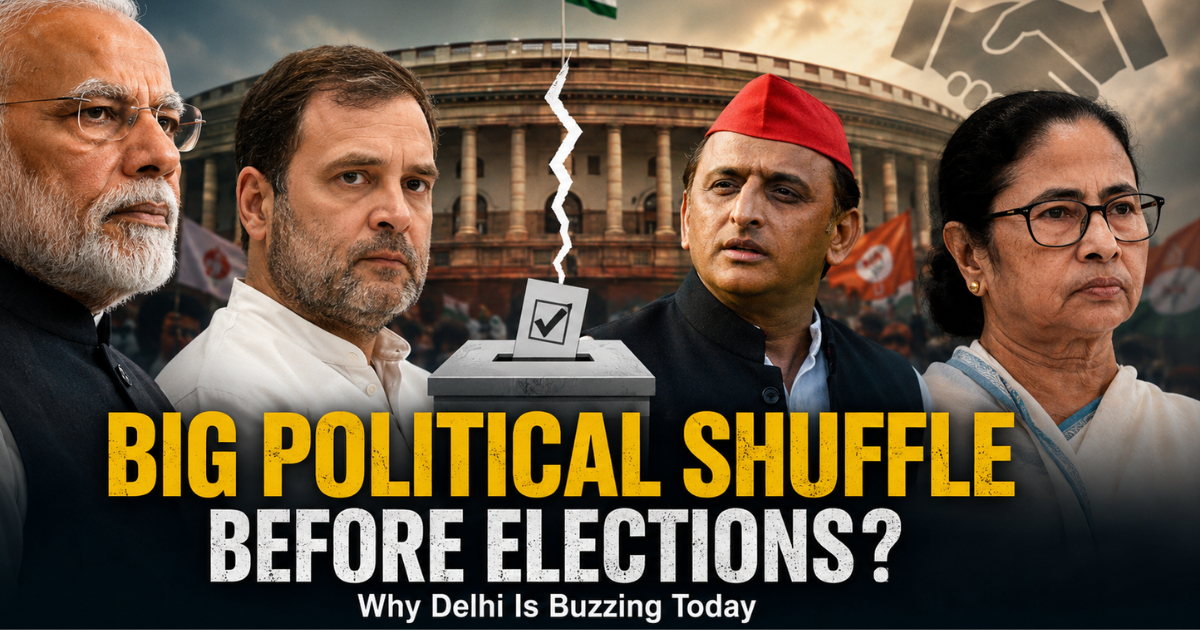
Big Political Shuffle Before Elections? Why Delhi Is Buzzing Today
Latest India Political Alliance News and State Election Updates
Opposition Meetings, NDA Strategy, and Regional Party Talks Trigger Fresh Political Speculation Ahead of State Polls
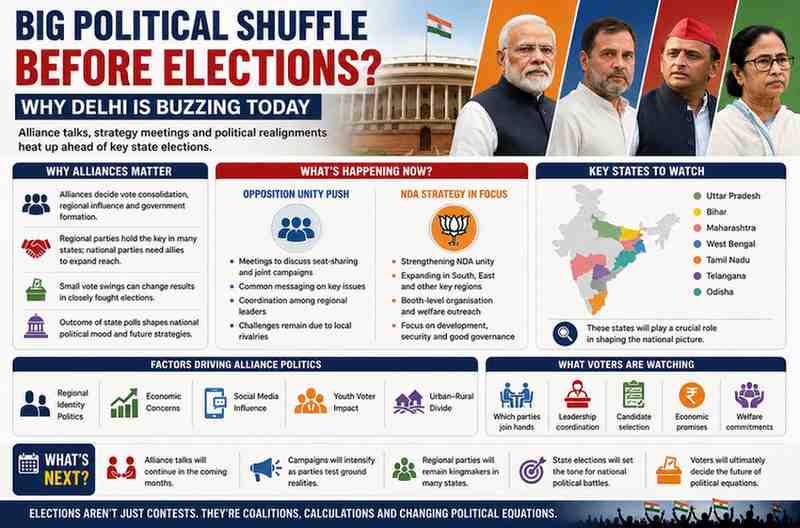
India’s political landscape is witnessing a fresh wave of alliance discussions, strategic meetings, and behind-the-scenes negotiations ahead of upcoming state elections and the larger national political battle expected over the next two years.
From New Delhi to regional political headquarters across the country, conversations around coalition building, seat-sharing formulas, and possible political realignments have once again become a major topic in Indian politics.
Several political observers believe the next phase of state elections could significantly shape the political mood before the 2026 and 2027 electoral cycle. As a result, both the ruling National Democratic Alliance (NDA) and opposition parties are actively working to strengthen their positions.
The growing buzz around political alliances has also dominated social media discussions, television debates, and online search trends, making it one of the most talked-about political developments in India today.
Why Political Alliances Matter Before Elections
Political alliances play a major role in Indian elections because they often determine vote consolidation, regional influence, and government formation possibilities.
India’s electoral system allows regional parties to hold significant influence in many states. Because of this, national parties like the BJP and Congress often rely on coalition partners to strengthen their electoral reach.
In several states, regional parties continue to have strong local voter bases. Strategic alliances can therefore directly impact election outcomes, especially in closely contested states.
Political analysts say alliances are becoming increasingly important because elections are now highly competitive, with smaller vote swings capable of changing results dramatically.
Delhi Emerges as the Centre of Political Activity
Over the past few days, Delhi has become the focus of intense political activity as senior leaders from multiple parties held meetings and consultations.
Leaders from opposition parties have reportedly discussed coordination strategies, common campaign messaging, and possible seat-sharing arrangements for future state elections.
At the same time, BJP leaders have also intensified internal discussions on alliance management, candidate selection, and regional expansion plans.
The rise in political meetings has triggered speculation about possible new partnerships as parties attempt to improve their electoral positions ahead of crucial contests.
While many discussions remain unofficial, the political atmosphere in the national capital has clearly become more active.
State Elections Expected to Shape National Politics
Upcoming state elections are expected to play a major role in setting the tone for national political developments.
Several states are likely to witness direct contests between the BJP and opposition alliances. In some regions, regional parties could become kingmakers depending on electoral outcomes.
Political experts say state elections often influence:
- National political narratives
- Leadership perception
- Coalition momentum
- Voter confidence
- Campaign funding strategies
- Regional policy priorities
Strong performances in state polls can help parties gain political momentum before larger national elections.
Similarly, poor results may force parties to rethink leadership structures, campaign strategies, or alliance partnerships.
Opposition Parties Focus on Unity Strategy
Many opposition parties have recently increased efforts to present a united front against the BJP in key states.
Several leaders have emphasized the need for coordinated campaigns and issue-based political cooperation.
Key topics reportedly being discussed include:
- Seat-sharing arrangements
- Joint rallies
- Common policy messaging
- Regional leadership coordination
- Vote transfer strategies
However, opposition unity continues to face challenges because regional parties often compete directly with one another in certain states.
Political observers note that while opposition parties may agree on national-level coordination, local rivalries could still complicate alliance efforts.
BJP Continues Focus on Regional Expansion
The BJP, meanwhile, is continuing its strategy of expanding its political footprint in states where regional parties traditionally dominate.
The party has focused on strengthening booth-level organization, welfare outreach, and alliance partnerships in multiple regions.
Political analysts say the BJP’s election strategy currently revolves around:
- Maintaining NDA unity
- Expanding support in southern states
- Strengthening presence in eastern India
- Improving urban voter outreach
- Consolidating welfare-based voter support
The party is also expected to continue emphasizing infrastructure, economic growth, welfare delivery, and national security during upcoming campaigns.
Regional Parties Hold Key Role in Alliance Politics
Regional parties remain central to India’s coalition politics.
Parties with strong influence in states such as West Bengal, Tamil Nadu, Bihar, Maharashtra, Telangana, Odisha, and Uttar Pradesh could play decisive roles in future political equations.
In many cases, regional leaders prefer maintaining independent political identities while selectively cooperating with national parties.
This creates a complex political environment where alliance discussions often continue until the final stages before elections.
Political experts say regional parties now hold stronger bargaining power because voter preferences are increasingly state-specific.
Coalition Politics Becoming More Competitive
India has witnessed coalition politics for decades, but analysts believe competition has become sharper in recent years.
Several factors are influencing alliance strategies today:
1. Regional Identity Politics
Local political issues continue to dominate voter behaviour in many states.
2. Economic Concerns
Inflation, unemployment, and welfare delivery remain major election issues.
3. Social Media Influence
Political narratives now spread rapidly through digital platforms.
4. Youth Voter Impact
Young voters are increasingly influencing campaign messaging and leadership strategies.
5. Urban-Rural Divide
Parties are adjusting campaign plans based on changing urban and rural voting patterns.
Because of these factors, alliances are no longer based only on ideology. Electoral mathematics and local leadership strength now play a major role.
Why Alliance News Trends Strongly Online
Political alliance discussions often trend heavily online because they combine uncertainty, leadership drama, and electoral calculations.
Search trends show rising interest in topics such as:
- India alliance news
- BJP alliance updates
- Congress coalition talks
- State elections 2026
- Opposition unity India
- Political strategy news
- Election campaign updates
Google Discover audiences also tend to engage strongly with election-related stories, especially when they involve major leaders or possible political shifts.
Experts say political speculation performs well digitally because voters actively follow developments that may impact future governments.
Social Media Amplifies Political Buzz
Social media platforms have significantly increased the visibility of alliance discussions.
Political hashtags, viral clips, press conferences, and leader meetings are quickly amplified online, creating wider public interest.
Short-form video platforms and reels are also playing an important role in simplifying political developments for younger audiences.
Popular political content formats currently include:
- “Top Political Moves of the Day”
- “Who Could Ally With Whom?”
- “Big Election Changes Explained”
- “State Poll Strategy Breakdown”
Digital-first political coverage is now influencing public conversation more rapidly than traditional campaign cycles.
Political Uncertainty Likely to Continue
Political observers believe alliance discussions are likely to continue for several months as parties evaluate electoral ground realities.
Seat-sharing disagreements, leadership ambitions, and regional competition may still create challenges for coalition building.
At the same time, new political developments or election outcomes could quickly reshape current equations.
Because Indian politics remains highly dynamic, alliances often evolve based on:
- Election survey trends
- Public mood
- Leadership negotiations
- Regional political shifts
- Campaign performance
This means the political landscape could continue changing rapidly ahead of major elections.
What Voters Are Watching Closely
For many voters, alliance politics is now becoming as important as individual party campaigns.
Citizens are closely watching:
- Which parties join hands
- Leadership coordination
- Candidate selection
- Economic promises
- Welfare commitments
- Governance records
In several states, voters may ultimately decide based on local leadership credibility rather than national narratives alone.
Political experts also note that coalition stability and governance capability could become major discussion points during upcoming campaigns.
The Road Ahead
India’s political atmosphere is expected to remain highly active as state elections move closer.
Both the BJP-led NDA and opposition parties are likely to intensify meetings, campaign planning, and alliance negotiations in the coming months.
Regional parties will continue playing a decisive role in shaping political outcomes, while voters are expected to closely follow every major political move.
As coalition discussions expand and election strategies evolve, Delhi is likely to remain the centre of India’s biggest political conversations in the weeks ahead.
Key Insights
- The growing focus on political alliances highlights how coalition politics continues to shape India’s electoral system, especially in states where regional parties hold strong voter influence and national parties alone may struggle to secure clear majorities.
- Upcoming state elections are likely to serve as an early political indicator for the broader 2026–2027 electoral cycle, influencing campaign narratives, leadership positioning, fundraising strategies, and coalition negotiations at the national level.
- Regional parties are expected to remain central to government formation calculations in several states, reflecting the continued importance of state-specific political identities, local leadership credibility, and regional development issues in Indian politics.
- The increasing role of digital platforms and social media has transformed alliance discussions into high-engagement public conversations, allowing political messaging, speculation, and campaign narratives to spread much faster than in previous election cycles.
- Opposition unity efforts may improve electoral competitiveness in certain regions, but seat-sharing disagreements and local rivalries could continue to pose challenges to long-term coalition stability and coordinated campaigning.
- The BJP’s continued emphasis on regional expansion, welfare delivery, infrastructure, and organizational strength suggests that future election campaigns are likely to combine national leadership messaging with highly localized voter outreach strategies.
- Political analysts note that coalition politics in India is increasingly driven by electoral mathematics, demographic shifts, and governance performance rather than ideology alone, making alliances more fluid and strategically negotiated.
- Voter behaviour is also evolving, with many citizens now closely evaluating not only party manifestos but also alliance stability, leadership coordination, and governance capability before elections.
Last Updated on: Tuesday, May 19, 2026 9:26 pm by Pushkarini Annabathula | Published by: Pushkarini Annabathula on Tuesday, May 19, 2026 9:23 pm | News Categories: Latest
About The Author