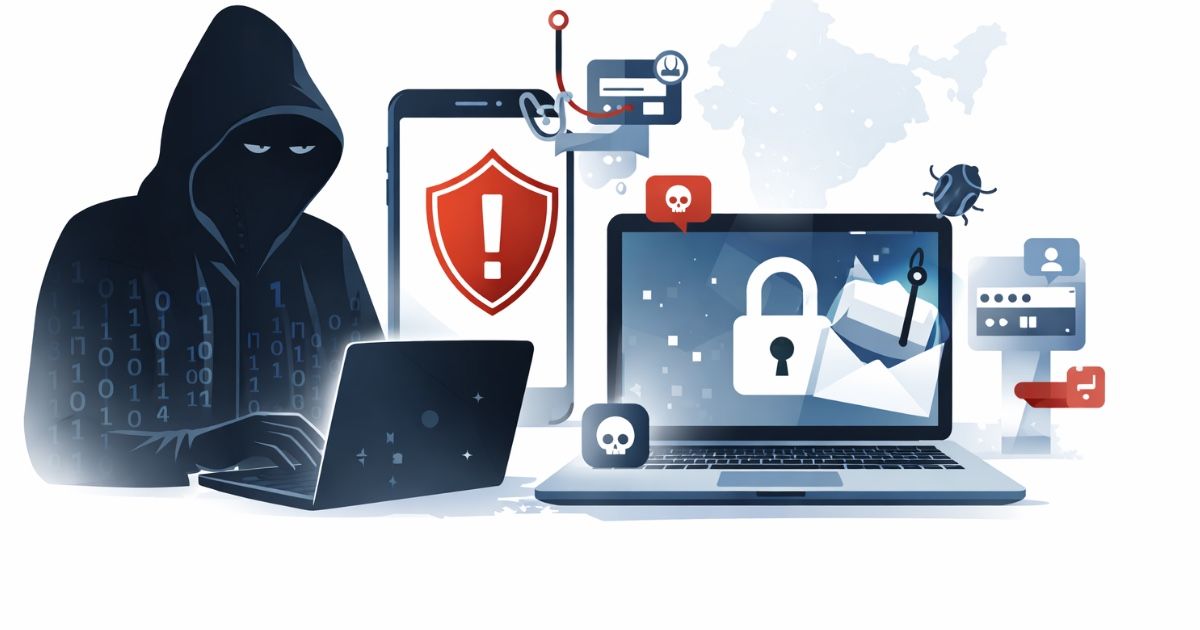
7 Critical Cybersecurity Alerts Indians Must Know to Stay Safe Online in 2026
India’s digital economy is growing fast. More people are using UPI, online banking, social media, and digital services every day. But as digital use rises, cybercrime is also increasing.
From phishing scams to data leaks, online threats are becoming more advanced. Fraudsters are targeting individuals, small businesses, and even government systems. For Indian internet users, staying alert is no longer optional. It is essential.
This report outlines 7 critical cybersecurity alerts Indians must know in 2026. These updates matter because cyber attacks can lead to financial loss, identity theft, and privacy breaches. Understanding the risks is the first step to staying safe online.
1. Rising UPI and Digital Payment Fraud Cases
Digital payments have become part of daily life. However, India cybercriminals are exploiting this growth.
Key Alert: Fake Payment Requests and QR Code Scams
Fraudsters are sending fake payment links and QR codes. Many victims believe they are receiving money but end up authorising payments instead.
Important safety tips:
- Never scan unknown QR codes.
- Do not approve collect requests unless you verify the sender.
- Always check the transaction message carefully.
UPI fraud often happens due to simple mistakes. Awareness can prevent major losses.
2. Fake Job Offers and Work-From-Home Scams
Job scams are increasing across India, especially on messaging apps and email.
Key Alert: Advance Fee Fraud
Scammers promise high-paying jobs. They then ask for a “registration fee” or “training charge.” Once paid, the fraudsters disappear.
Red flags to watch:
- Jobs that promise high income with little effort.
- Requests for payment before joining.
- Interviews conducted only through chat.
Always verify job offers through official company websites.
3. Deepfake Videos and AI-Based Impersonation
Artificial Intelligence is being misused to create fake videos and voice clips.
Key Alert: Fake Celebrity and Authority Messages
Scammers use AI to imitate public figures, company leaders, or even family members. They ask for urgent financial help.
If you receive a sudden request for money:
- Call the person directly to confirm.
- Do not rely only on voice notes or video clips.
- Report suspicious content immediately.
AI-powered scams are becoming harder to detect. Extra caution is needed.
4. Social Media Account Takeovers
Instagram, Facebook, and WhatsApp accounts are frequent targets.
Key Alert: Phishing Login Pages
Users receive links that look like official login pages. Once login details are entered, hackers gain access.
Safety checklist:
- Enable two-factor authentication.
- Avoid clicking login links sent via DMs.
- Use strong and unique passwords.
Account takeovers can lead to identity misuse and financial fraud.
5. Data Breach Alerts from Major Platforms
Data breaches are affecting global and Indian platforms alike.
Key Alert: Password Reuse Risk
When a platform suffers a breach, leaked emails and passwords are sold online. If users reuse the same password on multiple sites, hackers can access all accounts.
Security steps to follow:
- Change passwords regularly.
- Use different passwords for different apps.
- Consider using a password manager.
One weak password can expose multiple accounts.
6. Fake Customer Care Numbers in Search Results
Many cyber fraud cases begin with a simple Google search.
Key Alert: Sponsored Scam Numbers
Scammers post fake customer care numbers online. Victims searching for bank or airline support call these numbers and share sensitive details.
Precautions:
- Always visit the official website directly.
- Do not share OTPs with anyone.
- Remember: genuine companies never ask for full card details.
This scam is growing fast across metro cities.
7. Public Wi-Fi and Free Internet Risks
Public Wi-Fi in cafes, airports, and malls can be risky.
Key Alert: Man-in-the-Middle Attacks
Hackers can intercept data shared over unsecured networks. This includes passwords, emails, and banking details.
Protect yourself by:
- Avoiding financial transactions on public Wi-Fi.
- Turning off automatic Wi-Fi connection.
- Using secure and trusted networks only.
Free internet may come at a hidden cost.
Why These Cybersecurity Alerts Matter in 2026
India is among the world’s largest internet markets. Millions of new users are joining every year. Digital adoption is rising in rural and urban areas alike.
With this expansion, cybercriminals are finding new targets. Even small mistakes can lead to serious consequences.
Cybersecurity is not only about technology. It is about awareness.
What Indians Should Do Immediately
Here are practical steps every user should take today:
1. Enable Two-Factor Authentication (2FA)
Add an extra layer of protection to all major accounts.
2. Update Software Regularly
Security updates fix known vulnerabilities.
3. Be Careful with Links and Attachments
If unsure, do not click.
4. Monitor Bank Transactions
Check SMS alerts and statements regularly.
5. Report Fraud Quickly
Immediate reporting increases chances of recovery.
How Businesses and Small Enterprises Are at Risk
Small businesses are increasingly targeted. Many do not have strong security systems.
Common risks include:
- Ransomware attacks
- Email fraud
- Data theft
Business owners should:
- Train staff on cyber safety.
- Back up data regularly.
- Use secure payment systems.
Cyber attacks can disrupt operations and damage reputation.
Cybersecurity and Children: A Growing Concern
With online classes and gaming apps, children are also exposed to risks.
Parents should:
- Use parental controls.
- Teach children not to share personal details.
- Monitor online interactions.
Digital literacy must start early.
Government Awareness Drives and Helplines
Authorities are encouraging citizens to report cyber fraud quickly.
If you face online fraud:
- Contact your bank immediately.
- Report the issue on official cybercrime portals.
- Preserve screenshots and evidence.
Quick reporting can help prevent further damage.
The Bigger Picture: India’s Digital Future
India’s digital transformation is strong and growing. UPI transactions, online shopping, and remote work are shaping the economy.
However, cyber safety must grow alongside digital use.
The future depends not only on faster internet but also on safer internet.
Stay Alert, Stay Secure
Cyber threats are evolving every day. Fraudsters are using new tools and smarter tricks. But simple precautions can stop most attacks.
The key message is clear:
Verify before you trust. Think before you click. Protect before you regret.
In 2026, cybersecurity awareness is not just a tech issue. It is a daily life issue for every Indian internet user.
Staying informed is the strongest defence.
Edited by: Pushkarini Annabathula
Also Read : State of the Union 2026: 7 Powerful Moments That Sparked Intense Global Debate
Add republicpost.in as preferred source on google – Click Here
Last Updated on: Monday, March 2, 2026 4:47 pm by Republic Post Team | Published by: Republic Post Team on Monday, March 2, 2026 3:58 pm | News Categories: Technology
About The Author