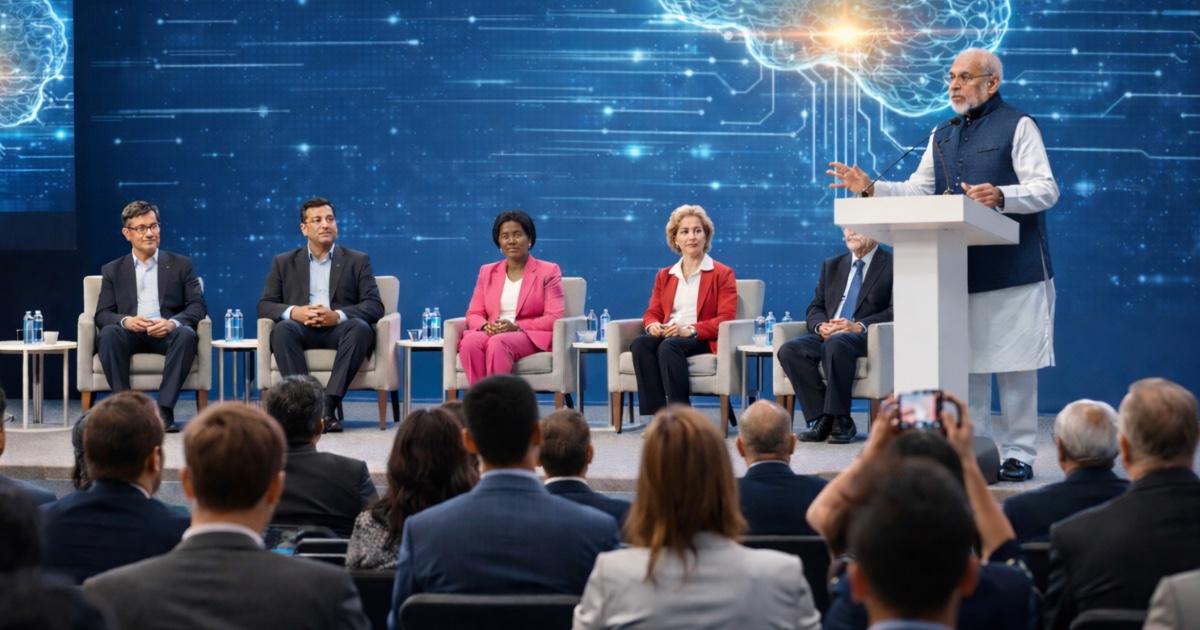
5 Big Takeaways from AI Impact Summit 2026 New Delhi: Final Sessions Conclude in New Delhi
The AI Impact Summit 2026 concluded in New Delhi on 20 February 2026, marking one of the most important technology gatherings hosted in India this year. Policymakers, global tech leaders, startup founders, and academic experts came together to discuss the future of artificial intelligence.
The summit matters today because AI is already shaping jobs, governance, education, healthcare, and business. As India positions itself as a global digital power, the decisions and discussions at this summit could influence policy and innovation for years to come.
Here is a detailed look at the key updates and what they mean for India.
What Was the AI Impact Summit 2026 New Delhi About?
The AI Impact Summit 2026 focused on three core themes:
- Responsible AI development
- Digital infrastructure and innovation
- Global collaboration on AI policy
The event saw participation from Indian ministries, global technology companies, startups, and research institutions.
India used the platform to highlight its growing role in AI research and digital transformation.
1. Strong Push for Responsible and Ethical AI
One of the biggest discussions during the final sessions was about ethical AI use.
Speakers stressed the need for:
- Transparency in algorithms
- Data privacy protection
- Reducing bias in AI systems
- Accountability in automated decisions
India emphasized that AI growth must balance innovation with citizen safety.
This focus is important as AI tools become more common in banking, healthcare, education, and government services.
2. India’s Digital Infrastructure Expansion Plans
The summit highlighted India’s rapid expansion in digital infrastructure.
Officials discussed:
- Expanding data centers
- Strengthening semiconductor manufacturing
- Improving AI computing capacity
- Enhancing cloud services access
India’s digital public infrastructure model was presented as an example of scalable technology systems.
The discussions showed that infrastructure investment will be critical for AI growth in the coming decade.
3. Industry and Startup Participation
The summit saw strong participation from Indian startups and global tech companies.
Key themes included:
- AI for agriculture
- AI in healthcare diagnostics
- Smart city technology
- Automation in manufacturing
Startups demonstrated real-world AI applications designed for Indian conditions.
This reflects a growing ecosystem where innovation is not limited to large corporations.
4. Education and Skill Development Announcements
A major takeaway from the final sessions was the urgent need for AI skill development.
Leaders highlighted:
- Curriculum updates in universities
- AI certification programs
- Industry-linked training models
- Faculty upskilling initiatives
India produces a large number of engineering and technical graduates every year. Aligning education with AI demand is seen as essential.
The summit stressed that AI skills must reach Tier-2 and Tier-3 cities, not just metro areas.
5. Global Cooperation on AI Governance
The summit also focused on international collaboration.
AI regulation differs across countries. Participants discussed the need for:
- Shared standards
- Cross-border data cooperation
- Cybersecurity frameworks
- Joint research programs
India positioned itself as a bridge between developed and emerging economies in shaping global AI policy.
This approach supports India’s ambition to be a trusted technology partner worldwide.
Why This Summit Matters for India in 2026 New Delhi
AI adoption is accelerating across sectors.
In India, AI is already being used in:
- Digital payments
- Health screening tools
- Language translation
- Customer service automation
The summit’s discussions show that AI is no longer experimental. It is becoming mainstream.
For businesses, this means increased investment in automation and analytics.
For students, this signals rising demand for AI-related skills.
For policymakers, it highlights the need for clear regulatory frameworks.
Economic and Job Market Implications
AI can improve productivity and create new roles. However, it can also change traditional jobs.
The summit addressed concerns about:
- Workforce displacement
- Reskilling needs
- Digital inclusion
Experts stressed that AI adoption must include training programs to help workers adapt.
Skill-based employment strategies were seen as critical for sustainable growth.
AI in Governance and Public Services
Government use of AI was another key topic.
Applications discussed included:
- Predictive analytics in public health
- Traffic management systems
- Fraud detection in welfare schemes
- Language AI tools for regional communication
India’s multilingual environment makes AI-based translation tools especially important.
Digital governance powered by AI could improve service delivery and efficiency.
Challenges Identified During the Summit
While the overall tone was optimistic, challenges were also acknowledged.
Infrastructure Gaps
Smaller institutions and rural regions may lack access to high-performance computing systems.
Data Protection Concerns
Strong privacy safeguards remain essential to maintain public trust.
Talent Shortage
AI expertise is still limited compared to demand.
Addressing these challenges will require coordination between government, industry, and academia.
What Happens After the Summit New Delhi?
The closing sessions focused on actionable steps.
Expected follow-up areas include:
- Policy consultations
- Industry partnerships
- Research funding discussions
- Education reforms
The real impact of the AI Impact Summit 2026 The AI Impact Summit 2026 New Delhi has reinforced one clear message:
will depend on how quickly these ideas translate into implementation.
India’s Position in the Global AI Landscape
India has a large technology workforce and one of the world’s biggest digital user bases.
This gives the country a strong foundation to expand AI leadership.
However, global competition in AI is intense. Countries are investing heavily in research, chips, and data infrastructure.
India’s balanced approach — focusing on innovation, regulation, and inclusion — may help it stand out.
Key Dates and Highlights
- Summit Location: New Delhi
- Conclusion Date: 20 February 2026
- Main Focus Areas: Ethical AI, infrastructure, skills, global cooperation
The event drew attention across business, tech, education, and policy circles.
Final Analysis
The AI Impact Summit 2026 New Delhi has reinforced one clear message:
Artificial intelligence is central to India’s future growth.
The final sessions in New Delhi highlighted both opportunity and responsibility.
If India can combine innovation with regulation and inclusive education, it may strengthen its position as a major AI hub.
For readers, the summit signals change that could affect careers, industries, and everyday digital experiences in the coming years.
The discussions may have concluded on 20 February 2026, but the real work now begins.
Also Read : SUV Accident in Dwarka on 19 February 2026: Key Investigation Updates and Road Safety Lessons
Add republicpost.in as preferred source on google – Click Here
Last Updated on: Friday, February 20, 2026 7:05 pm by Republic Post Team | Published by: Republic Post Team on Friday, February 20, 2026 7:04 pm | News Categories: News
About The Author