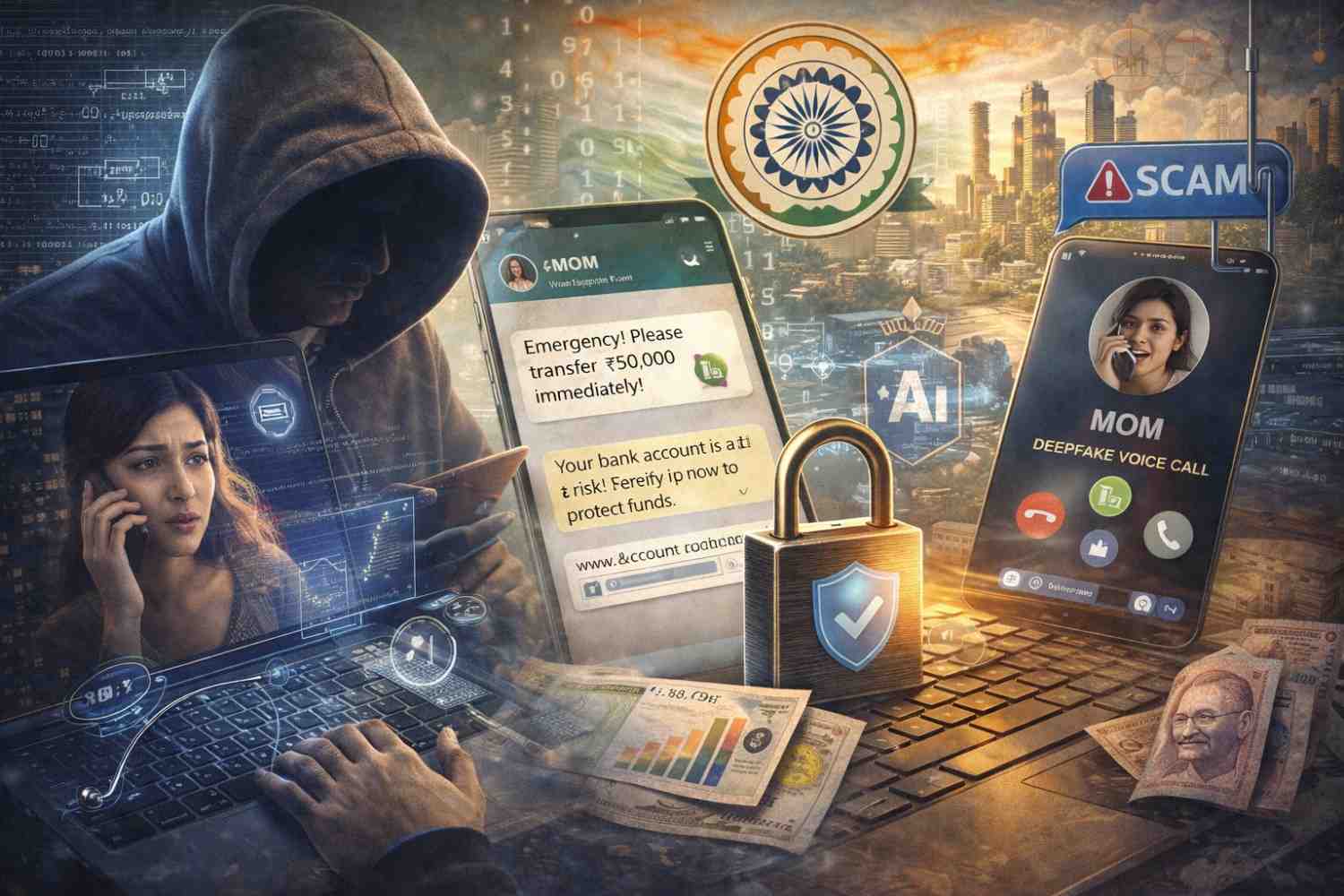
Complete Guide: Protecting Your Digital Identity from New-Age AI Phishing and WhatsApp Scams
India’s rapid digital adoption has transformed how citizens communicate, bank, shop, and access government services. At the same time, it has created fertile ground for a new generation of cybercrime driven by artificial intelligence, social engineering, and the misuse of popular messaging platforms such as WhatsApp. From deepfake voice calls impersonating family members to highly personalised phishing messages that appear indistinguishable from legitimate alerts, digital identity threats have evolved beyond traditional email scams. As regulators, law-enforcement agencies, and technology companies respond, individuals remain the first line of defence. Understanding how these scams operate and how to protect personal digital identity has become a matter of everyday security.
Background: India’s expanding digital footprint
Over the past decade, India has witnessed an unprecedented expansion of digital infrastructure. Affordable smartphones, low-cost data, and government-backed platforms for payments, identity verification, and service delivery have brought hundreds of millions of people online. Digital payments through UPI, online banking, e-commerce, telemedicine, and social media are now embedded in daily life across urban and rural areas.
This rapid expansion, however, has also widened the attack surface for cybercriminals. Personal data such as phone numbers, email addresses, Aadhaar-linked details, and financial identifiers are routinely shared across platforms. While most users are familiar with older forms of online fraud such as lottery scams or fake emails, the current threat landscape is far more sophisticated.
The rise of artificial intelligence tools capable of generating realistic text, audio, and images has altered the nature of digital deception. Scams are no longer limited to poorly written messages or generic emails. Instead, attackers can tailor content to individual targets, mimic trusted voices, and exploit real-time events to create urgency and fear.
Understanding digital identity in the Indian context
Digital identity refers to the collection of personal information that represents an individual in online and electronic systems. In India, this includes phone numbers linked to banking and messaging apps, email accounts, government-issued identifiers used for authentication, social media profiles, and behavioural data generated through online activity.
Because many services rely on mobile numbers as primary identifiers, control over a phone number often translates into access to multiple accounts. SIM-based authentication, one-time passwords, and messaging app verification codes are common gateways to financial and personal data. This makes mobile-centric scams particularly effective.
WhatsApp, with its deep penetration across demographics, has emerged as a preferred channel for fraudsters. Its encrypted nature, familiarity, and association with trusted personal communication make users more susceptible to deception.
The evolution of phishing: from emails to AI-driven attacks
Phishing has traditionally involved sending deceptive emails that trick recipients into clicking malicious links or sharing sensitive information. These early attacks were often easy to spot due to spelling errors, generic greetings, and unrealistic promises.
New-age phishing is markedly different. AI-powered language models can generate grammatically correct, contextually relevant messages in multiple Indian languages. Attackers can scrape publicly available data from social media or data breaches to personalise messages, addressing victims by name and referencing recent transactions or events.
In some cases, phishing attempts are combined with voice calls generated or enhanced by AI. Deepfake audio can replicate the voice of a known contact, such as a relative or colleague, asking for urgent financial help. The emotional manipulation involved reduces the likelihood of rational verification.
WhatsApp scams: why the platform is a prime target
WhatsApp scams exploit the platform’s trust factor and immediacy. Messages often appear to come from known contacts whose accounts have been compromised, lending credibility to fraudulent requests. Common tactics include sending links that claim to offer refunds, rewards, or account updates, as well as requests for verification codes or urgent transfers.
One widespread method involves account takeover. A victim receives a message asking for a verification code, often framed as a mistake or a request for help. Sharing this code allows the attacker to register the victim’s WhatsApp account on another device, locking the victim out and enabling further scams using their identity.
Another pattern involves impersonation of authorities or institutions. Messages may claim to be from banks, courier companies, or government agencies, warning of blocked accounts or undelivered packages. The inclusion of official-sounding language and logos increases the likelihood of compliance.
AI-enabled impersonation and deepfake threats
Artificial intelligence has lowered the barrier to impersonation. Voice cloning tools can create convincing audio samples with minimal source material, sometimes using clips from social media videos or voice notes. In reported cases, victims have received calls that sound like family members in distress, requesting immediate money transfers.
Video deepfakes, while less common in real-time scams due to technical complexity, are also emerging as a risk. Short video calls or recorded messages can be manipulated to appear authentic, particularly when viewed on small screens or under emotional stress.
These developments represent a shift from mass fraud to targeted attacks, where fewer victims are approached but with higher success rates and financial impact.
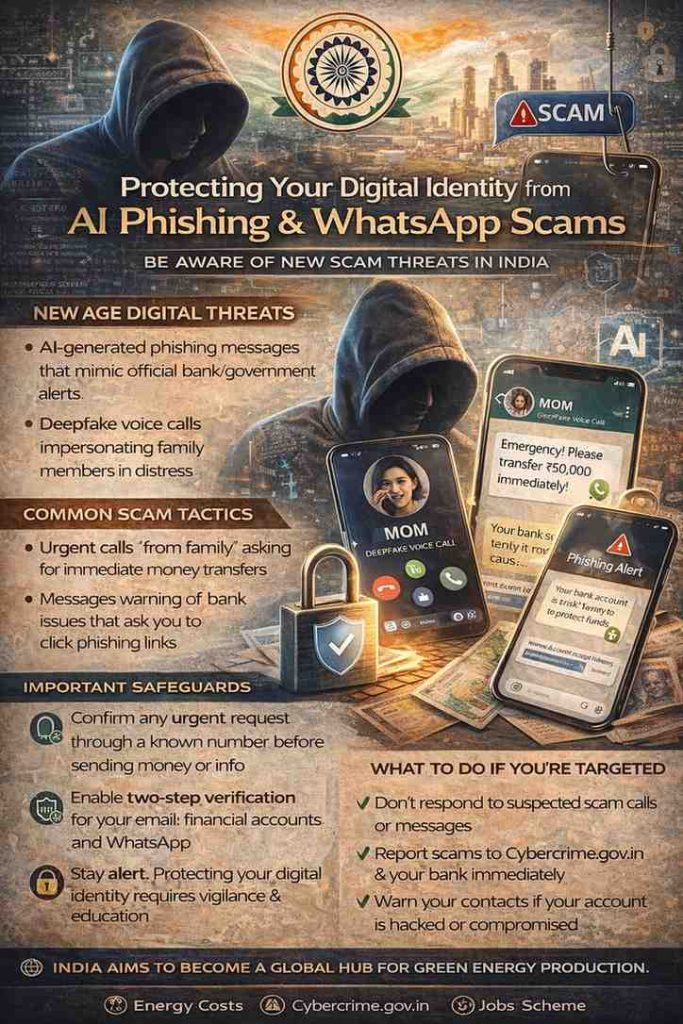
Impact on individuals and households
The consequences of digital identity fraud extend beyond financial loss. Victims often experience emotional distress, loss of trust in digital systems, and reputational damage if their accounts are used to scam others. In some cases, compromised identities lead to cascading effects, such as unauthorised loans, misuse of personal documents, or long-term credit issues.
Households with elderly members or first-time internet users are particularly vulnerable. Limited familiarity with digital security practices, combined with deference to authority or family hierarchies, can increase susceptibility to manipulation.
Broader societal and economic implications
At a systemic level, widespread digital fraud undermines confidence in online services. This has implications for financial inclusion, e-governance, and the digital economy. If users perceive digital platforms as unsafe, adoption may slow, affecting policy goals related to cashless transactions and efficient service delivery.
Law-enforcement agencies also face challenges in investigating cybercrime that often crosses state and national boundaries. Jurisdictional complexities, encrypted communications, and rapid fund transfers complicate recovery and prosecution.
Regulatory and institutional responses in India
Indian authorities have taken steps to address cyber fraud through regulatory frameworks, awareness campaigns, and technological interventions. Financial institutions have strengthened transaction monitoring and customer alerts. Telecom providers have implemented measures to reduce SIM misuse, while platforms like WhatsApp have introduced features to report and block suspicious accounts.
The government has also established mechanisms for reporting cybercrime through dedicated portals and helplines. Law-enforcement agencies are increasingly focusing on cybercrime units and digital forensics capabilities. However, given the scale of digital adoption, institutional responses alone cannot eliminate risk.
How scammers exploit human behaviour
Despite technological sophistication, many scams succeed because they exploit predictable human responses. Urgency, fear, authority, and familiarity are common triggers. Messages are crafted to create a sense of immediate action, discouraging verification.
Scammers also take advantage of information overload. Users receive numerous legitimate alerts daily, making it difficult to distinguish genuine messages from fraudulent ones. Over time, this can lead to complacency or rushed decision-making.
Understanding these psychological elements is crucial for effective prevention. Awareness that emotional manipulation is a deliberate tactic can help individuals pause and verify before responding.
Practical steps to protect your digital identity
Protecting digital identity begins with basic hygiene. Strong, unique passwords for different services reduce the impact of a single breach. Enabling two-factor authentication adds an additional layer of security, particularly for email, banking, and messaging accounts.
Users should be cautious about sharing personal information publicly on social media. Details such as phone numbers, birthdates, and family relationships can be exploited to personalise scams. Privacy settings should be reviewed regularly.
On WhatsApp, enabling features such as two-step verification can prevent account takeovers. Users should avoid sharing verification codes under any circumstances and be sceptical of unexpected requests, even if they appear to come from known contacts.
Verifying before trusting
Verification is a key defence against AI-driven scams. If a message or call requests money or sensitive information, taking time to confirm through an independent channel can prevent fraud. This might involve calling the person directly using a known number or contacting the institution through official channels.
For voice calls claiming emergencies, asking questions that only the genuine person would know can help identify impersonation. Scammers often rely on emotional pressure and may avoid detailed conversation.
The role of financial institutions and platforms
Banks and payment platforms play a critical role in protecting users. Transaction alerts, spending limits, and cooling-off periods for new beneficiaries can reduce losses. Users should familiarise themselves with available security features and promptly report suspicious activity.
Messaging platforms have introduced warnings for messages from unknown senders and options to report spam. While these tools are useful, they are not foolproof, underscoring the importance of user vigilance.
Educating vulnerable groups
Awareness efforts need to reach beyond digitally savvy users. Elderly individuals, students, and first-time smartphone users require targeted education that addresses common scam scenarios in simple language. Family members can play a role by discussing potential risks and establishing verification norms for financial requests.
Community-level initiatives, including workshops and local awareness campaigns, can help bridge knowledge gaps. As scams increasingly use regional languages, educational materials must be linguistically and culturally accessible.
Data protection and the future landscape
As India continues to digitise public and private services, data protection frameworks are evolving to address privacy and security concerns. Stronger safeguards around data collection, storage, and sharing can reduce the risk of large-scale breaches that feed phishing operations.
At the same time, AI technologies will continue to advance. Defensive uses of AI, such as fraud detection algorithms and behavioural analysis, are likely to become more prominent. The contest between attackers and defenders will increasingly involve automated systems on both sides.
What to do if you are targeted or victimised
If a scam attempt is identified early, blocking and reporting the sender can prevent further harm. In cases of financial loss or account compromise, immediate reporting to the bank, platform, and cybercrime authorities is essential. Timely action can sometimes lead to fund recovery or account restoration.
Victims should also inform contacts if their accounts have been compromised, reducing the risk of secondary scams. While reporting processes can be stressful, they contribute to broader enforcement efforts and data collection.
Conclusion
New-age AI phishing and WhatsApp scams represent a significant evolution in digital crime, blending advanced technology with age-old techniques of deception. In India’s increasingly connected society, protecting digital identity is no longer solely a technical issue but a matter of everyday awareness and behavioural discipline.
While regulators, platforms, and law-enforcement agencies continue to strengthen defences, individual users remain central to prevention. By understanding how modern scams operate, recognising psychological manipulation, and adopting cautious digital practices, citizens can reduce their vulnerability.
As digital services become more integral to economic and social life, safeguarding digital identity will be essential not only for personal security but also for maintaining trust in the systems that underpin India’s digital future.
Add republicpost.in as preferred source on google – click here
Last Updated on: Thursday, January 29, 2026 12:00 pm by Republic Post Team | Published by: Republic Post Team on Thursday, January 29, 2026 12:00 pm | News Categories: Technology, Education
About The Author