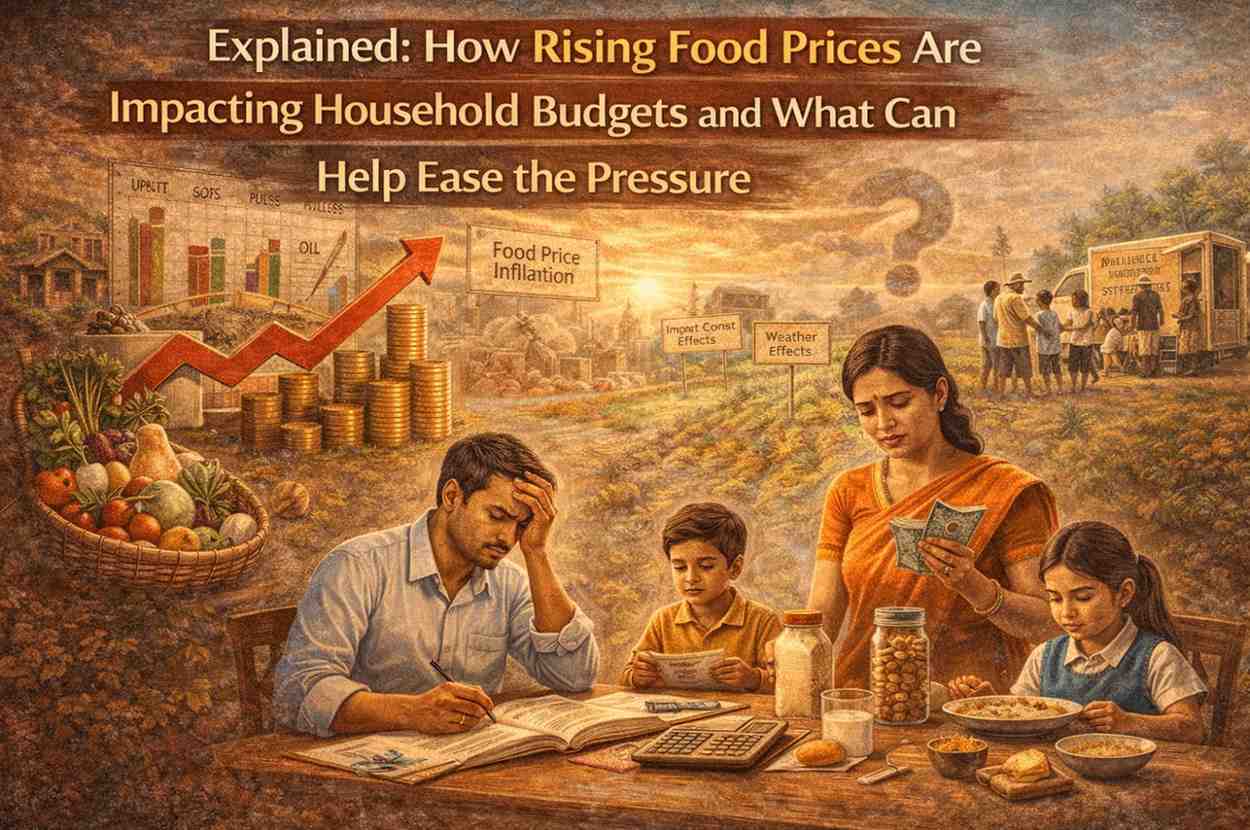
Explained: How Rising Food Prices Are Impacting Household Budgets and What Can Help Ease the Pressure
Rising food prices have emerged as one of the most pressing economic concerns for households across India. From vegetables and pulses to cooking oil and dairy products, everyday essentials have become steadily more expensive, putting pressure on family budgets and altering consumption patterns. While inflation is influenced by global and domestic factors, its impact is felt most acutely at the household level, where food accounts for a significant share of monthly spending, especially for lower- and middle-income families.
Why Food Prices Are Rising
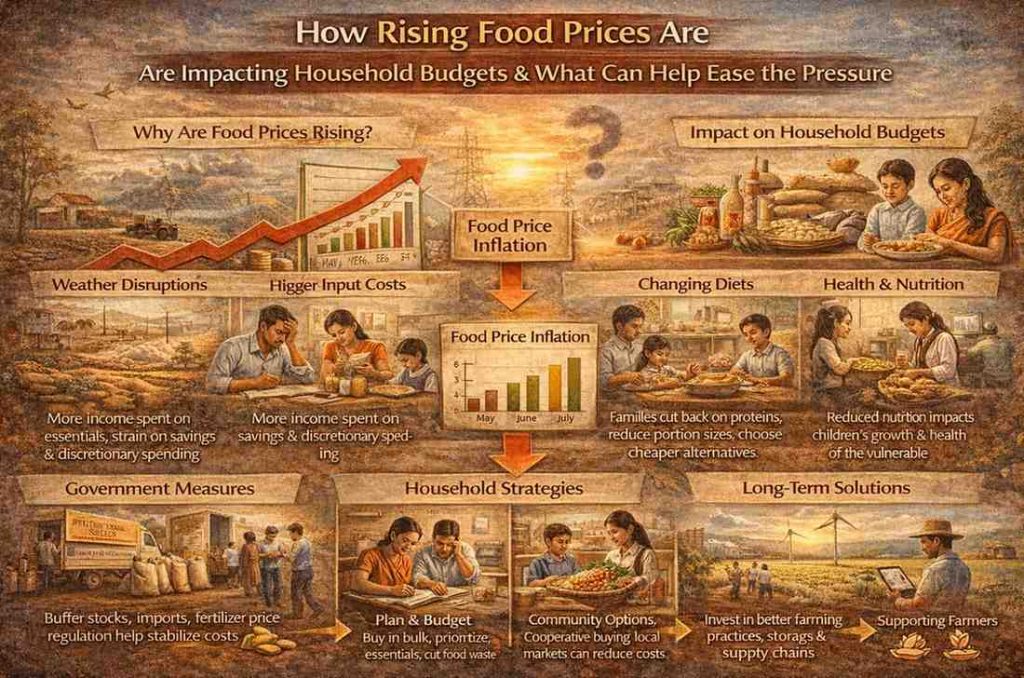
Food price inflation is driven by a combination of structural and short-term factors. Weather-related disruptions such as irregular monsoons, heatwaves, and unseasonal rainfall affect crop yields and supply chains. At the same time, higher input costs for farmers, including fertilisers, fuel, and transportation, add to production expenses, which are eventually passed on to consumers.
Global developments also play a role. Volatility in international commodity markets, geopolitical tensions, and changes in export-import policies influence the prices of edible oils, pulses, and grains. Together, these factors create upward pressure on food prices that can persist over several months.
Impact on Household Budgets
For most Indian households, food remains the largest component of monthly expenditure. As prices rise, families are forced to allocate a greater share of their income to essentials, leaving less room for savings, education, healthcare, and discretionary spending. This adjustment is particularly difficult for daily-wage earners and fixed-income households, where incomes do not rise in line with inflation.
Middle-class families also feel the strain as grocery bills increase steadily. Even small price hikes across multiple items can significantly affect monthly budgets, leading households to reassess spending priorities and cut back on non-essential purchases.
Changing Consumption Patterns
Rising food prices often lead to noticeable changes in what households consume. Families may shift from costlier food items to cheaper alternatives, reduce portion sizes, or limit the consumption of protein-rich foods such as pulses, eggs, and dairy. While these adjustments help manage expenses, they can have long-term implications for nutrition and health.
Urban households may turn to bulk buying, discount stores, or online grocery platforms to save costs, while rural families often rely more heavily on locally available produce. In both cases, price sensitivity becomes a key factor shaping food choices.
Impact on Nutrition and Food Security
Sustained food inflation poses risks to nutrition, particularly among children, the elderly, and economically vulnerable groups. When households cut back on nutritious foods to manage costs, dietary diversity suffers. This can exacerbate existing challenges related to malnutrition and health outcomes.
Food security concerns become more pronounced during periods of high inflation, especially in regions where incomes are unstable. Ensuring access to affordable and nutritious food remains a critical policy priority in such conditions.
Role of Government Measures
Governments play a central role in managing food price pressures. Measures such as releasing buffer stocks, adjusting import duties, and regulating exports are often used to stabilise prices of essential commodities. Targeted welfare schemes and subsidised food distribution through public systems help cushion the impact on vulnerable households.
Price monitoring and timely intervention are essential to prevent short-term spikes from turning into prolonged inflation. Transparent communication also helps manage public expectations during periods of volatility.
What Can Help Ease the Pressure on Households
At the household level, better budgeting and planning can help manage rising food costs. Prioritising essential items, reducing food waste, and exploring affordable local alternatives can provide some relief. Community initiatives such as cooperative buying and local markets also offer cost-effective options.
On a broader scale, improving agricultural productivity, investing in storage and logistics, and strengthening supply chains can help reduce price volatility over time. Encouraging crop diversification and supporting farmers through better access to technology and credit are equally important in addressing structural causes of food inflation.
Long-Term Solutions to Food Price Stability
Sustainable solutions lie in building resilience within the food system. Climate-resilient agriculture, efficient water management, and modern supply chains can reduce the impact of weather-related disruptions. Expanding cold storage and processing facilities can minimise post-harvest losses, which contribute significantly to price increases.
Policy coordination between agriculture, trade, and consumer affairs is key to ensuring that price stability does not come at the cost of farmer incomes or long-term food security.
The Road Ahead
Rising food prices are more than a temporary inconvenience; they shape household behaviour, affect nutrition, and influence overall economic well-being. While short-term measures can provide relief, lasting solutions require a balanced approach that addresses both supply-side challenges and consumer needs.
Explained simply, the pressure on household budgets highlights the importance of a stable and resilient food system. As policymakers, producers, and consumers navigate this challenge together, the focus must remain on ensuring affordability, accessibility, and nutritional security for all.
Also read – https://republicpost.in/your-morning-milk-is-tested-more-times-than-you-think-heres-why-it-matters/
Add republicpost.in as preferred source on google – click here
Last Updated on: Thursday, January 22, 2026 12:44 pm by Republic Post Team | Published by: Republic Post Team on Thursday, January 22, 2026 12:43 pm | News Categories: News, India
About The Author