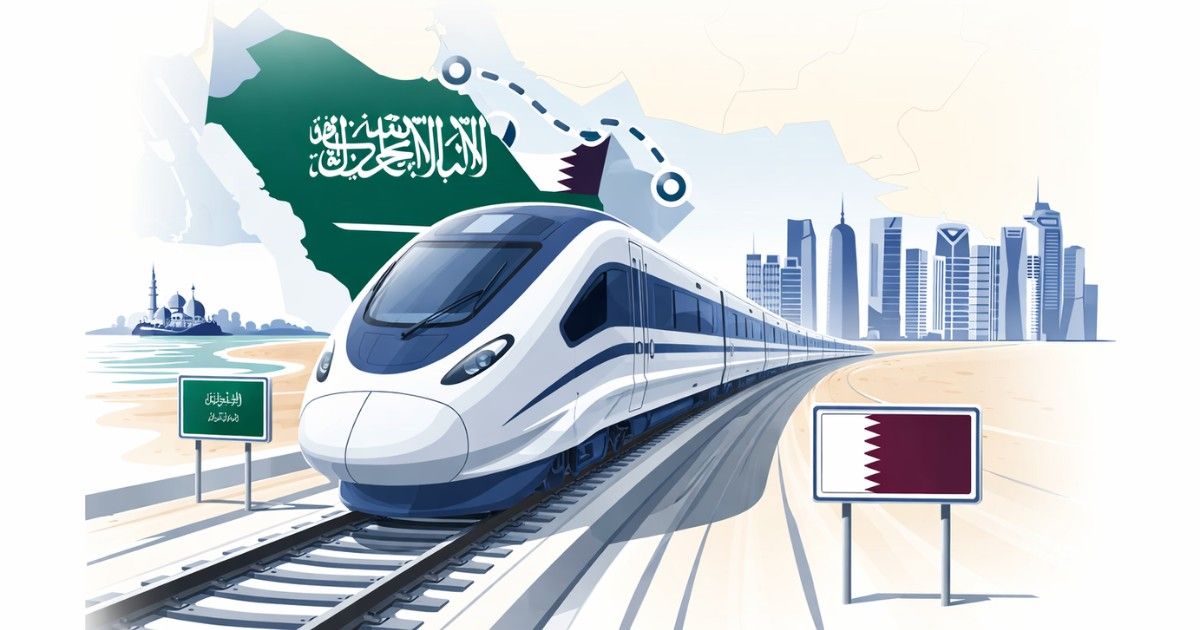
Saudi-Qatar High-Speed Rail Project: 7 Powerful Strategic and Economic Impacts on Gulf Cooperation
The Saudi-Qatar High-Speed Rail Project is emerging as one of the most talked-about infrastructure developments in the Gulf region. The proposed railway link aims to connect Saudi Arabia and Qatar through a modern high-speed rail network. If completed, it could reshape transport, trade, tourism, and political cooperation in the Gulf.
Infrastructure stories of this scale generate global interest because they go beyond transport. They represent strategy, economic ambition, and long-term regional planning.
The Saudi-Qatar High-Speed Rail Project is not just about trains. It reflects deeper regional cooperation and economic transformation within the Gulf.
Background: Regional Cooperation in the Gulf
Both Saudi Arabia and Qatar are key members of the Gulf Cooperation Council (GCC). The GCC has long discussed stronger economic and transport integration among member states.
In recent years, Gulf nations have focused heavily on diversification. Oil remains important, but leaders are investing in tourism, logistics, finance, and infrastructure.
The Saudi-Qatar High-Speed Rail Project fits directly into this broader regional vision.
What Is the Saudi-Qatar High-Speed Rail Project?
The Saudi-Qatar High-Speed Rail Project proposes a fast rail corridor linking major cities between the two countries. While final routes and technical details are still under planning discussions, experts suggest the line could connect eastern Saudi Arabia to Doha.
High-speed rail typically allows trains to travel above 250 km per hour. This would significantly reduce travel time compared to road journeys.
If implemented, passengers could travel between the two nations in a few hours instead of long highway drives.
Strategic Importance of the Rail Link
The Saudi-Qatar High-Speed Rail Project carries strong strategic value.
- Political Reconciliation and Cooperation
Improved connectivity signals stronger diplomatic ties and long-term collaboration. - Economic Integration
Faster movement of goods and people supports cross-border trade. - Regional Stability
Infrastructure partnerships often strengthen political trust.
Following the restoration of diplomatic relations in recent years, such projects reflect a more cooperative Gulf environment.
Economic Implications for Both Nations
The Saudi-Qatar High-Speed Rail Project could bring several economic benefits.
1. Boost to Trade
Faster transport corridors reduce logistics costs. Businesses can move goods efficiently between industrial zones and ports.
Saudi Arabia’s large market combined with Qatar’s investment capacity could create stronger commercial partnerships.
2. Tourism Growth
Both countries are investing in tourism:
- Saudi Arabia through Vision 2030 reforms
- Qatar through global sports and event-based tourism
A high-speed rail link would allow tourists to visit multiple destinations in one trip.
3. Job Creation
Large-scale infrastructure projects generate employment during construction and operation phases. Engineers, construction workers, technology providers, and service industries all benefit.
Alignment with Vision 2030
The Saudi-Qatar High-Speed Rail Project aligns closely with Saudi Vision 2030.
Saudi Arabia is investing heavily in mega infrastructure projects. Modern rail systems are central to this strategy. Improved regional transport supports economic diversification.
Similarly, Qatar continues to upgrade its infrastructure after hosting global events such as the FIFA World Cup 2022. The country built advanced metro systems and highways.
Connecting these infrastructure networks creates regional synergy.
Strengthening the GCC Vision
The Gulf Cooperation Council has long proposed a unified railway network connecting member states.
The Saudi-Qatar High-Speed Rail Project may become a stepping stone toward that larger Gulf railway plan.
A fully integrated GCC railway could connect:
- Saudi Arabia
- Qatar
- United Arab Emirates
- Bahrain
- Kuwait
- Oman
Such integration would transform regional mobility.
Infrastructure and Engineering Challenges
Despite the optimism, the Saudi-Qatar High-Speed Rail Project faces challenges.
1. Environmental Conditions
Desert terrain presents engineering complexities. High temperatures and sandstorms can impact rail infrastructure.
2. Funding and Investment
High-speed rail requires billions of dollars in investment. Governments may involve public-private partnerships.
3. Cross-Border Regulations
Rail systems require unified customs, immigration, and safety standards.
However, Gulf countries have strong financial capacity and prior experience with mega projects.
Global Significance of the Project
The Saudi-Qatar High-Speed Rail Project is not only important for the Gulf but also for global infrastructure trends.
Many regions are investing in high-speed rail as a cleaner transport alternative. Compared to air travel, high-speed trains reduce carbon emissions for short to medium distances.
International investors and engineering firms are closely watching developments in the Gulf.
Impact on Business and Logistics
Improved rail connectivity can reshape supply chains.
Industries such as:
- Petrochemicals
- Manufacturing
- Construction materials
- Consumer goods
could benefit from smoother cross-border movement.
The Saudi-Qatar High-Speed Rail Project may also support logistics hubs and free zones in both countries.
Potential Boost to Regional Unity
Infrastructure builds interdependence. The Saudi-Qatar High-Speed Rail Project symbolizes shared interests.
Stronger connectivity increases:
- Cultural exchange
- Business collaboration
- Student mobility
- Workforce movement
These factors strengthen long-term regional unity.
Comparison with Other Global Rail Projects
Globally, countries like China, Japan, and European nations have demonstrated the economic impact of high-speed rail.
The Gulf region has financial resources and strategic location advantages. A successful Saudi-Qatar High-Speed Rail Project could position the region as a key transit hub between Asia, Europe, and Africa.
Environmental Considerations
Modern high-speed rail systems are considered more environmentally friendly than traditional transport modes.
If powered by renewable energy sources, the Saudi-Qatar High-Speed Rail Project could contribute to sustainability goals.
Both Saudi Arabia and Qatar are investing in renewable energy, including solar power.
Public Reaction and Market Interest
Infrastructure analysts believe the Saudi-Qatar High-Speed Rail Project could attract global attention.
Investors often view large infrastructure projects as signals of economic confidence.
Regional stock markets may also respond positively if the project moves from proposal to execution stage.
Timeline and Future Outlook
At present, detailed technical plans and official construction timelines are still under discussion.
However, if agreements move forward, the Saudi-Qatar High-Speed Rail Project could become one of the most significant infrastructure projects in the Gulf in the coming decade.
Experts suggest phased development may be adopted to manage cost and implementation challenges.
A Strategic Turning Point for the Gulf
The Saudi-Qatar High-Speed Rail Project represents more than a transport link. It symbolizes cooperation, economic diversification, and regional ambition.
If completed, it could:
- Reduce travel time
- Increase trade
- Strengthen diplomatic ties
- Support sustainable transport
- Accelerate GCC integration
As global infrastructure competition intensifies, projects like this place the Gulf region firmly on the map of modern connectivity.
The coming years will determine whether the Saudi-Qatar High-Speed Rail Project becomes a landmark achievement in Middle Eastern infrastructure history.
Also Read: Sensex and Nifty Today: IT Stocks Tumble, Markets on Edge Ahead of Critical Q4 Earnings Season
Follow us on google news: Click Here
Last Updated on: Friday, February 13, 2026 5:37 pm by Republic Post Team | Published by: Republic Post Team on Friday, February 13, 2026 5:36 pm | News Categories: News
About The Author