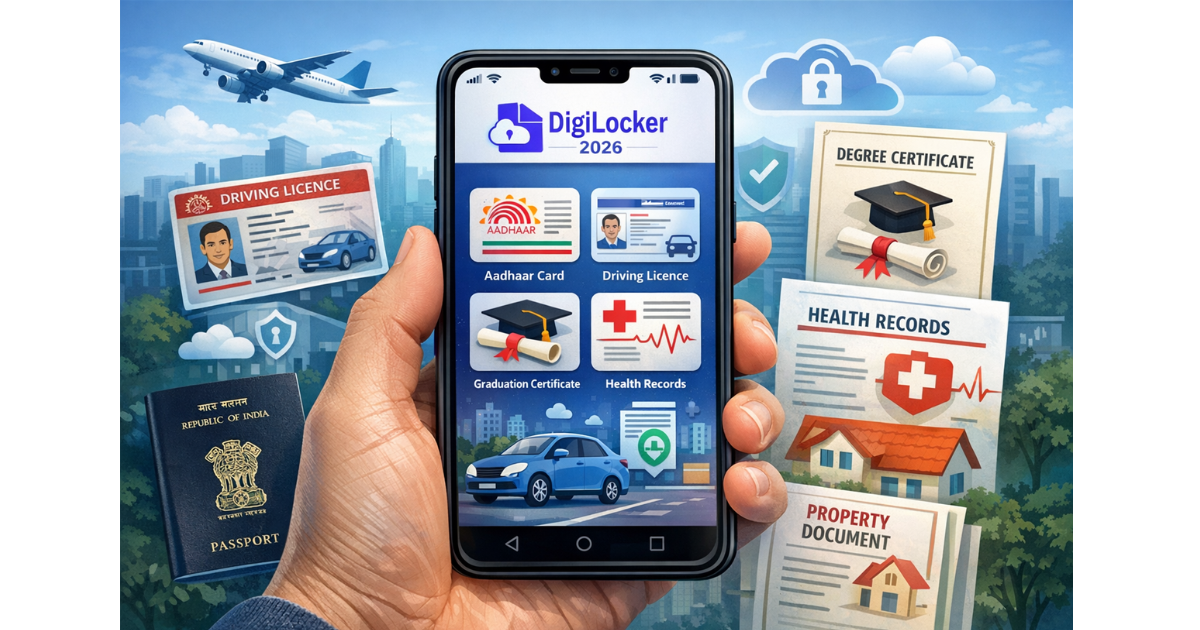
Complete Guide to DigiLocker 2026: New Digital Services and Documents You Can Now Store Legally
As India’s digital governance ecosystem matures, DigiLocker in 2026 has emerged as far more than a paperless document repository. What began as a convenience-driven initiative under the Digital India programme has now evolved into a legally robust, citizen-centric digital vault that supports daily life, compliance, education, travel, healthcare and employment. With fresh upgrades, expanded document categories and deeper integration with government and private platforms, DigiLocker 2026 marks a decisive shift toward a fully trusted digital-first documentation system.
What DigiLocker Means in 2026
DigiLocker today functions as an officially recognised platform where digital documents issued by authorised entities are considered legally equivalent to their physical counterparts. By 2026, the system has been strengthened through policy backing, wider issuer onboarding and improved cybersecurity architecture. Courts, traffic authorities, educational institutions, banks and employers increasingly accept DigiLocker-issued documents without insisting on hard copies, reinforcing its role as a legally valid digital identity companion.
New Categories of Documents You Can Store Legally
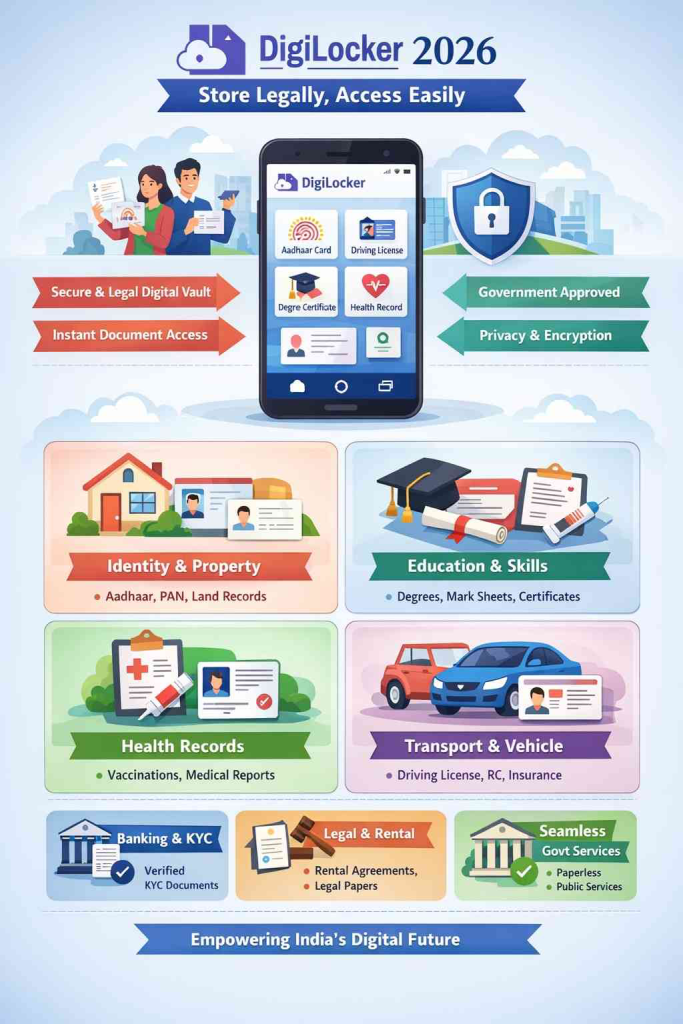
One of the most significant developments in DigiLocker 2026 is the expansion of document categories available for storage and verification. Beyond traditional identity and academic records, citizens can now legally store a wider range of personal, professional and service-related documents. These include updated land and property ownership records linked with state revenue departments, digitally signed rental agreements, insurance policies across health, life and motor segments, and verified employment records issued directly by employers registered on the DigiLocker ecosystem.
Healthcare documentation has also seen a major boost. DigiLocker now supports storage of government-recognised digital health records, including vaccination certificates, hospital discharge summaries and select diagnostic reports issued by authorised health facilities. This integration aligns with the national digital health framework, enabling citizens to securely access medical history when required, especially during emergencies or interstate travel.
Education and Skill Records Go Fully Digital
For students and professionals, DigiLocker 2026 has become an essential academic and career tool. Universities, boards and skill councils across India now issue degrees, mark sheets, migration certificates and skill credentials directly into DigiLocker accounts. New additions include apprenticeship completion certificates, government-backed online course credentials and professional licensing documents. These records are tamper-proof, instantly verifiable and increasingly mandatory for admissions, recruitment and foreign credential assessments.
Travel, Transport and Mobility Documents
Transport-related documentation has long been a core feature of DigiLocker, but 2026 brings deeper legal clarity and usability. Driving licences, vehicle registration certificates and insurance papers stored in DigiLocker are universally accepted by traffic enforcement agencies across states. In addition, select permits, fitness certificates and commercial vehicle documents are now digitally issued, reducing delays and compliance disputes for transport operators and individual vehicle owners alike.
Banking, Financial and Utility Integration
DigiLocker’s integration with financial and utility services has expanded substantially. Citizens can now store verified KYC documents issued by banks, pension authorities and financial institutions, reducing repeated submission during account opening or service changes. Certain utility connections and consumer service records issued by government-backed providers are also available in digital form, helping streamline address verification and service portability.
Legal Validity and Compliance Framework
A key reason for DigiLocker’s growing adoption in 2026 is the strengthened legal framework supporting it. Documents issued through DigiLocker by authorised issuers carry the same legal standing as original physical documents under applicable IT and administrative laws. Government notifications and departmental circulars have clarified acceptance norms, reducing ambiguity for citizens and officials alike. This clarity has significantly reduced document-related disputes, delays and verification fraud.
Security, Privacy and User Control
With rising digital adoption comes heightened concern around data security. DigiLocker 2026 addresses this through advanced encryption, multi-factor authentication and granular consent controls. Users retain control over who can access their documents and for how long. Temporary access links and consent-based sharing ensure privacy while enabling seamless verification for official purposes. Regular security audits and compliance with national data protection norms further reinforce trust in the platform.
Role in Governance and Citizen Services
From welfare schemes to recruitment processes, DigiLocker has become deeply embedded in governance workflows. Many government services now directly pull verified documents from DigiLocker, reducing paperwork and processing time. This has particular impact in rural and semi-urban areas, where citizens often faced challenges preserving physical records. DigiLocker’s accessibility through mobile devices has helped bridge this gap, making public services more inclusive and efficient.
What DigiLocker 2026 Signals for the Future
The evolution of DigiLocker in 2026 reflects India’s broader transition toward digital trust infrastructure. It signals a future where document verification is instant, transparent and citizen-controlled. As more institutions come onboard and interoperability expands, DigiLocker is set to become a foundational layer for digital citizenship, reducing administrative friction and empowering individuals with secure ownership of their records.
Conclusion
DigiLocker 2026 is no longer just a storage app; it is a legally recognised digital backbone supporting everyday life in India. With new services, expanded document types and stronger legal and security frameworks, it has transformed how citizens interact with the state, institutions and employers. For individuals willing to embrace digital documentation, DigiLocker now offers convenience, credibility and confidence in one secure platform.
Also read :https://republicpost.in/the-silent-crisis-why-economic-survey-2026-warns-against-the-rising-consumption-of-ultra-processed-foods/
Add republicpost.in as a preferred source on google – click here
Last Updated on: Wednesday, February 4, 2026 6:22 pm by Rishidhar Reddy | Published by: Rishidhar Reddy on Wednesday, February 4, 2026 12:04 pm | News Categories: News
About The Author