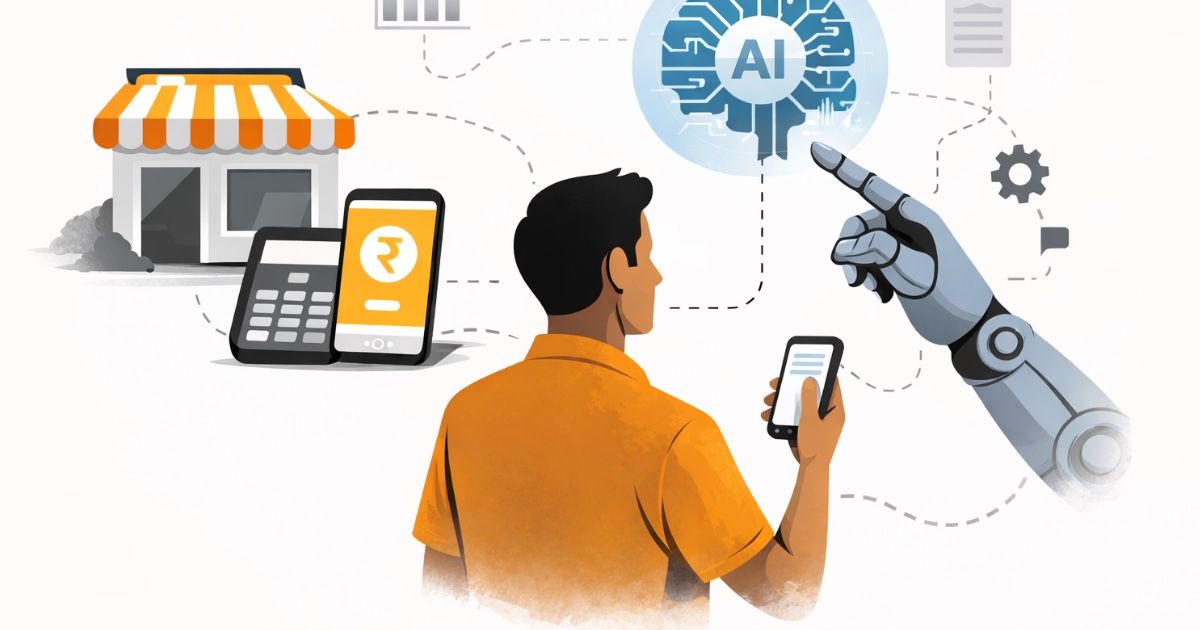
UPI-Style AI Playbook: 5 Powerful Steps That Could Transform India’s MSMEs
AI for MSMEs Takes Centre Stage After Major Summit Push
India is preparing a UPI-style AI playbook for MSMEs, aiming to make artificial intelligence simple, affordable, and scalable for small businesses across the country.
The proposal, discussed during recent national AI policy conversations and industry summits, focuses on creating a public digital framework that allows micro, small, and medium enterprises (MSMEs) to use AI tools just as easily as they adopted digital payments through National Payments Corporation of India’s Unified Payments Interface.
The idea is clear: if UPI transformed digital payments for millions of Indians, a similar open and interoperable model could transform AI adoption for small businesses.
With MSMEs contributing nearly 30% of India’s GDP and employing millions, tech adoption at this scale could redefine India’s growth story.
Why AI Adoption for MSMEs Matters Now
Small Businesses Face Growing Digital Pressure
India’s MSMEs are under pressure to:
- Compete with larger, tech-enabled firms
- Manage rising input costs
- Improve customer service
- Expand into online markets
- Automate routine tasks
Artificial intelligence can help solve many of these problems.
However, high costs, lack of expertise, and limited awareness often stop small firms from using AI tools.
The proposed AI playbook aims to reduce these barriers.
What Is a UPI-Style AI Model?
Open, Scalable and Easy to Use
UPI succeeded because it offered:
- Open architecture
- Interoperability between banks
- Simple mobile-based access
- Low transaction costs
The AI playbook proposes similar principles:
- Shared public digital infrastructure
- Plug-and-play AI tools
- Low-cost access for startups and MSMEs
- Standardised APIs for easy integration
Instead of each company building expensive AI systems, businesses could access ready-to-use AI layers built on national digital platforms.
How the AI Playbook Could Work
1. Shared AI Infrastructure
A common AI backbone could allow MSMEs to use tools such as:
- AI-powered accounting
- Automated customer chat systems
- Inventory forecasting
- Credit risk analysis
- Fraud detection
This reduces the need for in-house AI teams.
2. Cloud-Based Access
Cloud platforms could provide:
- Pay-as-you-use models
- Low upfront cost
- Easy onboarding
This makes AI adoption possible even for small traders and rural enterprises.
3. Integration with Existing Digital Public Infrastructure
India already has digital systems such as:
- Aadhaar identity stack
- UPI payments network
- GST digital framework
An AI layer built on top of these systems could unlock powerful business insights.
For example, AI could help MSMEs analyse GST sales data to predict demand trends.
Key Outcomes from AI Policy Discussions
Recent summit conversations highlighted three major goals:
- Democratising AI access
- Supporting MSME competitiveness
- Strengthening India’s digital economy leadership
Policymakers stressed that AI must not remain limited to large corporations.
Instead, it should empower kirana stores, manufacturers, exporters, service providers, and startups.
Benefits for MSMEs
Improved Productivity
AI can automate repetitive tasks such as:
- Invoice generation
- Customer query handling
- Data entry
- Demand forecasting
This allows business owners to focus on growth.
Better Access to Credit
AI-based credit scoring models can analyse:
- Transaction history
- GST filings
- Digital payments data
This may help small firms access loans faster.
Fintech firms are already experimenting with such tools.
Stronger Market Reach
AI-powered marketing tools can help MSMEs:
- Target customers better
- Analyse buying behaviour
- Improve product recommendations
This increases competitiveness against larger companies.
Economic Impact of AI for MSMEs
India has over 6 crore MSMEs, making the sector a backbone of the economy.
If even a fraction adopts AI tools, the impact could include:
- Higher productivity
- Increased exports
- Improved tax compliance
- Job creation in tech services
The multiplier effect could be significant.
Challenges Ahead
Despite strong policy momentum, several challenges remain.
Digital Literacy Gap
Many small business owners lack technical knowledge.
Training programs and awareness campaigns will be essential.
Data Privacy and Security
AI systems rely on data.
Clear guidelines will be needed to ensure:
- Secure data storage
- Responsible AI use
- Protection against misuse
Trust is critical for adoption.
Infrastructure in Rural Areas
Stable internet and cloud access remain uneven in some regions.
Digital infrastructure expansion must continue alongside AI initiatives.
Role of Startups and Private Sector
Indian startups are expected to play a key role.
They can build:
- Industry-specific AI tools
- Local language AI applications
- Sector-focused analytics platforms
Collaboration between government and private players will be crucial.
The success of UPI shows that public-private partnerships can scale rapidly.
Global Context: India’s AI Position
Countries like the US and China are leading in AI innovation.
India’s strength lies in:
- Large digital user base
- Strong IT services sector
- Growing startup ecosystem
- Experience with digital public infrastructure
A UPI-style AI model could become a global example of inclusive AI deployment.
Impact on Employment
There is concern that AI may replace jobs.
However, experts suggest that AI will:
- Change job roles
- Create new tech-enabled positions
- Increase efficiency
MSMEs using AI may hire more skilled workers in digital operations.
Upskilling will be key.
Training and Capacity Building
The AI playbook discussions emphasise:
- Skill development programs
- AI literacy workshops
- Online certification modules
- Industry training partnerships
Skill development will determine how effectively MSMEs use AI tools.
What This Means for India’s Digital Economy
India’s digital economy is expanding rapidly.
AI integration with MSMEs could:
- Increase formalisation
- Improve tax transparency
- Boost innovation
- Strengthen supply chains
Small businesses often drive grassroots growth.
AI adoption at this level can make India’s economic expansion more technology-driven.
Why This Story Is Trending
Search interest has increased for:
- “AI for small businesses India”
- “UPI model for AI”
- “MSME digital transformation”
- “AI summit India outcomes”
Business leaders, startup founders, and policymakers are closely tracking how the AI playbook develops.
The success of UPI has raised expectations for similar digital breakthroughs.
Key Highlights at a Glance
- India exploring UPI-style AI framework for MSMEs
- Focus on open, interoperable AI infrastructure
- Aim to reduce cost and complexity
- Could benefit 6 crore+ MSMEs
- Supports productivity, credit access, and market expansion
- Strong push from AI policy discussions
A Defining Moment for Small Business Tech Adoption
India’s plan to create a UPI-style AI playbook for MSMEs could mark a turning point in digital transformation.
If executed effectively, it can bring artificial intelligence within reach of millions of small businesses.
The model focuses on accessibility, affordability, and scale — the same principles that made UPI a success.
For India’s MSMEs, AI may soon move from being a buzzword to becoming a practical business tool.
And if this vision materialises, it could redefine how small enterprises compete in the digital age.
Also Read : Mexico Travel Advisory 2026: India, US and Canada Issue Urgent Warnings After Rising Cartel Violence
Add republicpost.in as preferred source on google – Click Here
Last Updated on: Tuesday, February 24, 2026 7:31 pm by Republic Post Team | Published by: Republic Post Team on Tuesday, February 24, 2026 7:31 pm | News Categories: News
About Us: Republic Post covers the latest News on Current News, Business, Sports, Tech, Entertainment, Lifestyle, Automobiles, and more, led by Editor-in-Chief Ankur Srivastava. Stay connected on Facebook, Instagram, LinkedIn, X (formerly Twitter), Google News, and Whatsapp Channel.
Disclaimer: At Republic Post, we are committed to providing accurate, reliable, and thoroughly verified information, sourced from trusted media outlets. For more details, please visit our About, Disclaimer, Terms & Conditions, and Privacy Policy. If you have any questions, feedback, or concerns, feel free to contact us through email.
Contact Us: rishidharqitech@gmail.com
About The Author