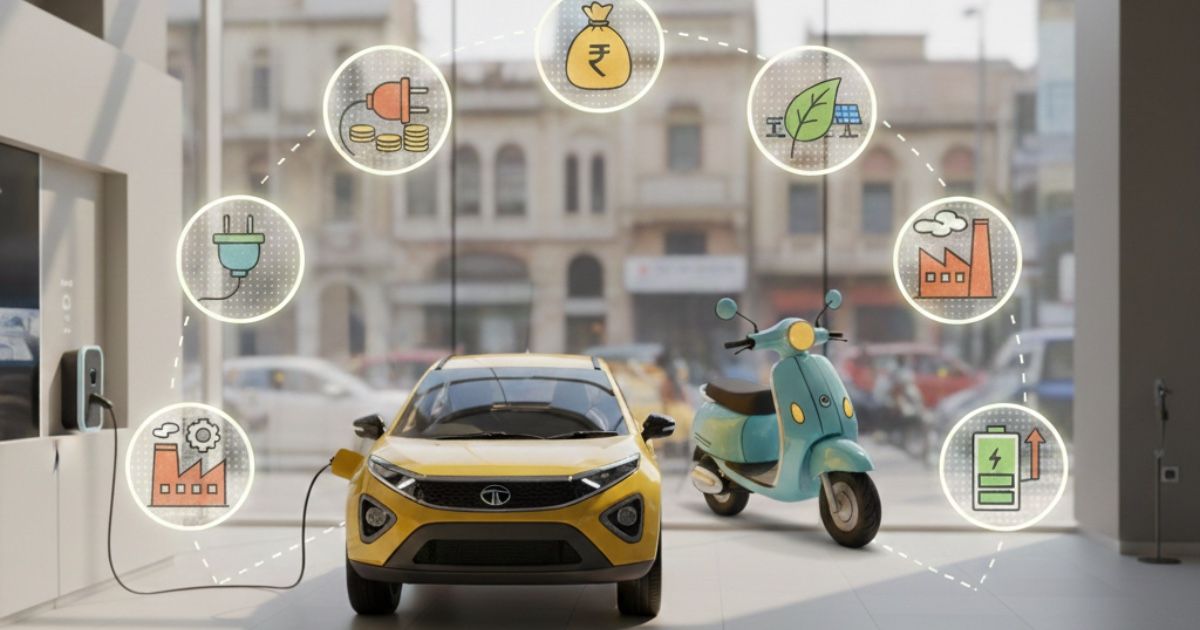
EV Market: 7 Key Drivers Behind India’s Electric Vehicle Boom Led by Tata, Ola and New EV Models
EV Market is tracking one of the most important changes in India’s auto industry today — the fast rise of electric vehicles across cities and towns. What was once seen as a niche option is now becoming a serious alternative to petrol and diesel vehicles.
India’s EV market is gaining momentum due to rising fuel prices, growing climate concerns, and strong policy support. Buyers are actively comparing running costs, charging access, and long-term savings. As a result, electric cars and two-wheelers are no longer limited to early adopters. They are entering the daily lives of families, office commuters, and delivery workers.
At the centre of this shift are key players like Tata Motors and Ola Electric, along with a steady flow of new EV modelsexpected in 2024 and 2025. Tata continues to dominate the electric car segment with models that suit Indian roads and budgets. Ola, meanwhile, has reshaped the electric two-wheeler market by pushing scale, design, and digital features.
EV Watch also highlights how improved battery range, expanding charging infrastructure, and falling ownership costs are helping remove earlier doubts around electric vehicles. Buyers today are not just asking whether an EV works. They are asking which EV fits their needs best.
This moment is critical for India’s mobility future. Decisions made now — by manufacturers, policymakers, and consumers — will shape how fast the country moves away from fossil fuels.
As EV adoption grows, competition is intensifying. New launches, price revisions, and technology upgrades are arriving at a steady pace. For Indian readers, staying informed through EV Watch means understanding where the market is heading, which brands are leading, and what choices make sense in a rapidly evolving landscape.
India’s electric vehicle (EV) market is no longer a future story. It is a present-day shift that is changing how Indians travel, buy vehicles, and think about fuel costs.
Rising petrol and diesel prices, strong government support, and rapid product launches have pushed EV adoption into the mainstream. From city commuters to fleet operators, more buyers are choosing electric over petrol.
At the centre of this transformation are Tata Motors, Ola Electric, and a growing list of new EV models entering the market in 2024 and 2025.
This EV market watch explains how these players are shaping India’s electric vehicle boom, why it matters for consumers, and what comes next.
India’s EV Market: A Fast-Growing Sector
India is one of the fastest-growing EV markets in the world.
Electric two-wheelers and compact electric cars are leading adoption, especially in urban areas. Buyers are drawn by lower running costs, reduced maintenance, and government incentives.
Key Drivers Behind EV Market Growth
- High fuel prices making petrol vehicles expensive to run
- FAME incentives and state-level EV policies
- Better charging access in cities
- Improved driving range in new models
EVs are no longer seen as risky or experimental. They are now practical choices for daily use.
Tata Motors: The Backbone of India’s Electric Car Market
Tata Motors remains the strongest force in India’s electric passenger vehicle segment.
The company built early trust by offering EVs that fit Indian roads, budgets, and usage needs.
Popular Tata EV Models in India
- Tata Nexon EV
- Tata Tiago EV
- Tata Tigor EV
These models are widely seen on Indian roads today. They are used by families, corporate fleets, and government departments.
Why Tata EVs Are Winning Buyers
- Competitive pricing compared to rivals
- Strong service network across India
- Indian-made platform suited for local conditions
- Regular software and battery updates
The Nexon EV, in particular, helped normalize electric cars in the compact SUV segment.
Tata’s EV Strategy for the Future
Tata Motors continues to invest heavily in EV technology.
The company has announced plans for new electric SUVs, better battery systems, and higher local manufacturing.
Its upcoming EV launches are expected to focus on:
- Longer driving range
- Faster charging
- Improved safety features
This strategy keeps Tata well-positioned as competition increases.
Ola Electric: Changing the Two-Wheeler EV Market Game
Ola Electric has transformed India’s electric two-wheeler space.
From its launch, Ola focused on scale, technology, and aggressive pricing.
Ola Electric’s Impact
Ola’s electric scooters gained attention for:
- Modern design
- Connected features
- Wide marketing reach
- Direct-to-customer sales model
Models like the Ola S1 series brought EV scooters into everyday conversations.
Challenges and Progress at Ola Electric
Ola Electric has faced challenges, including customer complaints and service issues. However, the company has responded by:
- Expanding service centres
- Improving software updates
- Increasing local manufacturing
Despite early hurdles, Ola remains a key player pushing EV adoption, especially among young riders.
New EV Models Entering India: More Choice for Buyers
India’s EV boom is not limited to Tata and Ola.
Several new electric vehicles are entering the market across segments.
Electric Cars and SUVs
Automakers are introducing EVs with:
- Longer range options
- Better interiors
- Advanced safety tech
Global and Indian brands are targeting buyers who want EVs without compromising on comfort.
Electric Two-Wheelers Beyond Ola
New brands and startups are offering:
- Affordable electric scooters
- Swappable battery options
- Models for delivery and gig workers
This competition is helping bring prices down and improve product quality.
Charging Infrastructure: A Key Factor in EV Market Growth
Charging access remains a major concern for buyers.
However, India’s charging network is expanding steadily.
Current Charging Trends
- More public chargers in metros
- Fast chargers on highways
- Home charging becoming standard
Government and private companies are investing in charging stations to support rising EV numbers.
Cost Advantage: Why EVs Make Sense for Indian Buyers
One of the strongest reasons behind EV adoption is cost.
Lower Running Costs
Electric vehicles cost much less per kilometre compared to petrol or diesel vehicles.
Maintenance costs are also lower due to:
- Fewer moving parts
- No engine oil changes
- Reduced wear and tear
Over time, EV ownership can be more affordable.
Government Support and Policy Push
India’s EV growth is closely linked to policy support.
Key Government Measures
- FAME incentives for EV buyers
- State-level subsidies
- Lower GST on EVs
- Support for battery manufacturing
These measures have helped reduce upfront costs and boost buyer confidence.
What’s Holding Back Faster EV Adoption?
Despite strong growth, challenges remain.
Key Concerns
- Charging availability in smaller cities
- High upfront cost for some models
- Battery replacement worries
- Limited awareness in rural areas
Addressing these issues will be crucial for the next phase of EV expansion.
What to Expect Next in India’s EV Market
The coming years are expected to bring major changes.
Trends to Watch
- More affordable EV models
- Improved battery technology
- Wider charging coverage
- Increased competition
As technology improves and prices stabilize, EVs are likely to move from early adoption to mass adoption.
India’s EV Market Boom Is Just Getting Started
India’s electric vehicle journey has moved beyond hype.
With Tata Motors strengthening the electric car segment, Ola Electric driving scooter adoption, and new EV models entering the market, the foundation is strong.
EVs are becoming practical, reliable, and cost-effective for Indian buyers.
The road ahead will not be without challenges. But the direction is clear.
India’s electric vehicle boom is real—and it is accelerating.
Also Read : CRICKET TOUR PREVIEW: INDIA WOMEN’S CRUCIAL AUSTRALIA CHALLENGE 2025–26, KEY PLAYERS AND WHAT LIES AHEAD
Add republicpost.in as preferred source on google – Click Here
Last Updated on: Wednesday, February 11, 2026 2:41 pm by Republic Post Team | Published by: Republic Post Team on Monday, February 9, 2026 2:58 pm | News Categories: News
About The Author