Odisha Presents Urban Governance Model to 2025 Batch IAS Probationers
State focuses on citizen-centric administration and practical urban governance exposure for young officers
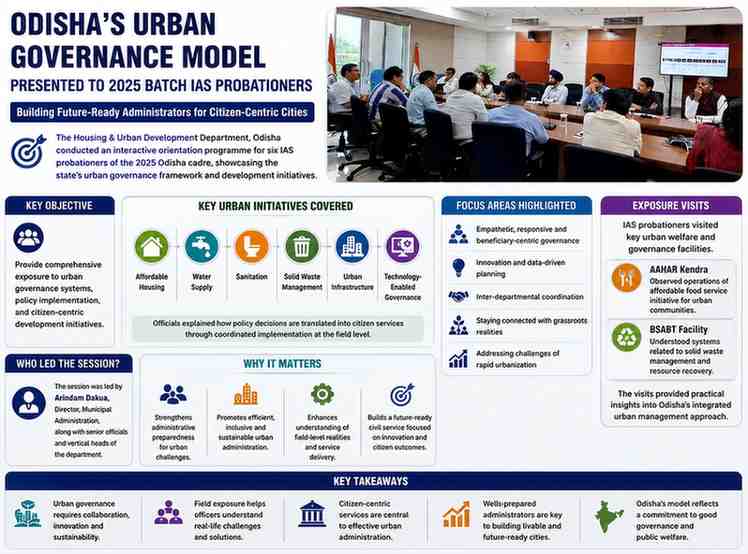
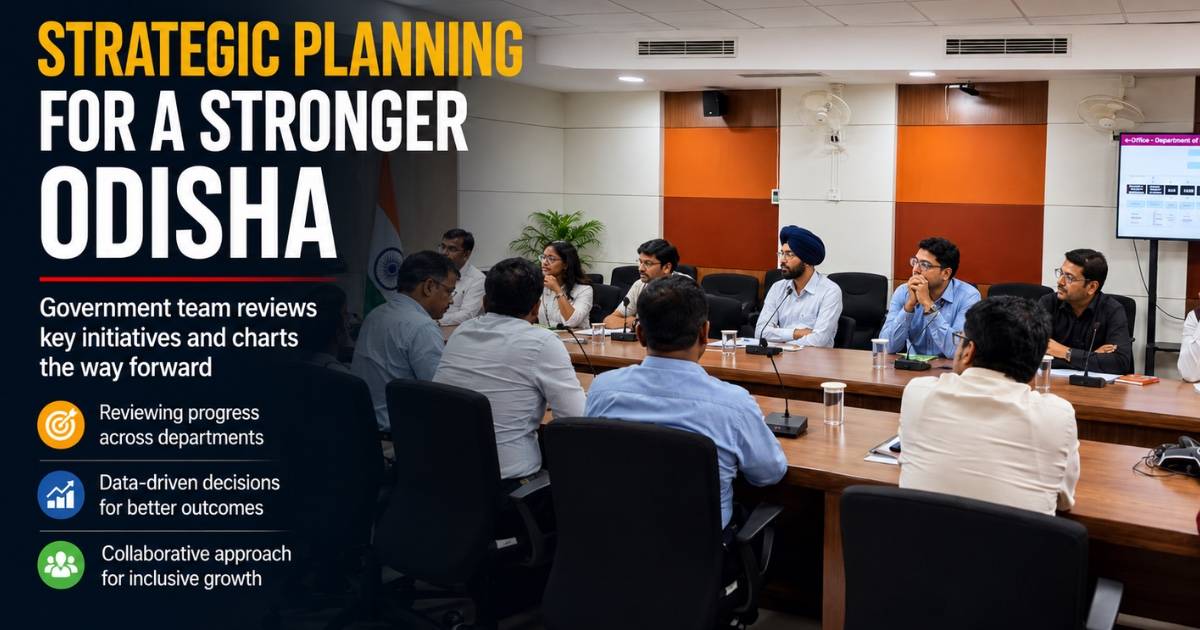
The Housing and Urban Development Department of Odisha conducted an interactive orientation programme for six IAS probationers of the 2025 Odisha cadre, offering them detailed exposure to the state’s urban governance framework and public service delivery systems.
The programme was organised in Bhubaneswar under the leadership of senior departmental officials, including Director of Municipal Administration Arindam Dakua.
Officials introduced the probationers to Odisha’s evolving urban governance model, highlighting major development initiatives, institutional systems, and administrative mechanisms aimed at improving urban living standards across the state.
Focus on Urban Development and Public Services
During the orientation session, the IAS probationers received presentations on several flagship urban development programmes currently being implemented in Odisha.
Officials explained the functioning of key sectors including:
- Affordable housing
- Urban water supply
- Sanitation services
- Solid waste management
- Urban infrastructure projects
- Technology-enabled governance systems
The officers were also briefed on how policy decisions are implemented at the field level through coordination between government departments, municipal bodies, and local administration.
According to officials, the objective of the programme was to help young administrators understand the operational realities of urban governance and citizen service delivery.
Citizen-Centric Governance Highlighted
Senior officials stressed the importance of responsive and beneficiary-focused governance while addressing challenges linked to rapid urbanisation.
The probationers were encouraged to:
- Stay connected with grassroots realities
- Use data-driven planning
- Promote innovation in administration
- Strengthen inter-departmental coordination
- Improve public service delivery efficiency
The programme highlighted how growing urban populations are increasing pressure on infrastructure, sanitation, housing, mobility, and civic services in Indian cities.
Officials said future administrators would play a critical role in managing these urban transitions through sustainable and inclusive governance practices.
Field Visits Provide Practical Administrative Exposure
As part of the orientation programme, the probationers also visited:
- AAHAR Kendra
- BSABT Facility
The field visits allowed officers to observe the functioning of important welfare and urban management initiatives at the operational level.
The AAHAR programme is widely known in Odisha for providing affordable meals to economically weaker sections in urban areas.
Officials said the practical exposure helped probationers better understand:
- Ground-level implementation challenges
- Public welfare delivery systems
- Urban management coordination
- Infrastructure maintenance processes
The visits also demonstrated Odisha’s integrated approach toward urban welfare and service delivery.
Odisha’s Urban Governance Model Gains Attention
Odisha has increasingly focused on urban modernization and public service reforms over the past several years.
The state government has implemented multiple initiatives linked to:
- Smart urban planning
- Digital governance
- Affordable public services
- Waste management reforms
- Housing development
- Urban infrastructure expansion
Experts say administrative training programmes for IAS officers are becoming increasingly important as Indian cities face complex governance and sustainability challenges.
Urban administrators today are expected to manage:
- Population growth
- Infrastructure stress
- Climate-related risks
- Public health systems
- Resource management
- Citizen grievance mechanisms
Why the Orientation Programme Matters
Policy experts note that early administrative exposure programmes help young civil servants understand the practical side of governance beyond policy frameworks.
Such training initiatives are considered important because IAS officers often take leadership roles in:
- Municipal administration
- Urban planning
- Disaster management
- Public welfare implementation
- Infrastructure governance
Experts also say exposure to citizen-centric governance models may help strengthen accountability, transparency, and service delivery in future administrative roles.
Urbanisation Emerging as Major Governance Challenge
India’s rapid urban expansion is increasing pressure on cities and municipal systems across multiple states.
According to urban development experts, future governance priorities will increasingly focus on:
- Sustainable city planning
- Affordable housing access
- Clean water supply
- Waste management
- Digital governance systems
- Climate resilience
Administrative capacity-building programmes are therefore being viewed as essential for preparing future officers to handle evolving urban challenges.
What Happens Next
The IAS probationers are expected to continue administrative training and field-level exposure as part of their cadre preparation in Odisha.
Officials say such orientation programmes will continue to play a role in familiarising officers with:
- State governance priorities
- Welfare delivery systems
- Urban administration structures
- Citizen engagement mechanisms
The initiative reflects Odisha’s broader focus on strengthening institutional governance and preparing administrators for increasingly complex urban development challenges.
Key Insights
- Odisha’s focus on exposing IAS probationers to real-time urban governance systems reflects a broader administrative trend in India toward field-oriented civil service training and practical policy implementation experience.
- Rapid urbanisation has emerged as one of the biggest governance challenges for Indian states, increasing the importance of trained administrators who understand issues related to housing, sanitation, infrastructure pressure, waste management, and urban public services.
- The orientation programme highlights the growing role of technology-driven governance and data-based decision-making in modern urban administration, especially as cities adopt digital systems for service delivery and citizen engagement.
- Exposure visits to welfare and urban management facilities indicate a shift toward experiential learning in bureaucratic training, helping young officers understand operational challenges beyond policy documents and classroom instruction.
- Odisha’s emphasis on beneficiary-centric governance aligns with national administrative reforms that encourage transparency, responsiveness, and direct public service delivery through coordinated institutional mechanisms.
- Programmes such as AAHAR and integrated urban welfare initiatives are increasingly being studied as examples of targeted urban support systems aimed at improving food security and social welfare for vulnerable populations in urban areas.
- Experts note that administrative preparedness will become increasingly important as Indian cities face growing pressure from population expansion, climate-related risks, migration, and infrastructure demand over the next decade.
- The initiative also reflects the evolving expectations from civil servants, who are now expected to balance policy execution with innovation, sustainability planning, public communication, and inter-departmental coordination in complex urban environments.
Inputs & Images: Hindusthan Samachar
Edited by: Pushkarini Annabathula
Also Read : CTET RESULT 2026 EXPECTED SOON: CBSE LIKELY TO ANNOUNCE FEBRUARY EXAM RESULTS ON OFFICIAL WEBSITE
Add republicpost.in as preferred source on google – Click Here
Last Updated on: Monday, May 18, 2026 5:53 pm by Pushkarini Annabathula | Published by: Pushkarini Annabathula on Monday, May 18, 2026 5:49 pm | News Categories: Latest
About The Author