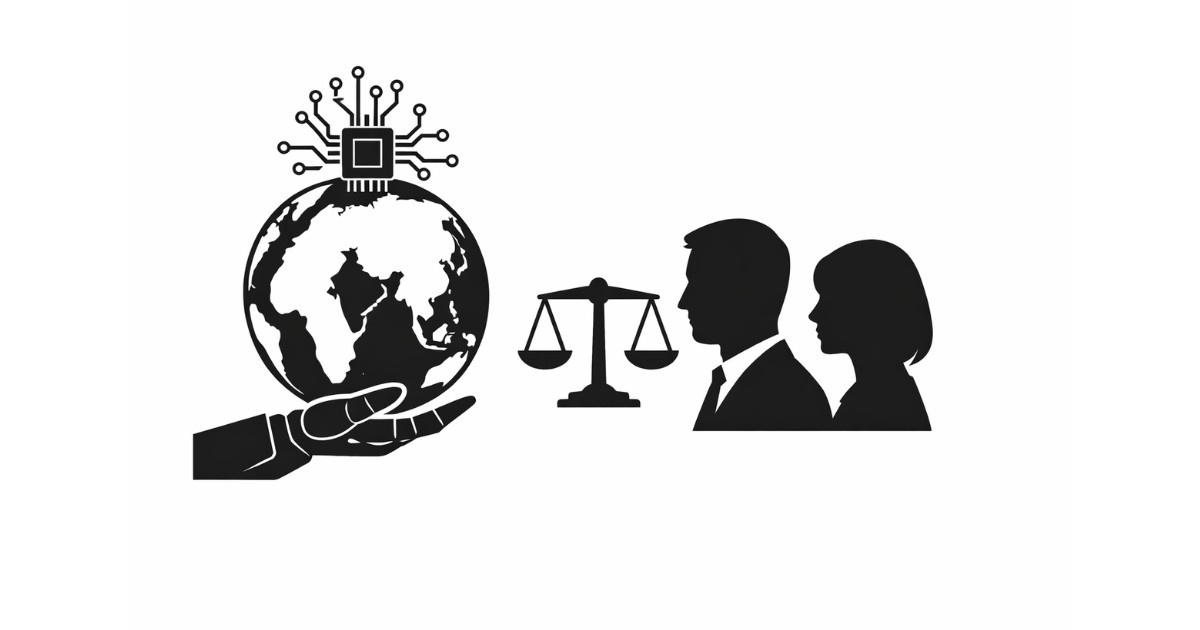
Global AI Governance Debate Intensifies in 2026 as India Hosts Tech Leaders and Civil Liberties Groups Raise Fresh Concerns
The global debate on artificial intelligence (AI) governance has entered a critical phase in February 2026, as India hosts top global technology executives, policymakers, researchers, and civil liberties groups for high-level discussions.
The conversations are not just about innovation. They are about rules, safety, privacy, and power.
As AI tools become part of daily life — from banking apps and healthcare systems to education platforms and social media — governments around the world are under pressure to create clear regulations. India’s role in this debate is growing fast.
With over 1.4 billion people, a rapidly expanding digital economy, and one of the world’s largest startup ecosystems, India is no longer just a user of AI. It is shaping how AI will be governed globally.
India at the Center of the Global AI Conversation
India’s hosting of major AI discussions signals its rising influence in global tech policy.
The country already plays a key role in digital governance through initiatives such as:
- The Digital India mission
- The India Stack digital infrastructure
- Expanding public digital platforms for payments and identity
Now, policymakers are pushing for a balanced approach to AI governance.
On one side, India wants to encourage innovation and attract investment. On the other, there is growing concern about misuse, misinformation, data privacy, and job disruption.
Officials have repeatedly stressed that AI must remain “human-centric” and inclusive.
India’s position is closely watched by other developing nations that face similar challenges.
What Is Driving the Global AI Governance Debate?
The AI governance debate is intensifying for three main reasons:
1. Rapid Growth of Generative AI
Generative AI systems can now create text, images, code, and videos within seconds. These tools are being used in schools, offices, media houses, and even courts.
But concerns are rising about:
- Deepfake videos
- Election misinformation
- Automated decision-making
- Bias in AI systems
Countries are struggling to decide how much regulation is necessary without slowing innovation.
2. Data Privacy and Surveillance Risks
AI systems rely on large volumes of data. Civil liberties groups argue that without strict safeguards, AI can enable mass surveillance or misuse of personal information.
India already has a Digital Personal Data Protection Act, but experts say AI systems need additional safeguards.
Privacy advocates are demanding:
- Strong transparency rules
- Independent audits of AI systems
- Clear consent mechanisms
- Limits on facial recognition use
These demands are now part of the broader governance debate.
3. Global Competition and Economic Stakes
AI is no longer just a technology issue. It is a geopolitical issue.
The United States, European Union, China, and other major economies are racing to lead in AI development.
The European Union’s AI Act has already set strict rules for high-risk AI systems. The US has taken a more flexible approach. China has introduced strong state-led controls.
India is now shaping its own framework.
The decisions taken in 2026 could influence global standards for years.
Civil Liberties Groups Speak Out
As global tech leaders gather in India, civil liberties organisations have also raised concerns.
Their key messages include:
- AI systems must not undermine democracy
- Automated tools should not replace human accountability
- Marginalised communities must be protected from algorithmic bias
Advocacy groups warn that AI errors can affect real lives — from loan approvals to welfare distribution and hiring decisions.
They argue that without strong safeguards, AI could deepen inequality.
Several experts have called for public consultations before finalising any national AI policy.
India’s Regulatory Approach: Innovation with Guardrails
India’s approach so far has focused on light-touch regulation combined with strong digital infrastructure.
In recent policy discussions, officials have emphasised:
- Encouraging AI startups
- Supporting local research
- Developing ethical guidelines
- Promoting responsible AI use
India has not yet introduced a single comprehensive AI law similar to the EU model. Instead, the government appears to be considering a sector-based approach.
This means AI rules could vary across:
- Healthcare
- Finance
- Education
- Law enforcement
Supporters say this approach allows flexibility. Critics say it may create gaps.
Key Questions Being Debated in 2026
The discussions in India are expected to focus on several core questions:
Should AI Developers Be Held Legally Responsible?
One major issue is liability.
If an AI system causes harm — such as giving wrong medical advice or spreading false content — who is responsible?
- The developer?
- The company using it?
- The end user?
There is no global agreement yet.
How Transparent Should AI Systems Be?
Experts are calling for “explainable AI.”
This means users should understand how decisions are made.
However, tech companies argue that revealing too much may expose trade secrets.
Balancing transparency and innovation is a key challenge.
Can AI Be Governed Globally?
Some leaders support the idea of international cooperation.
There are discussions about:
- Global AI safety standards
- Cross-border regulatory coordination
- Shared research on AI risks
However, geopolitical tensions make global alignment difficult.
India’s diplomatic role could become important in bridging gaps between developed and developing nations.
Impact on Indian Startups and Businesses
India’s startup ecosystem is watching closely.
The country has thousands of AI-driven startups working in:
- Fintech
- Healthtech
- Edtech
- Agriculture technology
Clear rules could increase investor confidence.
But overly strict regulations could increase compliance costs.
Industry groups are calling for:
- Regulatory clarity
- Predictable policy timelines
- Support for innovation sandboxes
The next few months may determine how attractive India remains for AI investment.
AI and Employment: A Growing Public Concern
Another major issue is jobs.
AI automation is already changing sectors such as:
- Customer service
- Content creation
- Data processing
Experts say AI will both create and replace jobs.
But reskilling is essential.
India’s young workforce could benefit from AI growth if skill training keeps pace.
Several policy voices are pushing for:
- AI education in universities
- Public-private skill programs
- Government-backed digital literacy campaigns
Without this, the digital divide could widen.
Public Trust Will Decide the Future
Technology adoption depends on trust.
If citizens believe AI systems are unfair or unsafe, resistance will grow.
Transparency, accountability, and clear grievance systems are crucial.
India’s digital transformation has been largely successful because of public trust in platforms like digital payments and identity systems.
AI governance must follow the same path.
What Happens Next?
The AI governance debate in 2026 is unlikely to end soon.
Possible next steps include:
- Draft policy frameworks
- Public consultations
- Industry roundtables
- International cooperation efforts
Observers expect India to release more structured guidelines later this year.
The outcome will shape:
- Innovation
- Investment
- Civil liberties
- Global AI standards
The Bigger Picture: A Turning Point for AI Policy
The global AI governance debate is no longer theoretical.
It is practical, urgent, and political.
India’s role in hosting tech leaders while also hearing civil liberties groups shows that the country wants to balance growth with responsibility.
The decisions made in 2026 may influence how AI is built, used, and controlled across the world.
For Indian readers, this debate matters because AI is already affecting daily life — from banking apps to government services.
The rules set today will determine whether AI becomes a tool of empowerment or a source of risk.
As discussions continue, one message is clear:
AI governance is not just about technology.
It is about rights, trust, and the future of digital society.
Also read: Electric Vehicles in India 2026: Exciting New Model Launches and Policy Shifts Driving Consumer Searches
Follow us on Google news: Click Here
Last Updated on: Wednesday, February 18, 2026 4:17 pm by Republic Post Team | Published by: Republic Post Team on Wednesday, February 18, 2026 4:17 pm | News Categories: News
About Us: Republic Post covers the latest News on Current News, Business, Sports, Tech, Entertainment, Lifestyle, Automobiles, and more, led by Editor-in-Chief Ankur Srivastava. Stay connected on Facebook, Instagram, LinkedIn, X (formerly Twitter), Google News, and Whatsapp Channel.
Disclaimer: At Republic Post, we are committed to providing accurate, reliable, and thoroughly verified information, sourced from trusted media outlets. For more details, please visit our About, Disclaimer, Terms & Conditions, and Privacy Policy. If you have any questions, feedback, or concerns, feel free to contact us through email.
Contact Us: rishidharqitech@gmail.com
About The Author