New National Sports Governance Rules Introduced
Fresh Sports Governance Framework Draws Attention As India Focuses On Transparency, Administration Reforms, And Future Athletic Development
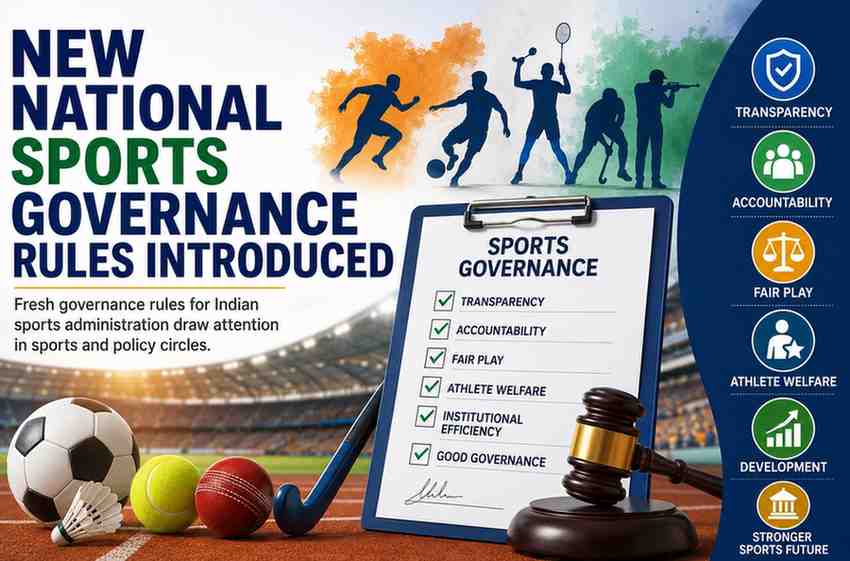
Fresh sports governance rules introduced for Indian sports administration are drawing increasing attention across policy circles, sports organizations, athlete communities, and governance experts. The latest developments have triggered discussions about how administrative reforms could shape the future of sports management, athlete development, transparency, and institutional efficiency in India.
Sports governance may not always generate the same public excitement as major tournaments or international competitions, but experts say administrative structures play a crucial role in determining long-term sporting success. Behind every athlete, medal, training program, and national event lies a complex system involving planning, funding, selection processes, infrastructure management, and organizational decision-making.
As a result, discussions around sports governance reforms often carry significant long-term implications.
The newly introduced governance framework has attracted attention because it comes at a time when India continues expanding its sporting ambitions. Over recent years, India has experienced increasing participation across multiple disciplines beyond traditional cricket popularity.
Interest has grown in sports including:
- Athletics
- Badminton
- Wrestling
- Football
- Hockey
- Shooting
- Boxing
- Tennis
- Kabaddi
- Esports
The country has also seen stronger performances at international competitions, leading to growing expectations regarding future athletic success.
Experts believe governance structures increasingly become important as sporting ecosystems expand.
Large sports systems require coordinated management across multiple areas including:
- Athlete welfare
- Infrastructure development
- Funding systems
- Talent identification
- Administrative accountability
- Selection procedures
- Training support
- International coordination
As sporting participation increases, administration systems face greater pressure to operate efficiently.
The latest governance discussions therefore arrive within a broader context involving India’s changing sports landscape.
Sports analysts say administration reforms often aim to create systems that improve transparency and strengthen institutional trust.
Trust remains an important factor within sports management.
Athletes, coaches, officials, and fans frequently expect processes to function fairly and consistently.
Questions surrounding administration occasionally generate public discussions because sporting decisions often influence athlete careers and opportunities.
Experts note that good governance can improve confidence among stakeholders.
Transparent systems may help reduce disputes and create stronger organizational credibility.
This is one reason governance reforms often receive considerable policy attention.
Discussions around sports administration increasingly focus on modernization.
Traditional structures now operate within a rapidly changing environment influenced by technology, digital systems, global competition, and rising public expectations.
Sports organizations today manage far more than tournaments.
Many institutions oversee:
- Financial operations
- Sponsorship relationships
- Data systems
- Athlete support programs
- Digital platforms
- Public communications
- International partnerships
- Performance analytics
Managing these responsibilities requires increasingly sophisticated administrative frameworks.
Policy experts say reforms often seek to align governance systems with evolving sporting realities.
Technology itself is becoming a growing factor within sports administration.
Modern sports increasingly depend on data-driven systems.
Athlete performance monitoring, injury prevention programs, scouting systems, and talent analytics now rely heavily on technology.
Artificial intelligence and advanced analytics are gradually entering sports environments worldwide.
As digital systems expand, governance structures may increasingly incorporate technology-focused oversight mechanisms.
Experts believe future sports administration may involve stronger integration of:
- Artificial intelligence
- Data analytics
- Performance monitoring
- Digital governance tools
- Transparency systems
- Athlete databases
Technology-driven management systems continue transforming industries globally, and sports administration may experience similar changes.
Another reason governance discussions attract attention involves athlete welfare.
Modern sporting systems increasingly emphasize athlete-centered approaches.
Beyond competition performance, there is growing focus on:
- Mental health support
- Injury recovery systems
- Career planning
- Education opportunities
- Financial guidance
- Training environments
Experts say governance systems increasingly influence athlete experiences both on and off the field.
Support systems now extend beyond coaching and facilities.
Administrative structures play an important role in shaping overall sporting environments.
Many sports observers argue that athlete trust in institutions remains essential.
Young athletes entering professional pathways often depend heavily on governance systems that determine opportunities and career progression.
Strong administrative frameworks may therefore help create confidence among emerging talent.
Talent identification also remains an important discussion area.
India’s large population presents enormous sporting potential.
However, identifying and supporting athletes across diverse regions requires extensive coordination.
Experts frequently emphasize the importance of grassroots development.
Talent pathways often involve:
School competitions
District events
State tournaments
Academies
Training centers
National development systems
Strong governance structures can help improve coordination across these levels.
Analysts believe long-term sporting success often depends upon efficient systems operating behind the scenes.
Administrative discussions also increasingly connect with international competitiveness.
Global sports have become highly professionalized.
Countries invest heavily in sports science, training programs, governance systems, and athlete support mechanisms.
As competition intensifies internationally, organizational effectiveness becomes increasingly important.
Experts suggest countries seeking sporting success increasingly evaluate not only athletic performance but also institutional structures.
Several nations have implemented reforms focused on transparency, accountability, and professional management.
India’s latest discussions therefore fit within broader international trends.
Public interest in sports administration stories has also evolved.
Previously, governance topics primarily attracted policy audiences.
Today, digital platforms have changed information consumption patterns.
Fans increasingly engage with behind-the-scenes stories involving sports organizations, athlete development, administration debates, and institutional reforms.
Social media platforms frequently amplify sports discussions beyond competition results.
Digital audiences increasingly want to understand:
How sports systems work
How athletes are selected
How decisions are made
How funding operates
How organizations function
This shift has increased visibility for governance discussions.
Searches involving sports administration topics often rise when reforms generate public curiosity.
Terms such as:
sports rules India
sports governance update
Indian sports administration
athlete policy
sports ministry news
sports reforms
are increasingly appearing within online conversations.
YouTube explainers discussing sports systems and governance structures have also gained stronger engagement.
Short-form content formats explaining policy developments are becoming increasingly popular.
Videos titled:
“What Changed In Sports Rules?”
“Sports Governance Explained”
“Why Sports Administration Matters”
“Big Changes In Indian Sports”
frequently attract viewers seeking simplified information.
Experts say audience behavior increasingly favors practical and explanatory journalism.
Readers want to understand how developments affect future outcomes.
This applies even to policy-related sports stories.
Many audiences now ask:
Will reforms help athletes?
Could administration improve?
Will transparency increase?
How could sports systems change?
Such curiosity contributes to online visibility.
Some observers believe stronger governance frameworks may eventually influence India’s long-term sporting ambitions.
The country continues investing heavily in infrastructure, athlete development, and international participation.
Future sporting goals may require increasingly efficient systems.
Administrative frameworks often become important foundations supporting those ambitions.
Sports development experts frequently emphasize that medals and tournament success rarely emerge overnight.
Long-term results typically depend on systems built over many years.
Governance structures often represent one component within that larger ecosystem.
As discussions continue, analysts will likely monitor how new rules shape administrative processes and organizational approaches.
Policy implementation often determines long-term impact.
Experts note that frameworks alone rarely create change.
Execution remains equally important.
For athletes and sports communities, future outcomes may matter more than announcements themselves.
Questions surrounding implementation, transparency, accountability, and athlete experience will likely remain central.
Still, the latest governance developments have already generated meaningful discussions.
They reflect broader recognition that sports success increasingly depends not only on talent and competition but also on the institutions operating behind them.
As India continues expanding its sporting ambitions on the global stage, governance reforms may become an increasingly important part of the national sports conversation.
And while fans often celebrate victories on the field, experts say long-term sporting success frequently begins far away from stadium lights—in meeting rooms, policy frameworks, and administrative decisions that shape the future of sports itself.
Key Insights
- New National Sports Governance Rules have been introduced, generating discussion across sports administration and policy circles.
- The reforms aim to strengthen transparency, accountability, and institutional efficiency in Indian sports management.
- Experts say governance systems play a major role in shaping:
- Athlete development
- Funding structures
- Selection processes
- Infrastructure planning
- Long-term sports growth
- The discussions come as India expands beyond cricket and sees rising participation in:
- Athletics
- Badminton
- Football
- Wrestling
- Hockey
- Shooting
- Esports
- Growing sporting ambitions are creating demand for modernized administration systems.
- Strong governance structures can help improve:
- Organizational trust
- Fair decision-making
- Administrative consistency
- Athlete confidence
- Sports organizations now manage increasingly complex responsibilities including:
- Sponsorships
- Digital systems
- Data management
- Public communication
- Performance analytics
- Technology is becoming more important in sports administration through:
- AI tools
- Performance tracking
- Data analytics
- Digital governance systems
- Athlete welfare discussions are increasingly central to sports policy, including:
- Mental health support
- Injury management
- Career guidance
- Training environments
- Governance reforms could improve grassroots talent identification and development systems.
- Experts say administrative strength increasingly influences international sporting competitiveness.
- Fans are showing greater interest in understanding how sports systems and decisions work behind the scenes.
- Searches around sports governance and policy discussions are increasing as audiences seek explainers and simplified updates.
- Analysts note that implementation will be more important than announcements, as long-term impact depends on execution.
- Experts believe sporting success increasingly depends not only on athlete talent but also on strong systems operating behind the scenes.
Last Updated on: Wednesday, May 27, 2026 3:11 pm by Pushkarini Annabathula | Published by: Pushkarini Annabathula on Wednesday, May 27, 2026 3:06 pm | News Categories: News, Latest
About The Author