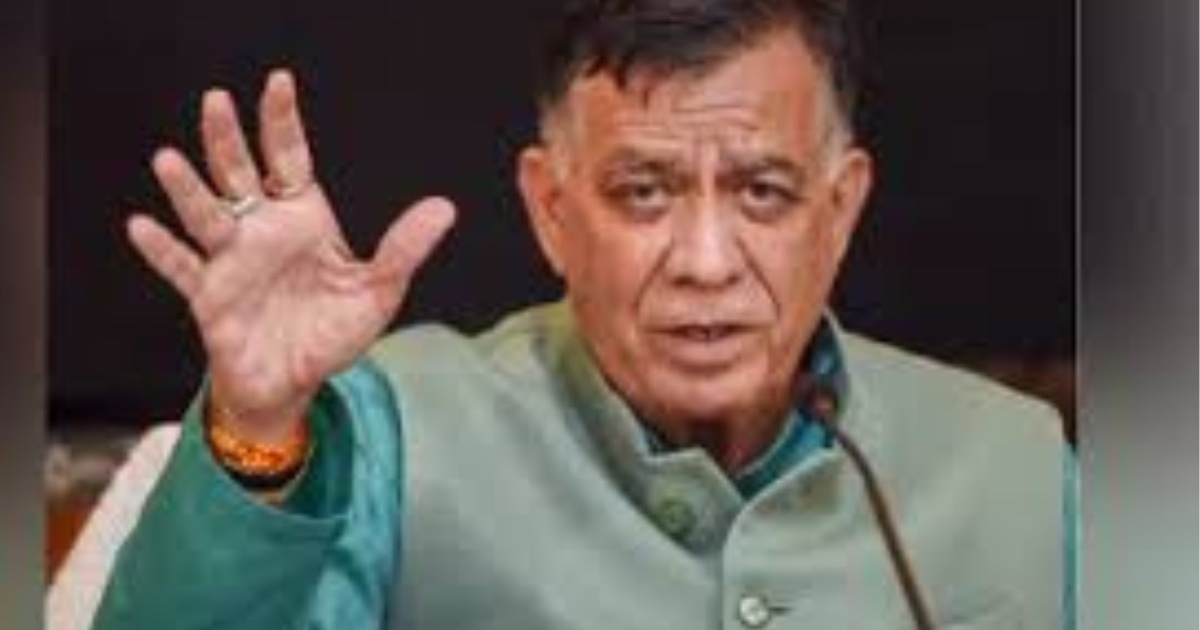
UP Assembly Speaker Satish Mahana Allows Discussion on Women’s Empowerment Motion Amid Opposition Objection
A procedural dispute emerged in the Uttar Pradesh Legislative Assembly on April 30, after opposition members objected to a motion concerning women’s empowerment. Speaker Satish Mahana ruled that the discussion could proceed, citing provisions under the Assembly’s rules of procedure.
Key Announcements / Highlights
- Opposition leaders questioned the admissibility of a motion linked to women’s empowerment.
- The government maintained that the discussion falls within permissible legislative scope.
- The Speaker allowed the debate under Rule 103 of the Assembly’s procedures.
- The issue was raised during a one-day special session in Lucknow.
Official Statement
Leader of Opposition Mata Prasad Pandey argued that matters outside the jurisdiction of the state government should not be debated in the Assembly. He said that implementation of the Nari Shakti Vandan Adhiniyam falls under the authority of Parliament, not the state legislature.
Responding to the objection, Parliamentary Affairs Minister Suresh Kumar Khanna clarified that the motion was focused on broader issues of women’s empowerment rather than reservation policy. He added that the proposal was introduced in accordance with established rules.
Speaker Mahana, while delivering his ruling, stated that discussions on matters of public concern are permissible with the Chair’s approval. He noted that Rule 103 allows such motions to be taken up, and the Speaker’s decision on their admissibility is final.
Context / Background
The Nari Shakti Vandan Adhiniyam, passed by Parliament, provides for reservation of seats for women in legislatures. However, its implementation is linked to processes at the national level.
State assemblies, meanwhile, often debate broader policy themes such as social welfare and empowerment, even when legislative authority may lie elsewhere. Rule 103 of the Uttar Pradesh Assembly’s procedures enables members to raise issues of public importance with the Speaker’s consent.
Public Impact
The development highlights how legislative bodies interpret procedural rules to address wider public issues. Discussions on women’s empowerment—regardless of jurisdiction—can influence policy priorities, awareness, and administrative focus at the state level.
Such debates also reflect political differences on how and where specific issues should be addressed within India’s federal structure.
With the Speaker allowing the motion to be discussed, the Uttar Pradesh Assembly is expected to deliberate on women’s empowerment during the special session. The episode underscores the role of procedural rules in shaping legislative debates, even amid disagreements over jurisdiction and scope.
Inputs & Images: Hindusthan Samachar
Edited by: Pushkarini Annabathula
Also Read : CTET RESULT 2026 EXPECTED SOON: CBSE LIKELY TO ANNOUNCE FEBRUARY EXAM RESULTS ON OFFICIAL WEBSITE
Add republicpost.in as preferred source on google – Click Here
Last Updated on: Thursday, April 30, 2026 5:54 pm by Pushkarini Annabathula | Published by: Pushkarini Annabathula on Thursday, April 30, 2026 5:54 pm | News Categories: Latest
About The Author