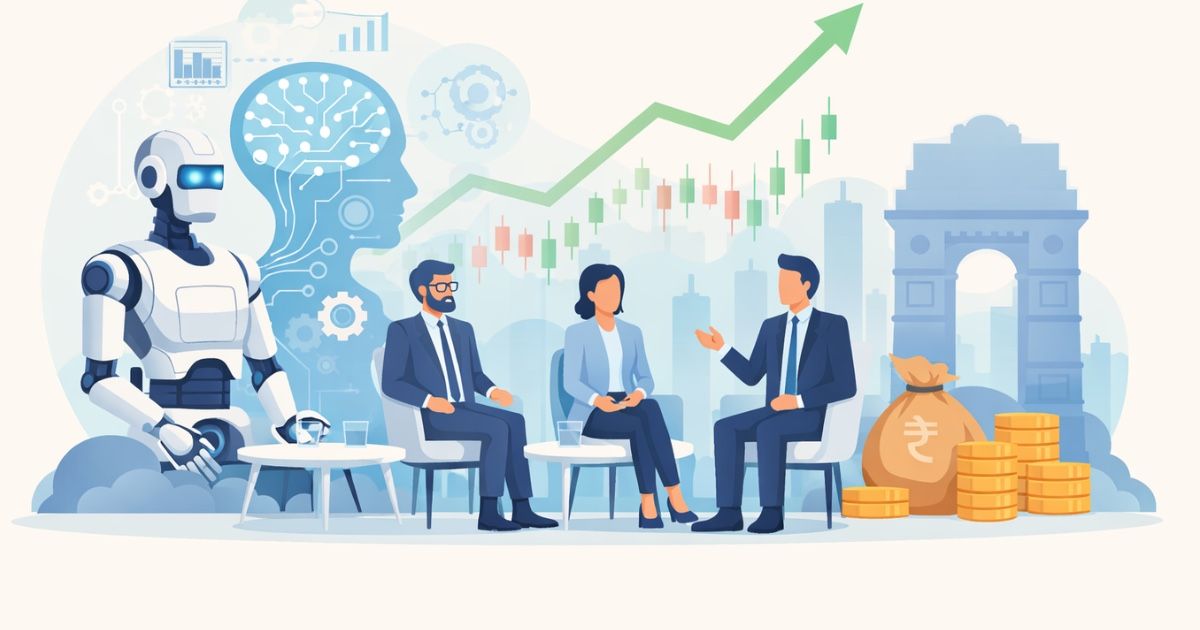
India AI Impact Summit 2026 Signals Major Policy Shift and Strong Investment Push Amid Job Concerns
India’s artificial intelligence roadmap moved into sharp focus at the India AI Impact Summit 2026, where top technology leaders, policymakers, startup founders and global investors gathered to discuss the future of AI in the country.
The summit comes at a crucial time.
Artificial intelligence is rapidly changing how businesses operate, how governments deliver services and how people work. For India — home to one of the world’s largest young workforces — the impact of AI on jobs, investment and policy is a national priority.
The discussions at the summit made one thing clear: AI is no longer a future plan. It is already reshaping India’s economy.
Why the India AI Impact Summit 2026 Matters
India is pushing hard to become a global AI hub.
Over the past year, the government has increased focus on AI research, semiconductor development, digital public infrastructure and startup support. Private companies are also investing heavily in AI tools across sectors such as banking, healthcare, retail, agriculture and manufacturing.
The summit served as a platform to:
- Review India’s AI progress so far
- Address job displacement concerns
- Announce new investment commitments
- Discuss regulatory and policy frameworks
- Strengthen global partnerships
With global competition rising, the event highlighted India’s ambition to balance innovation, job protection and responsible AI use.
AI and Jobs: Opportunity and Uncertainty
Will AI Create or Replace Jobs?
One of the biggest themes at the summit was employment.
Industry leaders agreed that AI will automate certain routine tasks. This includes work in data entry, customer support, back-office processing and basic analytics.
However, they also stressed that AI is creating new roles in:
- AI engineering
- Data science
- Cybersecurity
- Machine learning operations
- AI product management
- Robotics and automation
Experts pointed out that must focus on reskilling and upskilling its workforce.
Need for Large-Scale Skill Training
India has one of the world’s largest youth populations. But without the right skills, many workers risk being left behind.
Speakers at the summit called for:
- Expansion of AI training in universities
- Industry-linked certification programs
- Faster updates to technical education courses
- Public-private partnerships for digital skills
The message was clear: AI growth must include human capital development.
Investment Momentum: India’s AI Funding Push
Strong Investor Interest
The summit also saw strong participation from venture capital firms, global tech companies and domestic investors.
India’s startup ecosystem has become one of the largest globally. AI startups are attracting significant funding in areas such as:
- Generative AI tools
- Health-tech solutions
- Fintech automation
- Agriculture technology
- Language AI models for Indian languages
Investors highlighted India’s strengths:
- Large digital user base
- Rapid internet penetration
- Strong IT services industry
- Growing startup ecosystem
Government Support for AI Infrastructure
Policy discussions also focused on strengthening AI infrastructure.
Key areas under focus include:
- High-performance computing access
- Data centers
- Semiconductor manufacturing
- Cloud infrastructure
- Secure data-sharing systems
India aims to reduce dependence on foreign hardware and increase local manufacturing in critical technology areas.
Policy Shift: Toward Responsible and Ethical AI
Balancing Innovation and Regulation
Another major takeaway from the AI Impact Summit 2026 was the need for balanced regulation.
Government representatives emphasized that India does not want over-regulation that slows innovation. At the same time, there is growing concern about:
- Data privacy
- AI bias
- Deepfakes
- Misinformation
- Cybersecurity risks
The summit underlined the importance of transparent AI systems and clear accountability standards.
Focus on Data Protection
With AI systems relying heavily on data, discussions also touched upon the need to protect citizens’ information.
digital ecosystem has expanded rapidly through platforms such as UPI and digital identity systems. As AI tools use more personal data, stronger safeguards are expected.
The policy direction suggests that will adopt a framework that supports innovation but protects users.
AI in Key Sectors: Where the Impact Is Visible
Healthcare
AI tools are helping in early disease detection, medical imaging analysis and hospital management systems.
Startups are building affordable AI health solutions tailored to Indian needs.
Agriculture
AI-powered tools are being used to:
- Predict crop patterns
- Monitor soil health
- Improve yield forecasting
For a country where millions depend on farming, AI-driven insights can improve productivity.
Banking and Finance
Financial institutions are using AI for:
- Fraud detection
- Risk analysis
- Customer service automation
This improves efficiency and reduces operational costs.
Manufacturing and Logistics
AI-based automation is helping factories increase output while reducing waste.
Smart supply chain systems are improving delivery speed and inventory control.
India’s Global Position in AI
India is competing with major economies in AI development.
While countries like the United States and China lead in AI patents and large language models, India has advantages in:
- Skilled IT workforce
- Cost-effective development
- English-speaking talent
- Large domestic market
The summit highlighted the need for deeper global collaboration in research and technology exchange.
Startups and Innovation Ecosystem
India’s startup ecosystem played a central role at the summit.
Young founders showcased AI solutions for:
- Regional language translation
- Education technology
- Financial inclusion
- Small business automation
The rise of AI-driven startups shows that innovation is not limited to large tech companies.
Incubators and accelerators are expected to play a bigger role in supporting early-stage AI ventures.
Challenges Ahead
Despite optimism, experts acknowledged serious challenges:
- Skill gaps in advanced AI research
- Limited domestic chip manufacturing
- High cost of computing infrastructure
- Global regulatory uncertainty
There is also concern about misinformation and misuse of generative AI tools.
To address these risks, collaboration between government, academia and industry will be essential.
What This Means for Indian Youth and Professionals
For students and working professionals, the message from the summit was practical:
- Learn AI basics, even if you are not in tech
- Focus on problem-solving and digital skills
- Stay updated with emerging tools
AI literacy is expected to become as important as computer literacy once was.
Professionals in finance, marketing, healthcare and manufacturing will also need to adapt to AI-driven systems.
Key Takeaways from India AI Impact Summit 2026
- AI adoption is accelerating across sectors
- Job transformation is inevitable, but new opportunities are emerging
- Reskilling and education reforms are critical
- Investor interest in Indian AI startups remains strong
- Policy framework will focus on responsible and secure AI growth
The Road Ahead
The AI Impact Summit 2026 showed that is serious about shaping its AI future.
The discussions made it clear that AI is not just a technology trend. It is becoming a core part of India’s economic strategy.
Over the next few years, India’s success in AI will depend on three pillars:
- Skilled workforce
- Strong infrastructure
- Balanced regulation
If these align, India could emerge as a major global AI power.
For now, the summit has sent a clear message: India is preparing for an AI-driven decade — and the decisions taken today will shape jobs, investment and policy for years to come.
Also Read : Why India’s T20 World Cup Schedule Is Trending
Add republicpost.in as preferred source on google – Click Here
Last Updated on: Wednesday, February 18, 2026 3:22 pm by Republic Post Team | Published by: Republic Post Team on Wednesday, February 18, 2026 3:22 pm | News Categories: News
About Us: Republic Post covers the latest News on Current News, Business, Sports, Tech, Entertainment, Lifestyle, Automobiles, and more, led by Editor-in-Chief Ankur Srivastava. Stay connected on Facebook, Instagram, LinkedIn, X (formerly Twitter), Google News, and Whatsapp Channel.
Disclaimer: At Republic Post, we are committed to providing accurate, reliable, and thoroughly verified information, sourced from trusted media outlets. For more details, please visit our About, Disclaimer, Terms & Conditions, and Privacy Policy. If you have any questions, feedback, or concerns, feel free to contact us through email.
Contact Us: rishidharqitech@gmail.com
About The Author